
Sports
Baseball Legend Tommy John, Namesake of Pioneering Surgery, Dies at 83

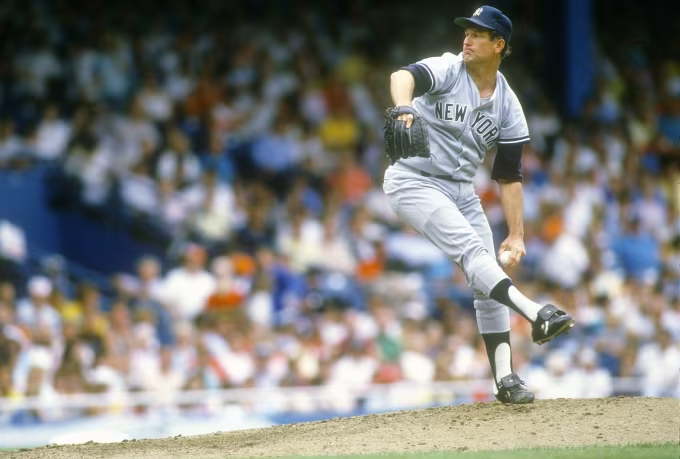
Former Major League Baseball pitcher Tommy John, whose remarkable comeback from a devastating elbow injury gave his name to one of the most influential procedures in sports medicine, has died at the age of 83.
John died Saturday at his home in Bradenton, Florida, the New York Yankees confirmed on Sunday. He had been in hospice care in recent days. Reports said he had battled bladder cancer and other health problems.
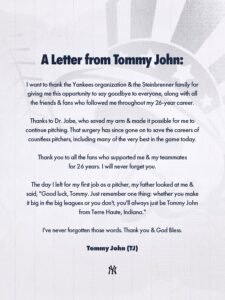
The left-handed pitcher spent an extraordinary 26 seasons in Major League Baseball, winning 288 games and making four All-Star appearances. He played for the Cleveland Indians, Chicago White Sox, Los Angeles Dodgers, New York Yankees, California Angels and Oakland Athletics during a career that stretched from 1963 to 1989.
But John’s most enduring contribution to baseball came not from his statistics, but from what happened to his left elbow in 1974.
At age 31, while pitching for the Los Angeles Dodgers, John suffered a torn ulnar collateral ligament in his pitching elbow during a game against the Montreal Expos.
At the time, such an injury was widely considered potentially career-ending.
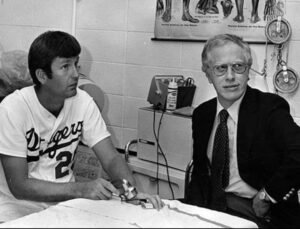
Dodgers team physician Dr. Frank Jobe proposed an experimental procedure. On September 25, 1974, Jobe reconstructed John’s damaged elbow ligament using a tendon taken from John’s right forearm.

John became the first pitcher to undergo the procedure.
The operation was considered a long shot. Instead, John returned to the major leagues in 1976 and went on to pitch for another 14 seasons.

Remarkably, he won 164 games after the surgery, more than the 124 victories he recorded before the operation. His successful return transformed perceptions of elbow injuries and established the procedure now universally known as Tommy John surgery.
John’s return was far more than a medical curiosity.
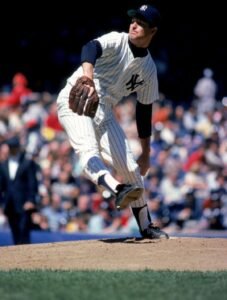
In 1977, his first full season back, he won 20 games for the Dodgers and finished second in the National League Cy Young Award voting. He later joined the Yankees and recorded consecutive 20-win seasons in 1979 and 1980.
He helped New York reach the World Series in 1981 and continued pitching into his 40s, earning the nickname “The Bionic Man.”
He finished his career with 288 victories, 2,245 strikeouts and more than 4,700 innings pitched. His 26 MLB seasons rank among the longest careers in baseball history.
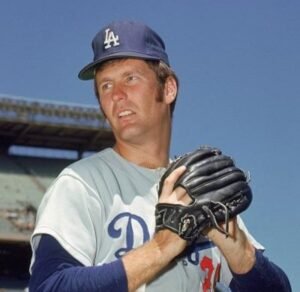
The procedure that saved John’s career went on to transform professional sports.
Tommy John surgery, formally known as ulnar collateral ligament reconstruction, has since been performed on thousands of athletes, particularly baseball pitchers. The operation has allowed many players to return to competition after injuries that once threatened to end their careers.
Dr. Jobe, who died in 2014, was the surgeon who developed and performed the pioneering procedure. But John’s successful comeback provided the proof that made the operation famous and helped turn it into a standard treatment.
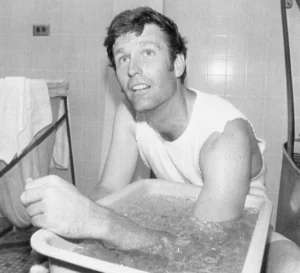
“His impact both on and off the field has been felt by ballplayers of all ages and will be for generations to come,” Dodgers president and CEO Stan Kasten said in a statement following John’s death.
The Yankees also paid tribute to John, describing him as a key member of their rotation and noting that his medical legacy sometimes overshadowed his accomplishments as a pitcher.
Never a Hall of Famer, but an enduring baseball figure
Despite his impressive numbers and four All-Star selections, John was never elected to the Baseball Hall of Fame.
His career, however, remains inseparable from one of the biggest medical breakthroughs in sports history.
The pitcher who once faced the possibility of never throwing another professional pitch instead returned to the mound for 14 more seasons, and ultimately became the namesake of a procedure that has helped generations of athletes do the same.
Tommy John was 83.