
Religion
Centuries-Old Festival in Japan Brings Shinto Traditions and Towering Floats to the Streets

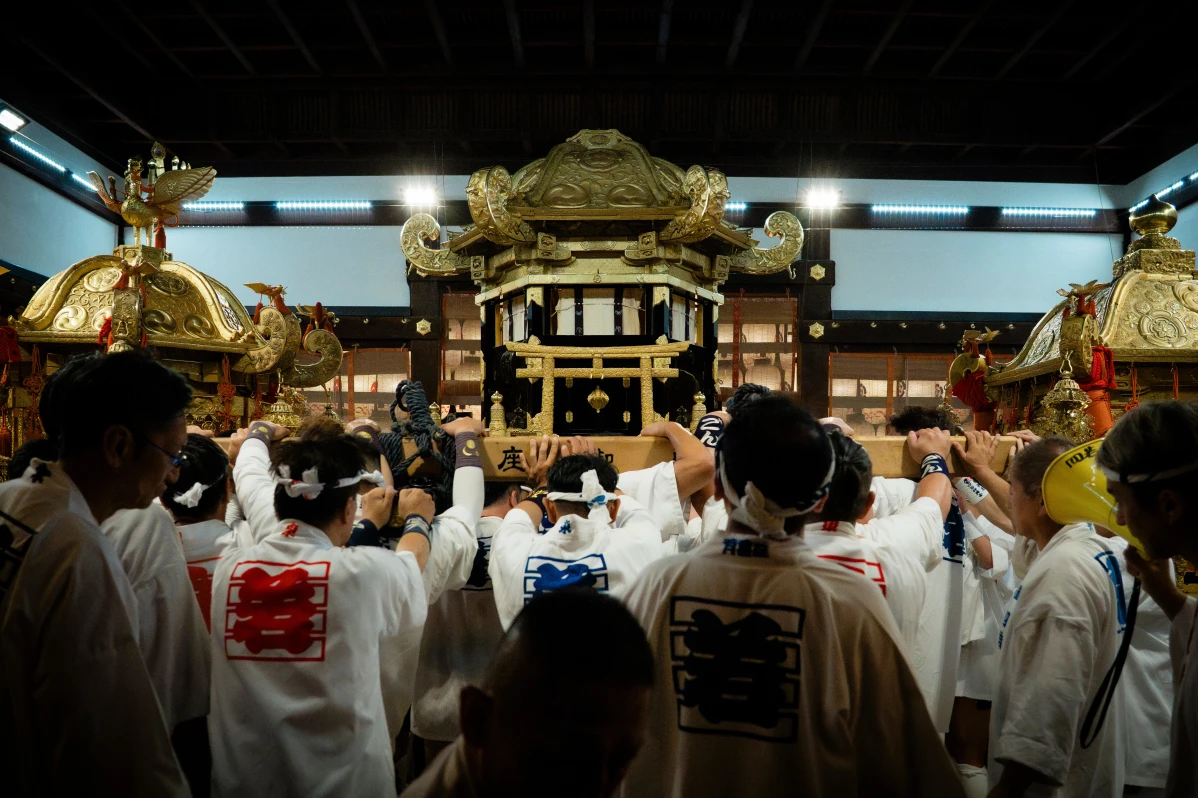
Thousands of people lined the streets of Kyoto, Japan, as one of the country’s oldest and most celebrated festivals transformed the historic city into a vibrant display of culture, religion and tradition. The annual Gion Matsuri, a centuries-old festival rooted in Shinto beliefs, once again showcased its iconic towering floats, traditional music and ceremonial processions, drawing visitors from across Japan and around the world.
Dating back to 869 AD, the festival was originally established as a religious ceremony to appease deities believed to be responsible for epidemics that had devastated the ancient capital. Over the centuries, the event evolved into one of Japan’s most important cultural celebrations while retaining its deep spiritual connections to Shinto, the indigenous religion of Japan. Today, it is regarded as one of the nation’s most significant and enduring festivals.
At the heart of the celebration are the spectacular Yamaboko floats, enormous wooden structures that can reach heights of more than 25 meters (82 feet) and weigh several tons. Decorated with intricate tapestries, handcrafted ornaments and historical artwork, the floats are often described as “moving museums” because many contain priceless cultural treasures passed down through generations.
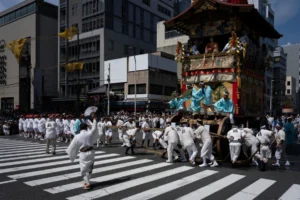
The highlight of the festival is the grand procession through Kyoto’s streets, where teams of participants dressed in traditional attire pull the massive floats through carefully planned routes. Spectators watch as skilled handlers maneuver the structures around tight corners using techniques that have been preserved for centuries. The event combines religious symbolism, artistry and community participation in a display that few festivals anywhere in the world can match.
Shinto rituals remain a central feature of the celebration. Priests conduct purification ceremonies and offer prayers for good health, prosperity and protection from disasters. Many residents view the festival not only as a cultural event but also as an important spiritual tradition connecting modern Japan with its ancient past.
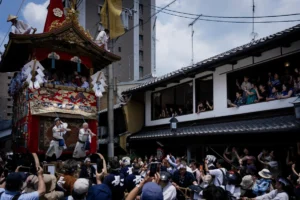
Local communities play a crucial role in preserving the festival. Families, artisans and neighborhood associations spend months preparing costumes, repairing floats and organizing ceremonies. For many participants, involvement in the festival is both an honor and a responsibility, ensuring that traditions dating back more than a thousand years continue to thrive.
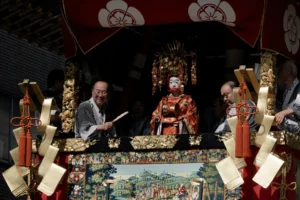
The festival also provides a significant boost to Kyoto’s tourism industry. Hotels, restaurants and local businesses experience a surge in visitors during the celebrations, which span most of July. Tourism officials estimate that hundreds of thousands of people attend various events associated with the festival each year, making it one of Japan’s biggest cultural attractions.
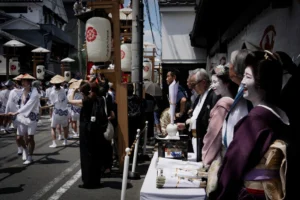
Cultural historians say the enduring popularity of Gion Matsuri reflects Japan’s commitment to preserving its heritage even as the country embraces modernization. Despite changes in technology, lifestyle and urban development, the festival continues to attract new generations eager to participate in customs that have survived wars, natural disasters and social transformation.
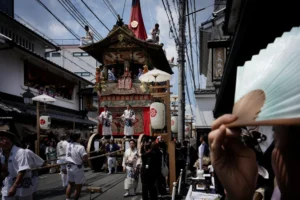
As the giant floats rolled through Kyoto’s historic streets and traditional music echoed between centuries-old buildings, the festival once again demonstrated why it remains one of Japan’s most treasured cultural events; a living link between the nation’s spiritual roots and its contemporary identity.