
General News
ECOWAS Parliament Must Bridge Divides Amid Rising Regional Threats – Gambian Speaker

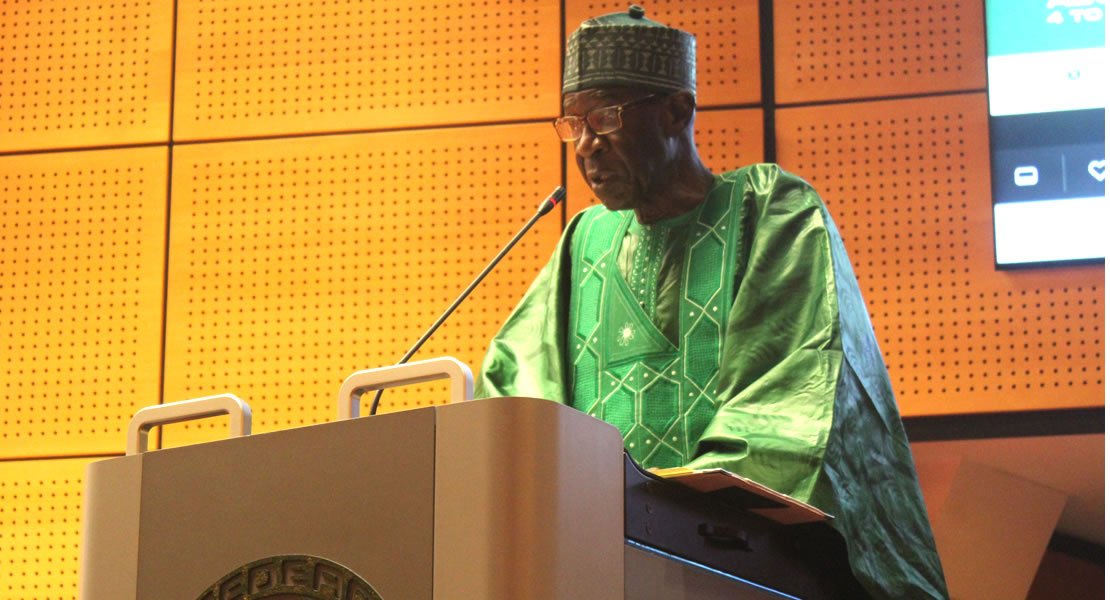
The Speaker of National Assembly of The Gambia, Fabakary Tombong Jatta, has called on the ECOWAS Parliament to play a more assertive role in strengthening regional unity, warning that terrorism, democratic decline, and climate change pose serious threats to West Africa’s integration agenda.


Delivering the keynote address at the opening of the Parliament’s First Ordinary Session in Abuja, Jatta described his appearance as a symbolic return to a chamber where he once served as a member, noting that the experience helped shape his belief in regional cooperation.
He commended The Gambia’s delegation to the Parliament, led by the Majority Leader and the Fourth Deputy Speaker, for ensuring that the interests of Gambians are effectively represented in regional deliberations.
Adopting a sober tone, Jatta warned that escalating terrorism and violent extremism across the Sahel are displacing communities and exposing young people to prolonged instability.
“This is not a crisis confined to geography,” he said, stressing that the security challenges require a coordinated regional response.
Beyond security concerns, the Gambian Speaker highlighted worrying signs of democratic backsliding and weakening commitment to regional ideals among some member states, urging lawmakers to remain vigilant in defending democratic norms.
On the economic front, Jatta pointed to persistent structural barriers hindering growth, noting that despite the promise of the African Continental Free Trade Area, intra-regional trade remains below its potential due to non-tariff constraints.
He also underscored the growing impact of climate change, describing it as a multidimensional crisis that now intersects with security, economic stability, and humanitarian concerns, particularly through resource competition and displacement.
Despite the challenges, Jatta acknowledged the evolution of the ECOWAS Parliament from a largely consultative body into a key institution in regional governance. He cited its roles in election observation, conflict mediation, and advocacy for gender equality and youth inclusion.
He particularly praised ongoing efforts to introduce Direct Universal Suffrage for the Parliament, describing it as a critical step toward enhancing democratic legitimacy and strengthening the connection between the institution and citizens across the region.
Jatta urged lawmakers to leverage parliamentary diplomacy to sustain engagement where executive-level relations may falter, emphasizing that dialogue must continue even during periods of political disagreement.
He concluded by calling for a reinvigoration of the ECOWAS vision, urging leaders to transform it into “a living covenant of peace, solidarity, and shared prosperity,” where citizens across cities like Banjul, Ouagadougou, and Lagos can fully benefit from a truly integrated regional economy.