
Environment
Environmental Experts Seek Increase of Ecological Fund to 5% Amid Rising Climate Disasters

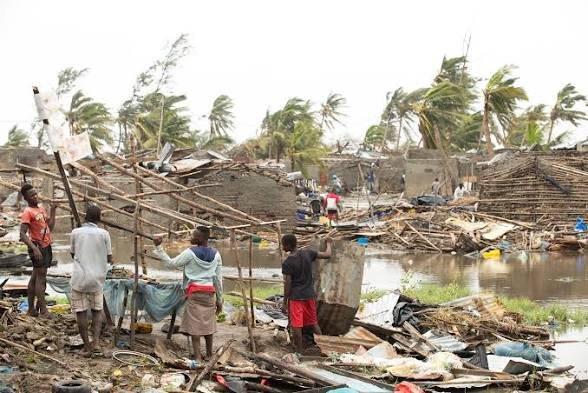
The President of the Association of Environmental Protection and Climate Change Practitioners, AVM (Rtd) Akugbe Iyamu, has called for an upward review of Nigeria’s Ecological Fund from the current 3 percent allocation to 5 percent, citing worsening environmental disasters and rising climate related costs across the country.

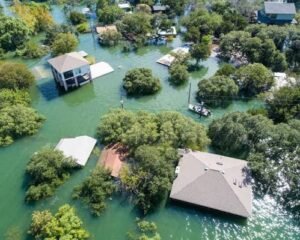
In a statement issued on Thursday, Iyamu said the existing allocation has become inadequate to address Nigeria’s growing ecological and disaster management challenges, including flooding, desertification, gully erosion, oil pollution and building collapses.
According to him, the devastating impact of climate change and extreme weather conditions now requires a more realistic and sustainable funding structure capable of protecting lives, livelihoods and critical infrastructure.
He noted that more than 238 Nigerians died from flooding between January and September 2025 alone, while thousands were displaced in different parts of the country due to environmental disasters.
Iyamu also referenced data from the National Emergency Management Agency, which reportedly recorded over 45,000 disaster incidents nationwide as of May 2026, covering 23 priority hazards.

He further disclosed that from 1974 to late 2025, more than 679 building collapses were recorded across Nigeria, resulting in over 1,639 deaths.
According to him, the increasing frequency and intensity of disasters clearly demonstrate that the current Ecological Fund structure can no longer effectively support disaster prevention, mitigation and recovery efforts nationwide.

“The ecological fund allocation started as a premium for humanity and supporting lives and livelihoods. It is now becoming slightly chaotic and grossly insufficient,” he said.
Iyamu explained that the Ecological Fund was originally established in 1981 as a constitutional intervention pool aimed at addressing severe environmental problems across Nigeria.
He noted that amendments to the Federation Account Allocation formula in 1992 allocated 2 percent specifically for general ecological problems, alongside allocations for the Federal Capital Territory, mineral producing areas and stabilization purposes.
However, he argued that while revenues accruing to the Federation Account Allocation Committee have increased significantly over the decades, environmental threats and the cost of disaster management have also risen sharply.
According to him, total revenue accruing to the federation account reached about N54.99 trillion in 2025, yet the funding available to tackle ecological emergencies remains insufficient.
The retired Air Vice Marshal warned that climate related crises such as the shrinking of Lake Chad, desertification in northern Nigeria, coastal erosion and recurrent flooding require greater investments in adaptation and resilience infrastructure.
He also stressed the need for accountability and transparency in the management of the Ecological Fund, warning that previous reports of misappropriation and diversion of funds for political purposes must be addressed.
According to him, increasing the fund without strengthening oversight mechanisms would undermine the original purpose of the intervention.
He called for a national disaster management strategy that prioritizes prevention rather than reaction, while assigning clear responsibilities and enforcing strict sanctions where necessary.
Iyamu said increasing the Ecological Fund to 5 percent would improve predictability, strengthen institutional response capacity and demonstrate the government’s seriousness in confronting climate change and environmental degradation.
He added that the country must move beyond a culture of reactive disaster response and embrace long term environmental planning anchored on sustainability and scientific reasoning.