
Africa
Ghana’s Constitutional Reform: What Other African Countries Can Learn From the Process

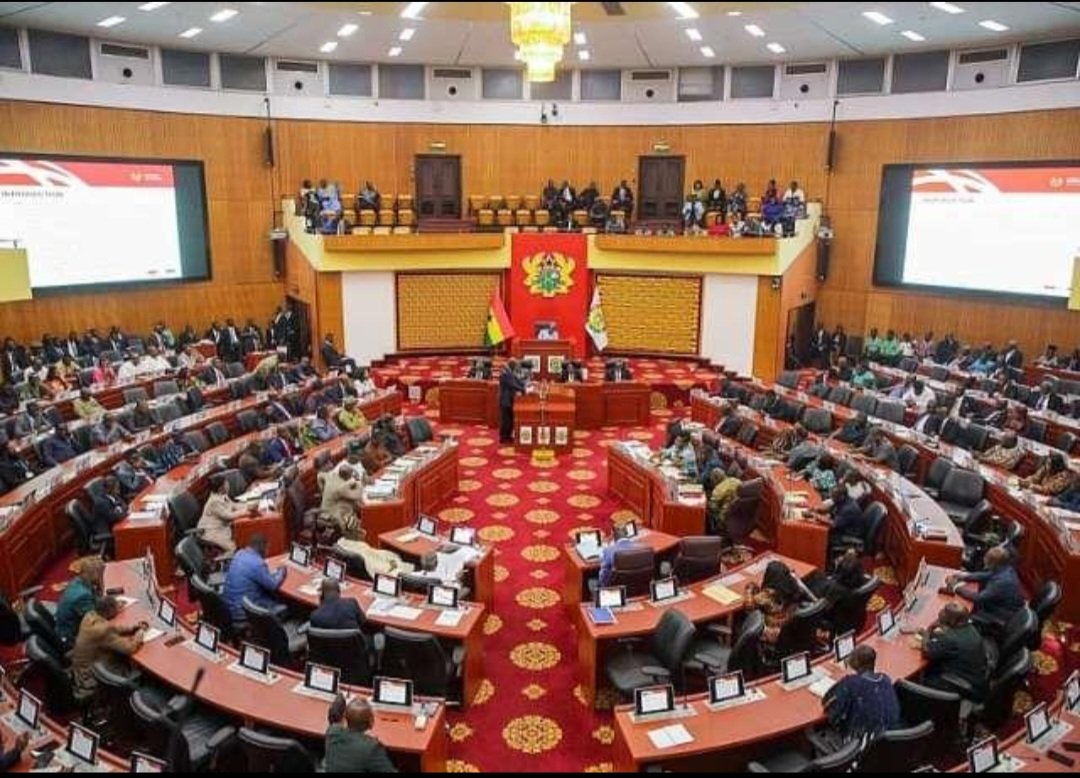
Ghana’s renewed attempt to reform its 1992 Constitution is becoming an important test of how African democracies can modernise their political institutions without weakening the safeguards designed to prevent the abuse of power.
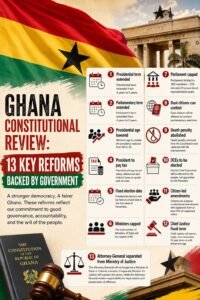
The process has gained fresh momentum after Ghana’s government accepted key recommendations from the Constitutional Review Committee, including proposals to extend the presidential and parliamentary terms from four years to five years and reduce the minimum age for presidential candidates from 40 to 35. The government has also backed a number of broader institutional reforms emerging from the review.
But the significance of Ghana’s constitutional debate goes beyond the proposed amendments themselves.
For countries across Africa; including Nigeria, Kenya, Uganda, Zambia, Ghana’s neighbours and states currently debating constitutional changes the process offers a number of lessons about public participation, institutional checks and balances, term limits, parliamentary oversight and the dangers of allowing constitutional reform to become a vehicle for extending political power.
Ghana has operated under its 1992 Constitution since the country returned to constitutional rule after years of military intervention.
The document has provided the framework for competitive elections, presidential term limits and peaceful transfers of power between the two dominant political parties.
Ghana has consequently developed a reputation as one of West Africa’s relatively stable electoral democracies. The country has experienced several transfers of power between the New Patriotic Party and the National Democratic Congress without the kind of prolonged political crisis or military intervention seen elsewhere on the continent.
But longevity has not meant perfection.
Critics have raised concerns about the concentration of executive power, presidential appointments, the independence of state institutions, decentralisation and the relationship between the executive and Parliament.
The latest review is therefore aimed not at replacing Ghana’s democratic framework but at adjusting institutions that have proved problematic in practice.
Ghana’s current constitutional reform effort did not begin with the latest announcement.
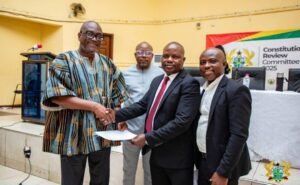
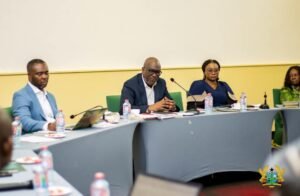
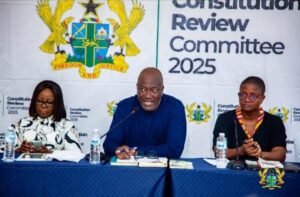
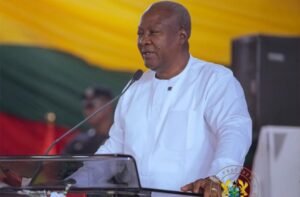
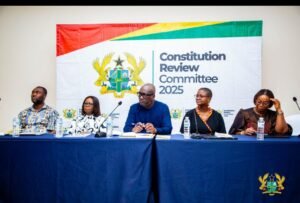
President John Mahama inaugurated an eight-member Constitutional Review Committee chaired by Professor Henry Kwasi Prempeh in January 2025.
The committee was tasked with examining earlier constitutional review work, engaging citizens and stakeholders and producing recommendations to strengthen democratic governance.
After nationwide consultations, the committee submitted its final report to Mahama on December 22, 2025.
The report runs to 127 pages and contains recommendations covering governance, political institutions, decentralisation, elections, public appointments, the judiciary and other aspects of the constitutional system.
The current process is therefore the product of consultation and review rather than a constitutional amendment introduced overnight.
That distinction is one of the first lessons other African countries can draw from Ghana.
One of the strongest features of Ghana’s current process has been the emphasis on public consultation.

The review committee engaged citizens and stakeholders, while civil-society organisations have subsequently created platforms designed to keep citizens involved in the implementation stage.
More than 70 organisations, including civil-society groups, professional bodies, trade unions, academics and faith-based organisations, have been brought into regional engagement efforts.
The Ghana Centre for Democratic Development has also repeatedly warned that constitutional reform cannot be left exclusively to politicians.
Civil society groups have called for greater public education and mobilisation, particularly because some proposed changes would require a referendum.
That is important for other African states.
A constitution is ultimately a framework for distributing power among citizens and institutions. If citizens are excluded from the process of changing that framework, the resulting amendments may lack legitimacy even if they are technically legal.
Ghana’s approach can be compared with Kenya’s constitutional experience.
Kenya’s 2010 Constitution emerged from a prolonged reform process involving political negotiations, public participation and a national referendum.
The document was ultimately approved by voters in August 2010, after years of political instability and the violence that followed the disputed 2007 presidential election.
The Kenyan experience demonstrated that constitutional reform can become a mechanism for addressing structural political problems rather than merely changing individual provisions.
The broader lesson is that constitutional legitimacy comes not only from parliamentary votes but from citizens having a meaningful role in determining the rules under which they are governed.
Ghana’s Constitution contains special protections for what it calls “entrenched provisions.”
Article 290 identifies provisions concerning areas including the Constitution itself, fundamental rights, representation, the executive and legislature among those subject to special amendment procedures.
Changes affecting entrenched provisions require significantly stronger safeguards than ordinary constitutional amendments.
That architecture is deliberate.
The idea is that a temporary parliamentary majority should not be able to rewrite fundamental democratic rules simply because it has enough votes.
The current review committee has nevertheless recommended changes to the classification of some provisions, including proposals for certain currently entrenched provisions to become “semi-entrenched”, making them easier to amend under specified parliamentary thresholds.
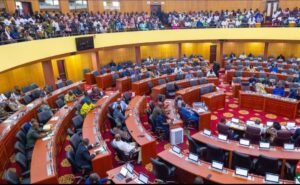
That proposal demonstrates why amendment procedures matter.
Making a constitution impossible to change can make it rigid and outdated. Making it too easy to change can make it vulnerable to political manipulation.
The challenge is to find the middle ground.
Perhaps the most politically sensitive element of Ghana’s reform process is the proposal to increase the presidential term from four years to five.
The government says the change would provide greater continuity in governance, and the proposal is accompanied by a corresponding extension of parliamentary terms.
But the debate highlights a much bigger African question:
When does legitimate constitutional reform become an attempt to weaken limits on political power?
Across Africa, constitutional amendments relating to presidential tenure have frequently generated controversy.
In some countries, leaders have attempted to remove or alter term limits so they can remain in office longer.
Cameroon, for example, removed presidential term limits in 2008, enabling President Paul Biya to remain eligible for further terms. Rwanda similarly amended its constitutional framework in 2015, allowing President Paul Kagame to seek additional terms.
These cases provide a cautionary lesson for countries considering constitutional changes.
A constitution should serve the state, not the individual currently occupying the presidency.
The proposed five-year presidential term is politically sensitive, but it is not itself a proposal to abolish Ghana’s two-term limit.
That distinction matters.
The debate therefore centres on whether five years provides better governance continuity or unnecessarily reduces the frequency with which voters can hold governments accountable.
For other African countries, the lesson is not necessarily that four-year or five-year terms are superior.
Rather, it is that the duration of a political mandate should be debated as a matter of institutional design, not as a mechanism for protecting an incumbent.
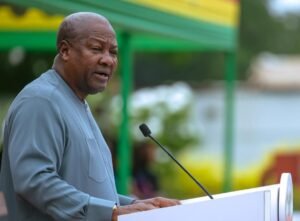
Another major proposal is to reduce the minimum age for presidential candidates from 40 to 35.
Supporters argue that the change would open presidential politics to a younger generation.
The proposal also reflects a broader demographic reality across Africa.
Africa has one of the world’s youngest populations, yet political leadership in many countries remains dominated by much older politicians.
Reducing the age requirement could therefore create greater opportunities for younger political leaders to compete.
But age alone does not guarantee good governance.
The more important question is whether younger candidates have meaningful access to political parties, campaign financing, media platforms and decision-making institutions.
A constitutional age reform without broader political reforms could therefore produce only limited change.
The Ghanaian review has also raised questions about executive appointments and institutional independence.
The constitutional review recommendations include proposals concerning presidential appointments and parliamentary approval for various positions.
The committee’s earlier recommendations, for example, proposed parliamentary approval for appointments including ministers, deputy ministers, the Auditor-General, Electoral Commission members and other officials.
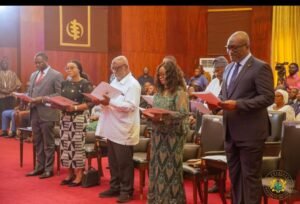
This addresses a familiar problem across African political systems: when too many important institutions depend directly on the presidency, checks and balances can become weaker in practice.
The principle is simple.
A president should have enough authority to govern but not enough authority to dominate every institution designed to scrutinise the government.
Lesson Six: Strong institutions matter more than strong leaders
Ghana’s experience reinforces another important lesson.
Political stability cannot depend entirely on whether a particular president is democratic, competent or restrained.
It must depend on institutions.
That means:
- An independent judiciary
- An effective Parliament
- A credible electoral commission
- An independent auditor
- Strong anti-corruption institutions
- A free media
- Active civil society
- Transparent public appointments
- Effective local government
Constitutional reform should therefore focus on how institutions behave when political leadership changes.
A good constitution should work under both a responsible president and an irresponsible one.
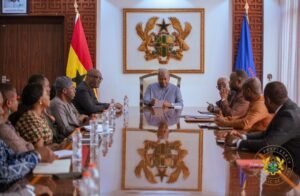
South Africa’s 1996 Constitution offers another useful African comparison.
Its drafting process involved extensive public participation and political negotiation.
The South African government describes the process as one designed to ensure that the Constitution would be legitimate, credible and accepted by the population.
The drafting involved ordinary citizens, civil society and political parties, with nearly two years of intensive consultation.
That experience illustrates the value of broad ownership.
When citizens believe they participated in creating the rules, they are more likely to regard those rules as legitimate.
Ghana’s current effort is attempting to achieve something similar, albeit through amendments to an existing constitutional order rather than the creation of an entirely new constitution.
Recent developments in Senegal demonstrate the other side of the equation.
In June 2026, Senegal’s National Assembly passed a controversial constitutional amendment aimed at changing the balance between the presidency and Parliament.
The reforms included stronger legislative powers, changes to the Constitutional Court and restrictions on certain presidential powers.
The changes generated protests, with demonstrators accusing politicians of interfering with the country’s constitutional framework.
The lesson for Ghana and other African states is clear:
Even reforms that are presented as democratic improvements can become politically divisive if citizens believe they are being driven primarily by political rivalry.
Transparency therefore matters as much as the substance of the amendment.
Togo’s constitutional reforms offer another cautionary example.
In 2024, lawmakers approved major changes that shifted the country’s political system toward a parliamentary model and created a new position of president of the council of ministers.
Opposition groups accused the government of using constitutional reform to prolong the political dominance of President Faure Gnassingbé.
The process attracted criticism partly because opponents complained about a lack of transparency and inclusion.
For other African governments, the lesson is straightforward:
Do not ask citizens to trust constitutional change they have not been allowed to properly examine.
Ghanaian civil society organisations have specifically called for the full constitutional review report to be made available for public scrutiny.
CDD-Ghana has argued that citizens need enough time to understand and debate proposed changes, particularly where entrenched provisions and referendum requirements are involved.
That principle should become standard practice across Africa.
Before voting on constitutional amendments, citizens should be able to answer basic questions:
- What exactly is changing?
- Why is it changing?
- Who benefits?
- Who could lose power?
- What problem does the amendment solve?
- What safeguards exist against abuse?
- When does the amendment take effect?
Without those answers, constitutional reform risks becoming a technical exercise understood only by lawyers and politicians.
Another important feature of Ghana’s current process is the attempt to maintain civic engagement after the review committee submitted its report.
Civil-society organisations have created platforms to monitor implementation and educate citizens.
That matters because constitutional reform does not end when Parliament approves a bill or voters approve a referendum.
The difficult stage is implementation.
A country can have an excellent constitution on paper while its institutions fail to respect it in practice.
Ghana itself has experienced several constitutional eras, including the 1960, 1969, 1979 and 1992 constitutional frameworks.
The country’s history demonstrates that constitutional documents cannot be separated from political culture and institutional behaviour.
Ghana’s current democratic stability has been strengthened by competitive elections and peaceful transfers of power, but debates over executive dominance and institutional independence remain unresolved.
The latest review therefore provides an opportunity to address weaknesses without destroying the institutional continuity that has helped Ghana maintain political stability.
Across the continent, constitutions are increasingly becoming central to political struggles.
Some countries are debating presidential term limits.
Others are considering parliamentary reforms, decentralisation, judicial independence or electoral changes.
The Ghanaian process demonstrates that constitutional reform can be constructive when it is:
- Inclusive.
- Transparent.
- Evidence-based.
- Institutionally focused.
- Open to public scrutiny.
- Protected from the interests of individual incumbents.
But the experience of other African states also shows what can happen when constitutional amendments are used primarily to consolidate political power.
The government’s acceptance of the review committee’s recommendations does not mean that the constitutional changes are already law.
Some amendments will have to pass through Ghana’s constitutionally prescribed procedures, and proposals affecting entrenched provisions require particularly demanding processes, including a referendum.

That means the most important stage of Ghana’s reform journey may still lie ahead.
The government must convince Parliament, political parties, civil society and ultimately the Ghanaian public that the proposed changes serve the country’s long-term democratic interests.
The opposition and civil society, meanwhile, have a responsibility to scrutinise the proposals without reducing the debate to partisan politics.
Ghana has an opportunity to demonstrate something important to the rest of Africa:
- Constitutions can evolve without democracy being weakened.
- The country can modernise its institutions while protecting presidential term limits, strengthening Parliament, improving accountability and widening political participation.
- But that outcome depends on the process.
- If constitutional reform remains transparent and citizen-driven, Ghana could provide a valuable model for democratic constitutional change.
- If political interests begin to dominate the process, however, the exercise could become another example of how constitutional amendments can unintentionally, or deliberately weaken democratic safeguards.
For Africa, that is perhaps the most important lesson of Ghana’s constitutional debate:
Changing a constitution is not difficult. Changing it while preserving public trust, institutional independence and democratic accountability is the real test.