
Africa
Guinea-Bissau Approves New Constitution Expanding Presidential Powers

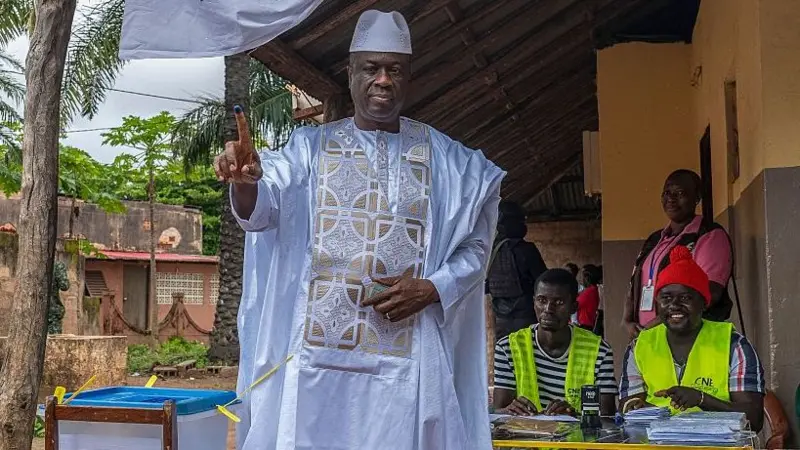
Guinea-Bissau has voted to approve a new constitution that significantly strengthens the powers of the presidency, reshaping the country’s political system ahead of general elections scheduled for December.
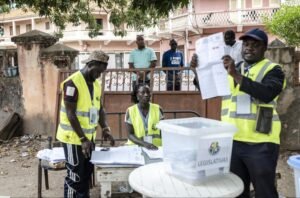
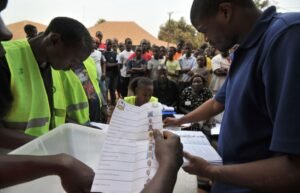
Provisional results announced by the National Electoral Commission show that 70% of voters backed the new constitution, while 30% voted against it. About 544,060 people cast valid ballots, representing nearly 60% of registered voters.
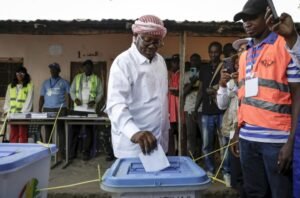
The referendum was held on August 30, less than a year after the military seized power following a disputed election, plunging the West African country into another period of political uncertainty.
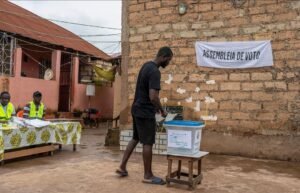
The approved constitution represents a major shift away from Guinea-Bissau’s existing semi-presidential arrangement.
Under the current system, parliament plays a central role in selecting the prime minister, who then forms the government. Under the new framework, the president will have the authority to appoint and dismiss the prime minister and cabinet, as well as create or abolish government ministries.
The president would also be empowered to dissolve parliament in circumstances deemed to constitute a grave political crisis.
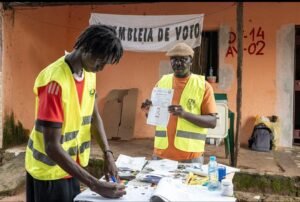
Supporters of the reforms, including the military authorities overseeing the transition, argue that the changes will bring greater clarity to the country’s leadership structure and prevent repeated confrontations between presidents, prime ministers and parliament.
Military chief General Tomás Djassi has argued that Guinea-Bissau cannot continue operating with competing centres of political authority, saying the reforms are intended to reduce the instability that has repeatedly paralysed the country.
The constitutional changes go beyond presidential powers.
The country’s parliament will be reduced from 102 seats to 65, while the number of electoral constituencies will fall from 29 to 12.
The new constitution also introduces a requirement that presidential candidates must have lived continuously in Guinea-Bissau for at least five years before seeking office. Critics say the residency requirement could have significant consequences for politicians who have spent extended periods abroad.
The reforms are expected to fundamentally alter the balance between the executive and legislature once civilian government is restored.
The referendum was heavily contested by Guinea-Bissau’s main opposition party, the African Party for the Independence of Guinea and Cape Verde (PAIGC).
The party called for a boycott, arguing that the constitutional process lacked sufficient political and institutional safeguards. PAIGC leader Domingos Simões Pereira accused the authorities behind the referendum of attempting to undermine democratic freedoms.
Opposition groups have also questioned whether a military-backed transitional government should be rewriting the country’s fundamental political rules in the first place.
There were reports of low participation at some polling stations in the capital, Bissau, with some residents telling local media they were unaware of the referendum or did not fully understand what the proposed constitution would change.
That has added another layer of controversy to an already sensitive political transition.
Guinea-Bissau has experienced decades of political instability, including repeated military interventions and attempted coups.
The latest military takeover followed a disputed presidential election last year in which rival political camps claimed victory. The military subsequently suspended the political process and established transitional institutions.
The new constitution now provides the military-backed authorities with a framework for a presidential system in which the head of state will wield substantially more executive authority.
The country’s presidential election is scheduled for December 2026, with the transition expected to culminate in a return to civilian rule.
But the constitutional changes could make that transition more contentious.
While supporters say a stronger presidency could end years of institutional deadlock, opponents fear that concentrating power in the presidency; particularly following a military takeover, could weaken parliament, political parties and democratic checks and balances.
For Guinea-Bissau, the coming months will therefore be critical. The December elections will test whether the new political system can deliver the stability promised by its supporters without sacrificing the democratic safeguards demanded by its critics.