
Africa
Scientists Discover New Orange-Lipped Monkey Species Hidden in DR Congo Forest

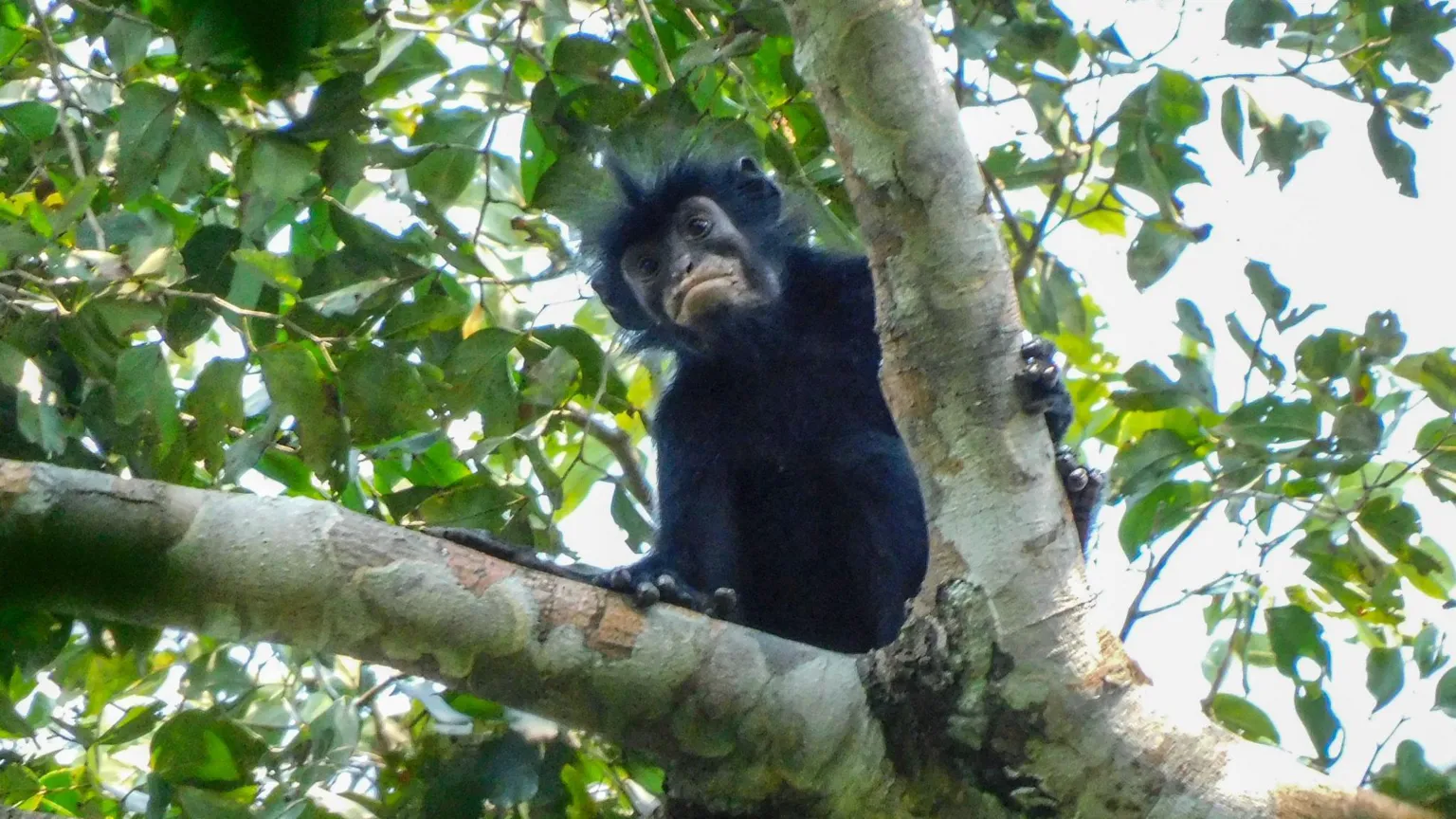
Scientists have officially identified a remarkable new species of monkey hidden deep within the rainforests of the Democratic Republic of Congo (DRC), ending nearly two decades of mystery surrounding an elusive primate distinguished by its striking pinkish-orange lips, black fur and unique roaring calls. The discovery has been hailed as one of Africa’s most significant primate findings in decades.
The newly described species, named Colobus congoensis and known locally as “Likweli,” inhabits the dense forests of Lomami National Park in east-central DRC. Researchers say it is only the fifth new African monkey species to be scientifically described in the past 75 years, highlighting how much of the Congo Basin’s biodiversity remains unexplored.
The first clue emerged in 2008, when conservationists photographed an unfamiliar monkey high in the forest canopy during an expedition. The blurry image suggested the animal might represent a previously unknown species, but researchers lacked enough evidence to confirm its identity. A second sighting in 2018 prompted an international research effort involving scientists from the DRC, the United States and Germany.
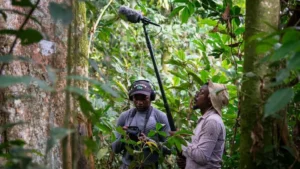
Over the next four years, researchers carried out extensive fieldwork that included photography, behavioural observations, audio recordings and genetic analysis. DNA testing ultimately confirmed that the monkey is genetically distinct from other colobus monkeys, particularly its closest known relative, the black colobus, from which it diverged millions of years ago.
The Likweli is instantly recognizable by its silky black coat, vivid orange-cream patch surrounding its mouth, slate-grey facial markings and a white patch beneath its tail. Researchers also found that its deep, resonant roaring and snorting calls differ acoustically from those of related monkey species, providing another important characteristic separating it from other colobus monkeys.
Although the monkey was unknown to science, researchers noted that some local communities had long been aware of its existence and referred to it as “Likweli.” However, only a handful of villages within the region reported regularly seeing the primate, reflecting its extremely limited distribution in the remote rainforest.
Scientists warn that the excitement surrounding the discovery is tempered by conservation concerns. Because the species occupies a relatively small range and faces growing threats from hunting and habitat destruction, researchers have recommended that Colobus congoensis be listed as Endangered on the International Union for Conservation of Nature (IUCN) Red List. Most of its known habitat lies within Lomami National Park, making continued protection of the reserve critical to the species’ survival.
Conservationists say the discovery underscores the global importance of the Congo Basin, the world’s second-largest tropical rainforest after the Amazon. The vast forest continues to harbour species that remain unknown to science, reinforcing calls for greater investment in biodiversity research and habitat protection.
Researchers hope the official recognition of the Likweli will encourage additional conservation funding and scientific exploration in one of Africa’s richest but least-studied ecosystems. They also believe the finding demonstrates that even large mammals can remain undiscovered in remote wilderness areas, particularly where conflict, difficult terrain and limited access have hampered research for decades.