
Africa
36-Year-Old Nigerian Accused of Funding ISIS-West Africa in Major U.S. Terror Crackdown

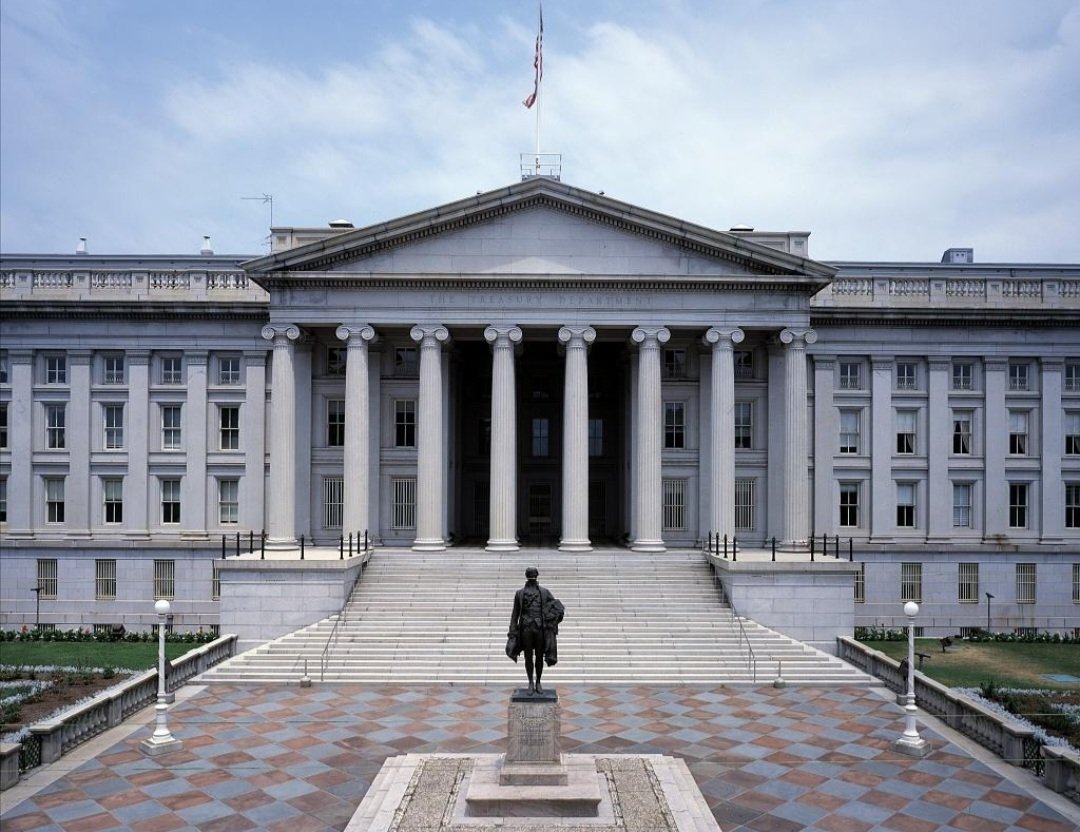
The United States government has identified a Lagos-based Nigerian, Mukhtar Adamu Muhammad, as an alleged financial facilitator for the Islamic State West Africa Province (ISWAP), imposing terrorism-related sanctions on him and three Nigerian Bureau De Change (BDC) companies accused of helping move funds for the extremist group.
The designation was announced by the U.S. Department of the Treasury’s Office of Foreign Assets Control (OFAC) as part of a broader international operation targeting financial networks linked to the Islamic State of Iraq and Syria (ISIS). According to U.S. authorities, the action targets individuals and entities operating across West Africa, Europe, and the Middle East that allegedly enabled the movement of funds for ISIS operations.

Treasury officials described Muhammad as a key financial facilitator for ISIS-West Africa, accusing him of conducting financial transactions and money transfers on behalf of the terrorist organization. The designation places him on the U.S. list of Specially Designated Global Terrorists (SDGT), a status that blocks any assets under U.S. jurisdiction and prohibits American individuals and companies from conducting business with him.
According to OFAC records, Muhammad was born in August 1990 and resides in the Agege area of Lagos State. U.S. authorities allege that he operated a network of currency exchange businesses that served as channels for moving funds connected to ISIS-West Africa. The allegations have not been tested in a U.S. criminal court, and no criminal conviction was announced alongside the sanctions.

The sanctions also extend to three Nigerian Bureau De Change firms allegedly linked to Muhammad. These include Generation Currency Bureau De Change Limited in Lagos, Manhattan Bureau De Change Limited in Kano, and Nine to Nine Exchange Bureau De Change Limited, located within the Federal Airports Authority of Nigeria (FAAN) complex in Lagos. U.S. officials claim the firms were used to facilitate financial transactions on behalf of ISIS-West Africa.
The move forms part of a wider campaign by Washington to dismantle terrorist financing networks globally. The Treasury Department said ISIS increasingly relies on decentralized financial facilitators and regional affiliates to move money across borders, fund recruitment activities, support operations, and sustain militant activities in conflict zones.
U.S. Treasury Secretary Scott Bessent said ISIS continues to develop new methods of financing its operations and attacks, adding that American authorities would continue pursuing individuals and entities that enable the terrorist group’s financial activities.
Security experts say disrupting funding channels remains one of the most effective ways to weaken terrorist organizations. Unlike direct military operations, financial sanctions can significantly limit a group’s ability to purchase weapons, recruit fighters, organize attacks, and maintain logistical networks.

The sanctions come amid growing cooperation between the United States and Nigeria in combating terrorism and extremist financing. Nigerian authorities have in recent years intensified efforts to identify and freeze assets linked to terrorist groups, including Boko Haram and ISWAP. Earlier this year, Nigeria’s sanctions committee updated its national list of suspected terrorism financiers and extremist-linked entities as part of broader counterterrorism measures.
The latest designation places renewed attention on Nigeria’s financial sector, particularly the Bureau De Change industry, which authorities worldwide have increasingly scrutinized for potential misuse in money laundering and illicit financial flows. Analysts say the case underscores the importance of strengthening oversight mechanisms and international cooperation in tracking cross-border financial transactions linked to extremist networks.
While the sanctions do not amount to a criminal conviction, they effectively cut off the designated individuals and companies from access to the U.S. financial system and expose them to secondary sanctions risks from international financial institutions. The Treasury Department indicated that investigations into ISIS financing networks remain ongoing and that additional actions could follow as authorities continue tracing the movement of funds linked to terrorist organizations.
The designation is part of a broader U.S. counterterrorism strategy aimed at disrupting ISIS financial operations worldwide and limiting the group’s ability to support affiliates operating across Africa, the Middle East, and other regions.