
World News
Iran and UAE Clash at BRICS Meeting Over Gulf Conflict

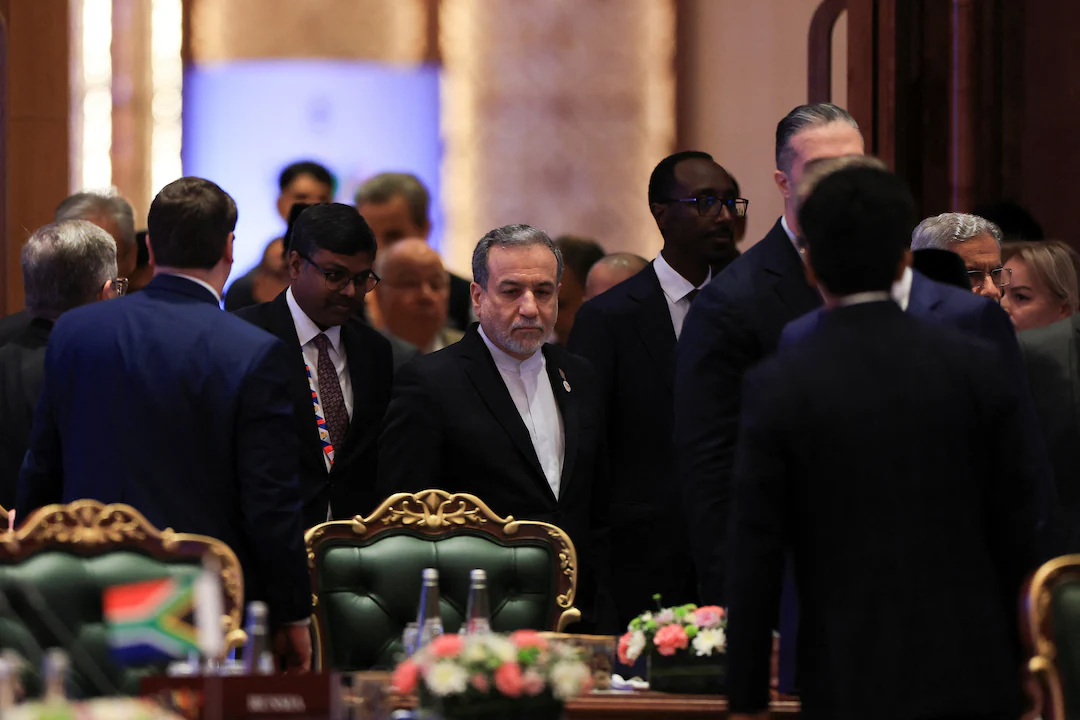
Tensions between Iran and the United Arab Emirates erupted during a BRICS foreign ministers’ meeting in New Delhi on Thursday, exposing growing divisions within the expanding bloc over the ongoing conflict in the Middle East.
Iranian Foreign Minister Abbas Araghchi reportedly accused the UAE of being directly involved in military operations against Iran during a heated exchange at the summit, according to Iranian media reports.
“I didn’t name the UAE in my statement for the sake of unity. But the truth is that the UAE was directly involved in the aggression against my country,” Araghchi was quoted as saying after comments from the Emirati delegation triggered a diplomatic confrontation.
The dispute comes amid escalating regional tensions following months of conflict involving Iran, the United States, and Israel. Tehran has repeatedly accused some Gulf states of quietly cooperating with Western and Israeli military operations targeting Iranian interests.
The UAE has publicly denied claims that it participated in attacks against Iran and has attempted to maintain a delicate diplomatic balance amid the widening regional crisis.
The clash at the BRICS meeting raised doubts about whether the bloc would be able to issue a unified final communiqué, with Iranian officials suggesting disagreements with the UAE were obstructing consensus.
India, which is hosting the two-day meeting as BRICS chair, urged member states to prioritize stability and ensure safe maritime trade routes, particularly around the Strait of Hormuz and the Red Sea.
Indian Foreign Minister Subrahmanyam Jaishankar warned that disruptions to major shipping lanes could threaten global economic stability, especially as attacks on commercial vessels in the Gulf region continue to rise.
The BRICS bloc now expanded to include Iran, the UAE, Egypt, Ethiopia, and Indonesia alongside Brazil, Russia, India, China, and South Africa, has increasingly struggled to maintain unity on major geopolitical issues.
Analysts say the public disagreement between Tehran and Abu Dhabi highlights the challenge of managing rival regional interests within the organization as BRICS seeks to position itself as a stronger alternative voice to Western-led global institutions.
Despite the tensions, diplomatic talks among member states are expected to continue through Friday in an effort to reach a joint position on regional security and global economic concerns.