
International
Macron Tightens Protest Restrictions in France, Blames Far-Left Groups for Unrest

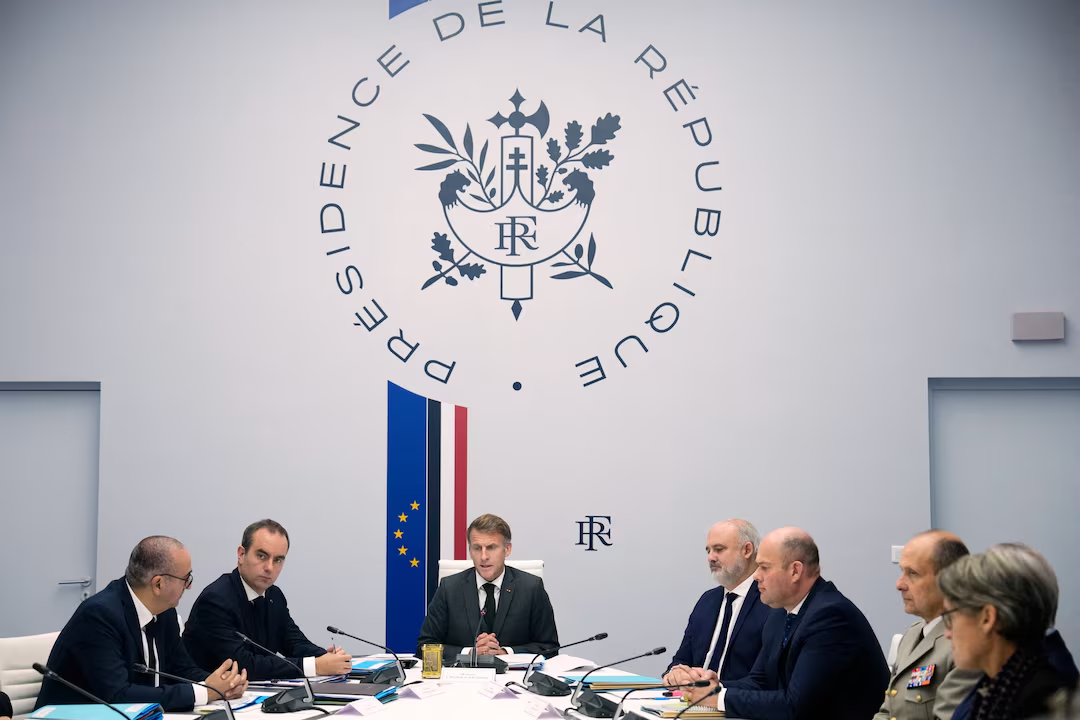
French President Emmanuel Macron has announced tighter restrictions on demonstrations, saying protests organised by groups without what authorities consider legitimate standing would be prohibited in the coming days, as the government prepares for further unrest following widespread riots and looting.
Speaking on Thursday, October 22, after a security meeting with intelligence chiefs and senior ministers, Macron blamed what he described as radical far-left groups for violence during protests last weekend, accusing them of seeking to destabilise the French Republic.
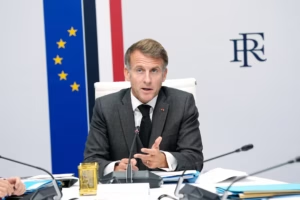
The president said demonstrations organised by recognised trade unions could still take place, although authorities might redirect them away from city centres, businesses and public buildings to reduce the risk of further damage.
The announcement comes after some of France’s worst urban unrest in years. Violence on October 17 affected Paris, Marseille, Lyon and other cities, with shops looted, buildings vandalised and public institutions targeted. The scale of the disorder also raised questions about the preparedness of police and security services.
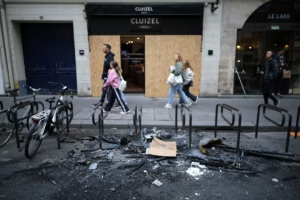
Authorities have already imposed restrictions on planned demonstrations in several areas. Officials in Lyon, France’s second-largest city, banned protests scheduled for Saturday, while a student demonstration planned in Paris for Thursday was also prohibited.
However, further rallies are being organised. France’s main student union, UNEF, has called for demonstrations on Saturday, while the Yellow Vest movement has announced plans for a march through central Paris. The government has warned that the coming weekend could bring another round of confrontations.
Prime Minister Sébastien Lecornu has pledged a major security operation, including additional police deployments and military support, following criticism of the authorities’ handling of last weekend’s violence. The government has also acknowledged shortcomings in its response.
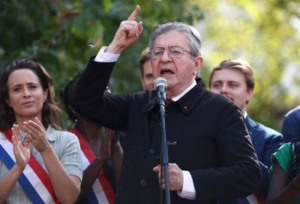
The government’s accusations against the radical left have intensified a political dispute involving Jean-Luc Mélenchon’s France Unbowed party, known by its French initials LFI. Politicians from the centre, right and far right have accused the party of contributing to the unrest through its rhetoric and support for protest movements.
Mélenchon and his allies have rejected the accusations, arguing that the government is attempting to shift responsibility away from its own failures. They point to rising living costs, deteriorating public services and public frustration as key factors behind the demonstrations.
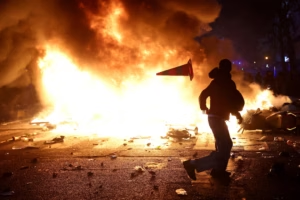
The unrest has also prompted calls from some political figures to consider banning LFI, a proposal that the party has denounced as authoritarian. Other opposition politicians have cautioned against blaming one party or individual for the violence. France’s National Assembly has launched a parliamentary inquiry into the disorder and the handling of law enforcement.
The demonstrations have been fuelled in part by economic grievances, including pressure on household budgets and concerns about public spending and services. Trade unions have also vowed to continue campaigning over living costs and government policies, with a general strike planned for November 5.
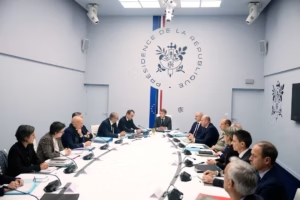
Macron’s announcement places renewed emphasis on public order as France approaches its 2027 presidential election. The crisis has intensified political divisions at a time when the president is facing mounting criticism over his government’s response to economic and social pressures.
While the authorities say the restrictions are intended to prevent violence and protect public safety, the measures could fuel further debate over freedom of assembly and the government’s handling of dissent. The coming days will test whether tighter controls can prevent fresh disorder without deepening the political tensions behind the protests.