
Religion
Muslims to Surpass Christians as World’s Largest Religious Group by 2035 — Pew


Muslims are projected to overtake Christians as the world’s largest religious group by 2035, while sub-Saharan Africa is expected to become the centre of global Christianity, according to new demographic research released by the Pew Research Center.
The study, titled The Future of World Religions: Population Growth Projections, 2020–2070, was conducted in collaboration with Poland’s Center for Advanced Studies of Population and Religion (CASPAR).
Released on Wednesday, November 18, 2026, the research examines how fertility rates, life expectancy, migration and religious switching could reshape the global religious landscape over the next five decades.
According to the projections, the global Muslim population could reach approximately 2.57 billion by 2035, surpassing the Christian population, which is expected to stand at about 2.52 billion.
By 2070, Muslims are projected to number approximately 3.64 billion, representing 35.8 per cent of the world’s population, while Christians are expected to reach nearly 2.96 billion, accounting for 29.1 per cent.
Researchers identified higher fertility rates and younger population structures among Muslims as major factors behind the projected growth.
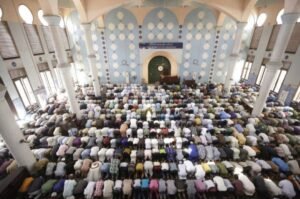
Muslim women had an average of 3.1 children between 2020 and 2025, compared with 2.5 children among Christian women, according to the study.
However, researchers cautioned against interpreting the projected shift as Christianity losing its followers directly to Islam.
Conrad Hackett, a senior demographer at Pew Research Center and co-leader of the project, explained that much of the growth in both religions would occur in countries where they already have established majorities.
He said approximately 74 per cent of projected Muslim population growth would take place in countries that already have Muslim-majority populations.
Similarly, most Christian population growth is expected to occur in countries where Christians already constitute the majority.

One of the most significant findings concerns the changing geographical distribution of Christianity.
Sub-Saharan Africa is projected to experience the largest increase in the number of Christians, with the region expected to account for approximately 54 per cent of the world’s Christian population by 2070, compared with 31 per cent in 2020.
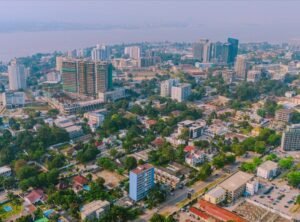
The Democratic Republic of the Congo is also projected to overtake the United States as the country with the largest Christian population.
According to the research, the DRC’s Christian population could rise from approximately 92 million in 2020 to 299 million by 2070, while the US Christian population is projected to decline from 217 million to 174 million over the same period.
The United States is also expected to experience a decline in the proportion of its population identifying as Christian, reflecting wider changes in religious affiliation.
Meanwhile, the study projects a significant decline in the global proportion of people who identify as religiously unaffiliated, particularly because of demographic changes in China, which is expected to experience a substantial population decline.
China’s population is projected to decrease by approximately 421 million over the period examined, contributing to a reduction in the share of the world’s population classified as religiously unaffiliated.
The projections also indicate that while Hindu and Jewish populations may increase in absolute numbers, their shares of the global population are expected to decline slightly. The Buddhist population, meanwhile, is projected to decrease in both numbers and proportion.
Researchers stressed that the findings are demographic projections based on current patterns rather than certainties about the future.
The report highlights how differences in population age, fertility, migration and religious identification could significantly reshape the global distribution of religious communities by 2070, with Africa expected to play an increasingly important role in the future of Christianity.