
Religion
Vatican Unveils Popemobile Exhibition Tracing 100 Years of Papal Travel

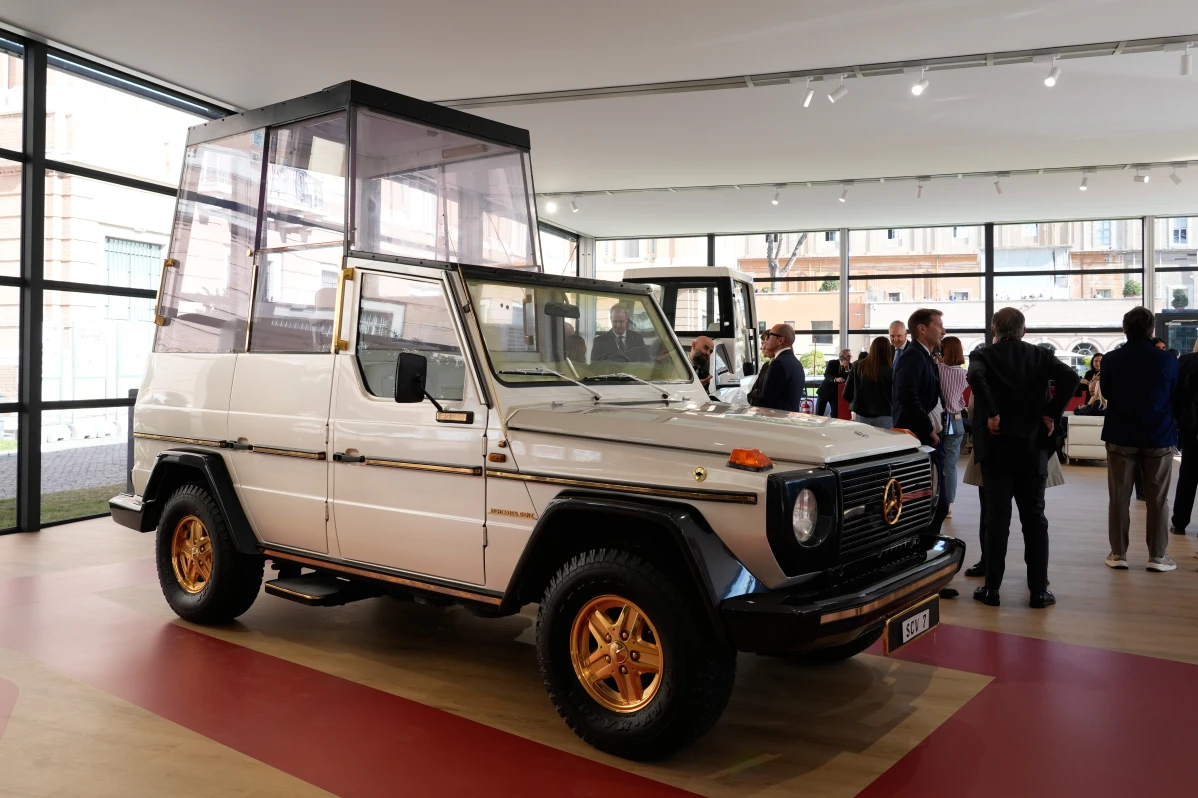
The Vatican Museums have unveiled an exhibition celebrating a century of vehicles used by popes, bringing together eight historic Mercedes-Benz models that trace the evolution of papal transportation from 1930 to the present day.
Titled A Century of the Popemobile, the exhibition was previewed on Wednesday, October 28, 2026, and opened to the public on Thursday. It is housed in a glass pavilion in the Square Garden area of the Vatican Museums and is scheduled to run until January 31, 2027.
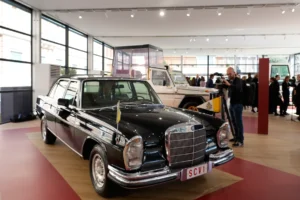
The collection highlights the longstanding relationship between the Vatican and German automaker Mercedes-Benz, which began in 1930 when Pope Pius XI received a Mercedes-Benz Nürburg 460. The luxury limousine, the oldest vehicle in the exhibition, featured a papal seat upholstered in silk brocade, alongside fine wood and metal finishes.
Over the decades, the vehicles evolved to meet the changing needs of papal journeys, particularly the desire to allow the pope to be seen by crowds while maintaining comfort and security.
A 1960 Mercedes-Benz 300 d Landaulet, presented to Pope John XXIII, featured removable rear side windows that enabled him to reach out to people during public appearances. Another milestone came in 1980, when Mercedes-Benz developed a 230 G for Pope John Paul II’s visit to Germany. The vehicle introduced an elevated seating position and a transparent protective dome, improving visibility while providing additional protection.
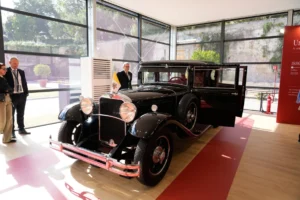
The exhibition also looks at the transition from traditional state limousines to specially adapted off-road vehicles designed for public appearances and papal visits around the world.
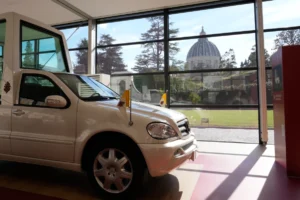
More recently, the Vatican’s fleet has embraced electric technology. Mercedes-Benz presented Pope Francis with a fully electric G-Class Popemobile in 2024, reflecting his emphasis on environmental responsibility.
Pope Leo XIV met with Mercedes-Benz executives during the exhibition’s unveiling and praised the evolution of the vehicles, describing the Popemobile as having grown beyond a means of transport into a way for the pontiff to connect more closely with the faithful.
He also urged the continued use of technological innovation in support of human dignity, care for creation and the common good.
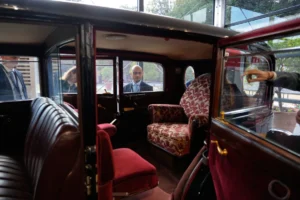
The exhibition places the vehicles within a wider history of the papacy, showing how changes in transportation have influenced public appearances, pastoral visits and the relationship between popes and Catholic communities worldwide.
According to the Vatican Museums, the display also reflects broader developments in automotive design, social customs, communication and the Church’s public role over the past century.