Security
Nigeria Moves to Bring AES States Back into Lake Chad Force as Military Denies Boko Haram Truce

Nigeria’s Defence Headquarters has announced plans to work with countries of the Alliance of Sahel States (AES) to reposition the Multinational Joint Task Force (MNJTF), the regional coalition fighting Boko Haram in the Lake Chad region.
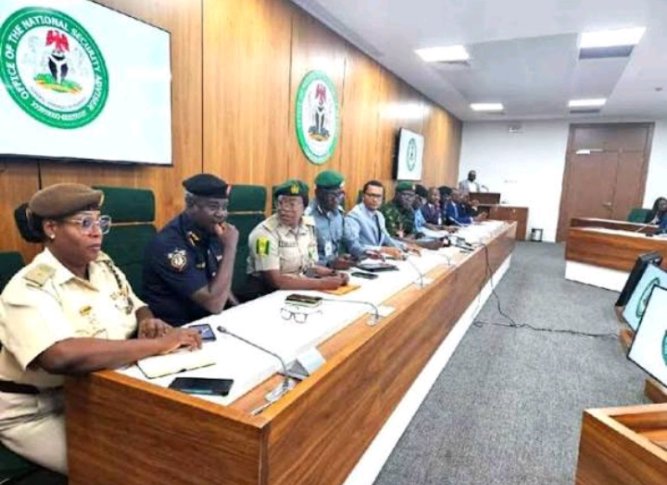
Defence spokesperson Maj.-Gen. Samaila Uba disclosed the plan on Thursday at a joint security briefing in Abuja, saying a high-level forum of serving and former MNJTF commanders, academics and experts had examined the future of the force.
The forum also assessed the implications of the withdrawal of Niger, Mali and Burkina Faso from ECOWAS, including diplomatic alternatives to address the resulting challenges.
“I assure you that we will begin to see the dividends of that high-level engagement very soon,” Uba said.
Niger stopped participating in the MNJTF after joining the AES and formally withdrew from the force in March 2025, leaving a security gap on the northern shore of Lake Chad. The AES, formed in September 2023 by Niger, Mali and Burkina Faso, has since developed its own unified military force.
At the same briefing, Uba firmly denied reports of a secret ceasefire with Boko Haram or the Islamic State West Africa Province. “I want to make it clear that there is nothing like a ceasefire,” he said, adding that troops would continue to sustain pressure on criminal elements.
The denial followed a report by The New Humanitarian alleging that the government had reached a temporary truce since June with a Boko Haram faction led by Ibrahim Bakura Doro, reportedly linked to the release of 360 civilians abducted in Ngoshe, Borno State, and an alleged ₦5 billion payment that the government has denied.
Uba said the military conducted 588 operations in September and October, neutralizing 435 terrorists and bandits, arresting 809 suspects, securing the surrender of 198 insurgents and rescuing 717 kidnapped victims. Troops also recovered 5,666 arms, ammunition, explosives and improvised explosive devices.
He acknowledged that some insurgents were relocating from their former strongholds, describing the movement as evidence of operational pressure but insisting the military was mapping new locations to prevent them from establishing footholds elsewhere.