
Analysis
NIGERIA PARTNERS FINANCE GIANT, BLOOMBERG TO BOOST FOREIGN INVESTMENT


The Federal Government of Nigeria has announced a two-year partnership with Bloomberg, a renowned financial giant, to showcase the country’s economic potential and attract foreign investment. This initiative is being undertaken through the Ministry of Finance Incorporated (MOFI).
According to a press release signed by Director, Information and Public Relations, at the Federal Ministry of Finance, Mohammed Manga, the partnership aims to leverage Bloomberg’s vast media network to highlight Nigeria’s achievements and opportunities. At a meeting with the Honourable Minister of Finance and Coordinating Minister of the Economy, Mr. Wale Edun, Bloomberg’s Global Director, Nicole Keefe, emphasized the company’s commitment to reshaping Nigeria’s narrative and showcasing its economic potential to the global audience.
The partnership will spotlight key government projects, such as the Real Estate Investment Fund and gas pipeline initiatives, to promote Nigeria’s progress in critical sectors. Dr. Armstrong Takang, CEO of MOFI, noted that this initiative will further promote Nigeria’s achievements and opportunities, addressing investor hesitations tied to outdated or negative perceptions.
As stated by HM Edun, “To attract global investment, we must effectively showcase our economic reforms and achievements.” Director, Information and Public Relations, Mohammed Manga, reiterated the importance of strategic communication in achieving these objectives. With this partnership, Nigeria is poised to redefine its global narrative, unlock new investment opportunities, and solidify its position as a key player in the global economy.







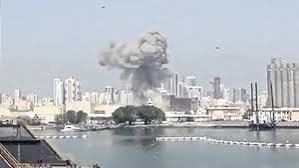
Countries hosting United States military bases in the Gulf region are increasingly facing the consequences of the escalating conflict between Iran and the United States, as missile and drone attacks spill into their territories.
Recent retaliatory strikes by Iran have targeted U.S. installations across the Middle East, including locations in the United Arab Emirates, Qatar, Bahrain, Kuwait and Saudi Arabia. These nations, though not direct participants in the conflict, have found themselves absorbing its impact due to their strategic hosting of American bases.
The crisis intensified following a February 28 offensive reportedly carried out by the United States in partnership with Israel against Iran, amid tensions over Tehran’s nuclear and missile programmes. In response, Iran launched widespread attacks on U.S. military assets and allied locations across the region.
In the UAE, air defence systems have intercepted hundreds of ballistic and cruise missiles, along with over a thousand drones since the conflict began. However, some strikes penetrated defences, hitting key locations in Dubai and causing casualties, infrastructure damage, and flight disruptions.
Similarly, Saudi Arabia has reported repeated drone and missile attacks targeting regions including Riyadh and the Eastern Province, with most threats intercepted.
Qatar also recorded multiple attacks, including a major strike on the Ras Laffan gas facility operated by QatarEnergy, which caused significant damage and triggered emergency response efforts.
Other Gulf states, including Bahrain, Kuwait, and Oman, have also intercepted numerous projectiles aimed at critical infrastructure such as airbases and airports.
Security experts say the attacks highlight the strategic risks associated with hosting foreign military bases. While such bases offer defence cooperation, training, and deterrence, they also make host nations potential targets during conflicts.
Professor Joshua Bolarinwa of the Nigerian Institute of International Affairs noted that powerful nations like the United States maintain overseas bases to project influence and strengthen alliances, with dozens located across the Middle East.
However, analysts warn that the presence of these installations creates a trade-off between enhanced security cooperation and increased exposure to geopolitical conflicts.
As tensions persist, Gulf states continue to maintain a delicate balance benefiting from military partnerships while managing the growing risks of being drawn deeper into a widening regional conflict.
Analysis
Ozoro Festival Scandal Sparks National Debate on ‘Weaponised Traditions’ and Cultural Reform

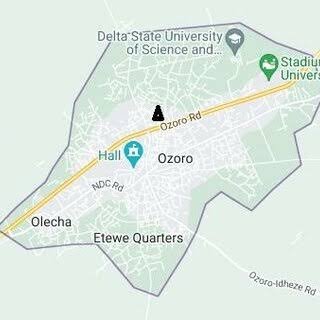
The controversy surrounding the Ozoro Festival in Delta State has ignited a nationwide debate over harmful cultural practices, following viral videos showing acts of sexual violence and widespread outrage across Nigeria.

The scandal has led to the arrest of six suspects by the police, including a community leader, but many Nigerians argue that the response falls short of justice and fails to address deeper cultural issues.
Critics have described the Ozoro Alue-Do Festival as a “weaponised tradition,” accusing it of reinforcing misogyny and enabling abuse under the guise of cultural celebration. Some members of the Isoko community, however, insist the issue is being misrepresented.
A female indigene, who spoke anonymously, condemned what she described as systemic discrimination against women within the culture, alleging that harmful practices are often excused and victims silenced.
“Women are blamed even in cases of abuse, while perpetrators are shielded,” she said, pointing to long-standing traditions that, in her view, enable injustice.
But cultural analyst Anote Ajelouruo cautioned against sweeping generalisations, arguing that the festival’s origins must be understood within historical context.
He noted that fertility rites were common in many ancient societies and said isolated incidents of misconduct should not define an entire cultural heritage.
“Every society had practices shaped by limited knowledge at the time. What matters is ensuring such traditions are not hijacked or abused,” he said.
Lessons from Ibadan
Observers say reform is possible, pointing to the transformation of the Oke’Badan Festival in Ibadan, which has evolved from a chaotic and unsafe event into a structured cultural celebration.
Journalist and historian Temilade Adeyemi recalled that the festival was once notorious for harassment of women, with vulgar displays and public misconduct.
Today, however, it is widely regarded as a symbol of cultural pride, featuring organised performances and safer participation for women.
Path to Reform
Experts say any attempt to reform the Ozoro Festival must be driven by the community, with traditional leaders playing a central role in redefining its purpose.
They also stress the importance of accountability, urging authorities to ensure that those arrested are prosecuted to rebuild public trust.
Increased participation of women in planning and decision-making is seen as critical to reshaping the festival into a safer and more inclusive event.
Analysts further recommend sustained public education and media engagement to highlight positive cultural values while discouraging harmful practices.
Uncertain Future
Despite the outrage, questions remain over whether meaningful reform will take place or if the festival will continue to attract criticism.
For now, attention remains on both community leaders and law enforcement authorities, as Nigerians watch closely to see whether the incident will mark a turning point or another missed opportunity for change.
By AVM Rtd Akugbe Iyamu MNSA fsi
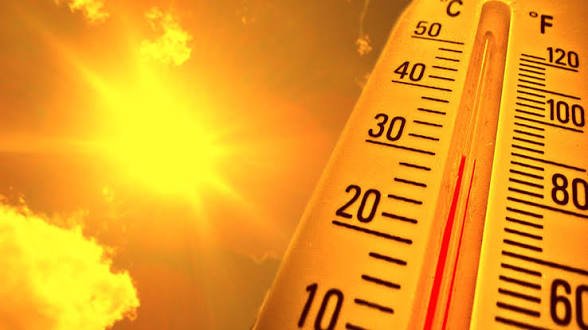
Extreme weather conditions are unexpected, unusual or severe weather events that fall outside normal patterns, often causing significant disruption, damage to infrastructure, and environmental destruction.
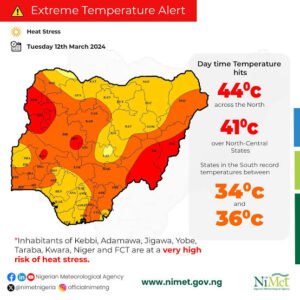
Examples include heatwaves, intense hurricanes, flooding, severe droughts, and tornadoes. These events are becoming more frequent due to climate change.
Nigeria is a country perpetually under elections frenzy: campaigning, off cycle and other electoral activities. These political manifestations always offered little attention to key areas of the environment that threatens economic growth and development, security and poverty, inequality and hunger. As of early 2026, Nigeria hosts over 3.7 million internally displaced persons (IDPs) driven from their homes by conflict, insecurity, and climate disasters. The vast majority of this displacement is concentrated in the North-East and North-West regions, with around 3,900 camps and host communities providing temporary shelter. Currently, Africa is experiencing intensified extreme weather events driven by climate change, primarily manifested as severe droughts, devastating floods, and extreme heatwaves. These events, such as the 2020-2023 Horn of Africa drought and 2024 regional flooding, are becoming more frequent, severely impacting food security, agriculture, and infrastructure.
For instance the death situation in Kenya has risen to 66 and Ethiopia 125 deaths with 11,000 displaced. This is a clear and present danger to Africa and is likely to stretch the existing response measures. At this point NIHSA, NiMet and other agencies need to be called out to show visible signs to the 2026 Seasonal Climate Prediction. At this point, the country need more emphasis in advising all stakeholders to shift from reactive to proactive climate-informed planning to ensure food security and protect infrastructure. Nigeria need to step up preparation against what we see coming as extreme weather in 2026. From the situations in Ethiopia and Kenya, it is obvious that 2026 will be characterized by variable rainfall and cyclone bomb. We have seen prolonged dry spells, and higher-than-average temperatures early in the year that have threatened the health and security of Nigerians. Based on the 2026 Seasonal Climate Prediction (SCP) unveiled by the Nigerian Meteorological Agency (NiMet) on February 10, 2026, the country need to do more. Judging from the heavy snow in the northern hemisphere, nigeria need key preparations that include using AI for better forecasting, tailored agricultural advice, and flood warning systems.
2026 should not be treated like other years. With insecurity, poverty, inequality, high taxation, higher borrowings and higher energy costs, negligence will unravel the economy and underbelly of Nigeria energy security system. Time to act is now because there are too many negatives conflating the country and we have to solve the issues of environmental challenges because when you lack the structure, you attract rupture.
The Federal Government, through the National Orientation Agency (NOA) should be promoting the dissemination of the SCP to local farmers to ensure it directly informs field decisions.
AVM RTD AKUGBE IYAMU MNSA fsi
CONSULTANT ON CLIMATE CHANGE AND ANALYST ON ENVIRONMENTAL POLICIES
PRESIDENT ASSOCIATION OF ENVIRONMENTAL PROTECTION AND CLIMATE CHANGE PRACTITIONERS