Finance
Nigeria’s Public Debt Hits N166.79trn as Atiku Demands Full Account from Tinubu

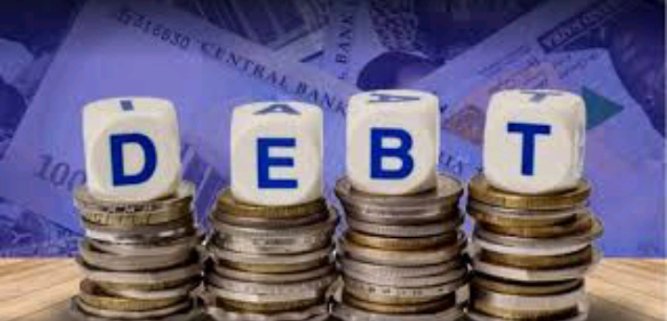
Nigeria’s total public debt stock rose to N166.79 trillion as of June 30, 2026, according to the Debt Management Office (DMO), representing an increase of N7.44 trillion from N159.35 trillion recorded at the end of the first quarter.
The latest figure, published on September 25, 2026, shows domestic debt accounting for N91.59 trillion, or 54.91 per cent of the total portfolio, while external debt made up the balance.
In dollar terms, the country’s total public debt stood at $120.93 billion, comprising $54.52 billion in external debt and $66.41 billion in domestic debt.
The Federal Government of Nigeria accounted for the bulk of the debt, with N152.77 trillion of the total stock, comprising N86.99 trillion in domestic debt and N65.77 trillion in external debt. State governments and the Federal Capital Territory accounted for the remaining N14.01 trillion.
FGN bonds remained the largest category at N64.84 trillion, representing 74.53 per cent of federal domestic debt, followed by Nigerian Treasury Bills at N19.48 trillion.
The latest debt figures show Nigeria’s public debt has grown by 90.9 per cent since President Bola Tinubu assumed office in May 2023, rising from N87.38 trillion to N166.79 trillion over the three-year period.
External debt rose from $42.49 billion in December 2023 to $54.52 billion by June 2026, while domestic debt increased from N59.1 trillion to N91.59 trillion within the same period.
Former Vice President Atiku Abubakar has demanded a full reconciliation of the debt, challenging President Tinubu to explain why borrowing continues despite increased government revenues.
In a statement issued by Phrank Shaibu, Director of Strategic Communications of the African Democratic Congress Presidential Campaign Council, Atiku said Nigeria’s public debt rose from N49.85 trillion in March 2023 to N166.79 trillion by June 2026.
“A government that says more money is coming in must explain why it keeps borrowing and why the people paying for its policies cannot see the promised gains,” Atiku said.
He urged the government to “identify the old debt newly recorded, the foreign debt whose naira value rose with the exchange rate, and every new loan contracted since he assumed office”.
Atiku also questioned the cost of servicing the country’s debt, citing a BudgIT report showing N12.52 trillion spent on debt service against N18.63 trillion in revenue by the third quarter of 2025.
He referenced President Tinubu’s remarks at the Africa Forward Summit in Nairobi in May, where the President said Nigeria expected to spend about $11.6 billion on debt service in 2026, describing the amount as nearly half of projected revenue.
The former Vice President further demanded clarification on $39.25 million listed as “other charges” in the DMO’s second-quarter 2026 external debt-service report, including a $22.5 million charge linked to a First Abu Dhabi Bank Total Return Swap and about $8.97 million against Deutsche Bank AG.
He also called for a reconciliation of the N19.48 trillion Treasury Bills outstanding as of June 30, 2026, saying Nigerians needed to know what was redeemed, rolled over and genuinely borrowed.
The DMO data also showed that external debt service fell to $870.73 million in the second quarter from $954.06 million in the first quarter, a reduction of $83.33 million.
However, interest payments alone accounted for $491.73 million, or 56.5 per cent of the payments made between April and June, exceeding principal repayments of $339.75 million.
Commercial creditors received $325.70 million during the period, with no principal repayment recorded under that category.
Atiku argued that the rising debt burden was limiting resources available for public services and development.
“The true test of economic policy is whether Nigerians can afford food, transportation, housing, education, healthcare and electricity,” he said.
He also demanded an apology from the Tinubu administration over the hardship caused by the removal of the petrol subsidy and other economic reforms introduced in 2023.