
Disaster/Tragedy
Powerful Earthquake Strikes Mexico Near Guatemala, Tsunami Threat Issued

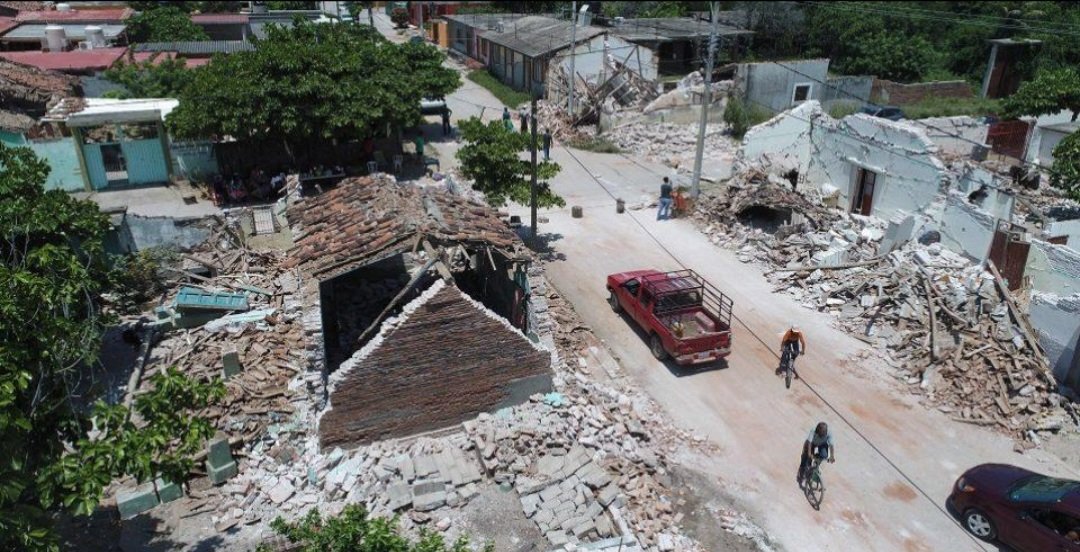
A powerful earthquake struck off the Pacific coast of southern Mexico near the border with Guatemala on Friday, prompting tsunami warnings for parts of the Pacific coastline and sending residents rushing into the streets across southern Mexico and Central America.
The U.S. Geological Survey (USGS) initially measured the earthquake at magnitude 7.4 before revising it to 7.3. The shallow quake struck near Puerto Madero in the Mexican state of Chiapas, at a depth of about 15 kilometers (9 miles), making it widely felt across the region.
The U.S. Tsunami Warning System issued a tsunami threat for coastal areas near the epicenter, warning that hazardous waves could affect parts of Mexico and Guatemala. Authorities closely monitored sea levels and urged residents in vulnerable coastal communities to remain alert and follow evacuation instructions if necessary.
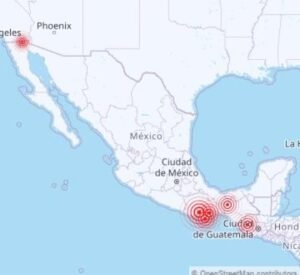
The earthquake was felt across southern Mexico, Guatemala and parts of El Salvador.
In Guatemala City, office workers and residents evacuated buildings as the shaking triggered panic. Videos shared on social media showed people gathering in open spaces while emergency officials inspected buildings for possible structural damage. Reports also indicated a possible landslide in Guatemala’s San Marcos department near the Mexican border.
In Mexico, seismic alarms sounded in several communities in Chiapas, prompting residents to leave homes, offices and businesses as emergency protocols were activated. Authorities urged people to remain cautious because of the possibility of aftershocks.
Despite the strength of the quake, there were no immediate reports of significant casualties or widespread destruction in either Mexico or Guatemala in the hours following the earthquake.
Emergency response agencies in both countries began assessing infrastructure, including roads, bridges, hospitals and public buildings, while local governments continued monitoring the situation for delayed impacts.
Seismologists noted that the earthquake’s offshore location and shallow depth increased the possibility of tsunami waves.
The tsunami warning covered sections of the Pacific coast closest to the epicenter, with authorities warning that dangerous waves and strong ocean currents could threaten beaches, harbors and low-lying coastal communities. Residents were advised to avoid the shoreline until official clearance was given.

Officials in the United States clarified that there was no tsunami threat to the U.S. West Coast, including California, Oregon, Washington, Alaska and western Canada.
Southern Mexico and Guatemala lie along the Middle America Trench, where the Cocos Plate subducts beneath the North American and Caribbean plates. The region experiences frequent earthquakes, some of which have generated destructive tsunamis and caused significant loss of life in the past.
Experts warned that additional aftershocks are likely in the coming hours and days, urging residents to stay away from damaged buildings and remain prepared for further seismic activity.
Emergency authorities in both countries said inspections and damage assessments would continue as more information becomes available, while disaster management agencies remained on high alert in case the tsunami threat or aftershocks create additional hazards.