
Disaster/Tragedy
Panic Across Afghanistan and Pakistan as Powerful Quake Rocks Hindu Kush Region

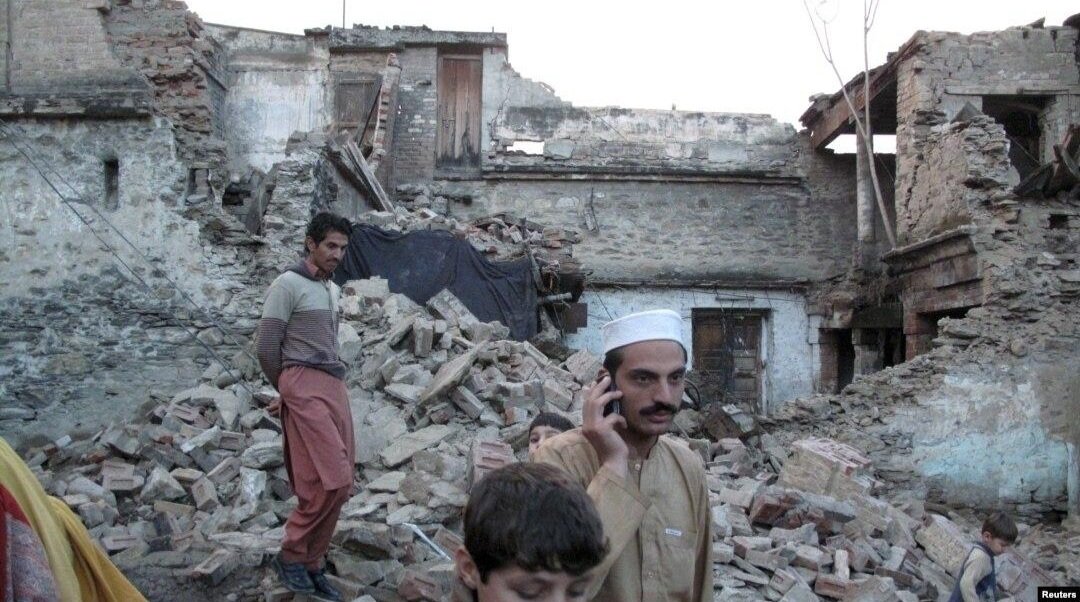
A powerful earthquake struck Afghanistan’s mountainous Hindu Kush region on Saturday, sending strong tremors across large parts of Afghanistan and neighboring Pakistan and triggering panic among residents who rushed from homes and buildings fearing a major disaster. While the earthquake was widely felt across both countries, authorities reported no immediate casualties or significant structural damage as emergency teams began assessments in affected areas.
According to the European-Mediterranean Seismological Centre (EMSC), the earthquake measured approximately magnitude 6.0 and occurred at a depth of about 100 kilometers (62 miles) beneath the Hindu Kush mountain range in northeastern Afghanistan. The U.S. Geological Survey (USGS) issued a slightly higher estimate, placing the earthquake at around magnitude 6.1.
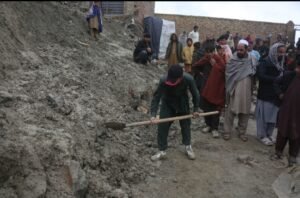
The tremor was felt across a vast area stretching from Afghanistan’s capital, Kabul, into northern and central Pakistan, including Islamabad, Peshawar, Rawalpindi, Lahore, and areas of Pakistan-administered Kashmir. Reports also indicated that the shaking was felt in parts of northern India, including the Delhi-NCR region and Kashmir.
Witnesses described scenes of alarm as the ground shook for several seconds.
In Pakistan’s northwestern Swat district, residents rushed outdoors as homes, offices, and shops trembled. Many feared that buildings could collapse, particularly in older urban areas vulnerable to seismic activity. Women and children were reportedly seen crying as families gathered in open spaces awaiting aftershocks.
“It was very huge here in Swat and it lasted for quite a long time,” one resident told Reuters. “People came out of their houses and women and children were seen crying in panic.”
In Kabul, office workers and residents evacuated buildings as a precaution, while social media users across the region shared videos showing chandeliers swaying, furniture shaking, and people gathering in streets and parks.
Pakistan’s Provincial Disaster Management Authority immediately placed emergency services on alert following the earthquake. Rescue teams, hospitals, and local authorities were instructed to monitor conditions and prepare for possible emergencies.
Officials said no significant damage had been reported in the initial hours after the quake, although assessments were continuing in remote and mountainous areas where communication can be difficult.
Afghanistan’s National Disaster Management Authority also announced that teams were evaluating the situation and collecting information from provincial authorities. Given the country’s rugged terrain and limited infrastructure, it can sometimes take hours or even days to obtain a complete picture of earthquake impacts in isolated communities.
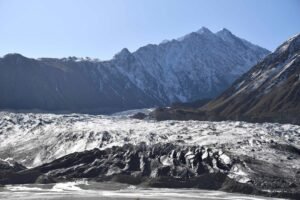
The Hindu Kush mountain range is one of the most seismically active regions in the world.
The area lies near the collision zone between the Indian and Eurasian tectonic plates, a geological process that continually generates earthquakes of varying strengths. Deep-focus earthquakes are particularly common in the Hindu Kush region, where seismic activity can be felt across multiple countries because of the depth at which many tremors occur.
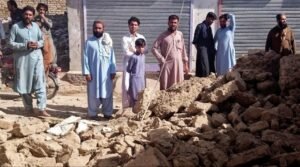
Over the years, Afghanistan and Pakistan have experienced numerous deadly earthquakes. The devastating 2005 Kashmir earthquake killed more than 70,000 people and injured tens of thousands more, while Afghanistan has suffered several destructive quakes in recent years that destroyed villages and displaced thousands of residents.
Experts note that although deeper earthquakes often cause less surface damage than shallow ones, they can be felt over much larger geographical areas, which explains why Saturday’s tremor was experienced across several countries.
The strong earthquake came only hours after another tremor measuring approximately 5.4 magnitude was recorded in Pakistan, according to the EMSC. While the two events were not immediately linked, the back-to-back seismic activity heightened public concern across the region.
Seismologists continue to monitor the region for aftershocks and additional activity.
Despite the widespread panic caused by the earthquake, initial reports suggested that major damage had been avoided.
Authorities in both Afghanistan and Pakistan said inspections of critical infrastructure, including roads, bridges, hospitals, and public buildings, were ongoing. Emergency officials urged residents to remain cautious and follow safety guidelines in case of aftershocks.
As assessments continue, disaster management agencies remain on standby, particularly in rural and mountainous communities where earthquakes can trigger landslides and damage transportation networks.
For now, the region appears to have escaped a major catastrophe, but the earthquake serves as another reminder of the persistent seismic risks facing millions of people living along one of the world’s most active geological fault systems.