
Disaster/Tragedy
Major Earthquake Rocks Southern Japan as Mall Blast Leaves Workers Missing

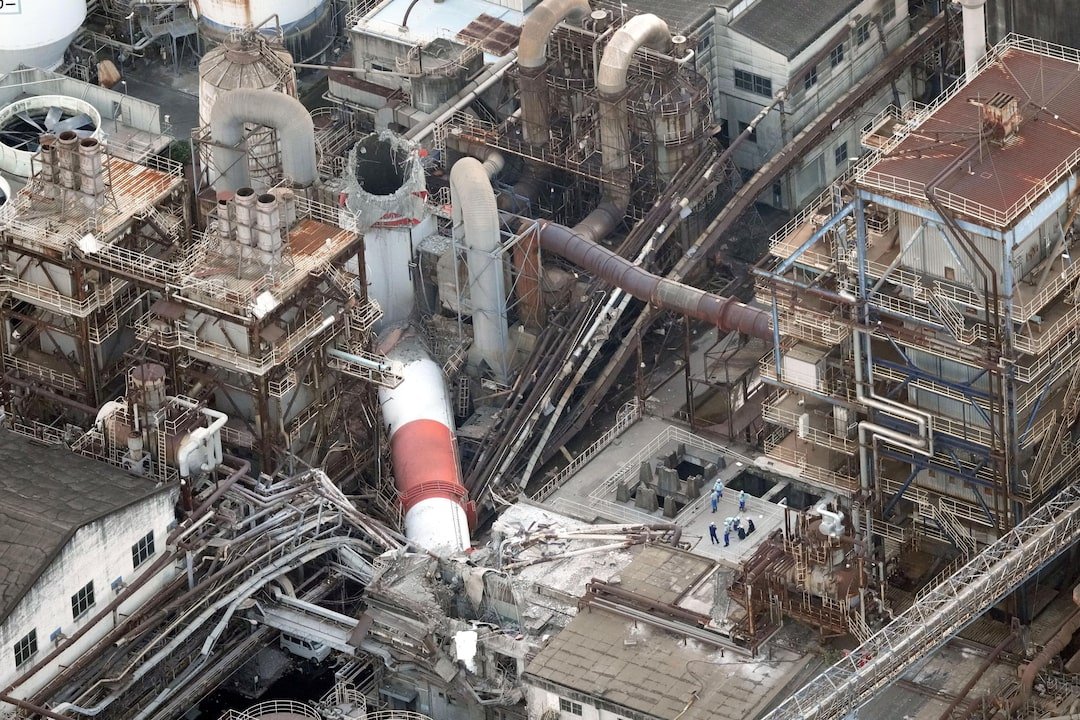
A powerful earthquake struck Japan’s southern island of Kyushu on Tuesday, leaving widespread destruction across Kumamoto Prefecture, disrupting transport and power supplies, and triggering a devastating explosion at a shopping mall where dozens of workers remain unaccounted for. Rescue teams have been working through the day to reach those trapped beneath collapsed structures as aftershocks continue to shake the region.
The Japan Meteorological Agency (JMA) measured the earthquake at magnitude 7.1, while the U.S. Geological Survey (USGS) later revised its estimate to 6.8. The quake struck at a shallow depth of about 10 kilometres near Kumamoto, producing violent shaking across Kyushu. A tsunami advisory was briefly issued for the Ariake and Yatsushiro seas before being lifted after officials confirmed there was no significant tsunami threat.

The most serious incident occurred at Aeon Mall Kumamoto in Kashima Town. Authorities said an apparent gas explosion following the earthquake caused part of the shopping centre to collapse after customers had largely been evacuated. Between 20 and 30 employees remain unaccounted for, and specialist rescue teams have been forced to proceed cautiously because of repeated aftershocks and the risk of further structural collapse.
The tragedy has been especially painful for local residents because the mall had only recently reopened following an extensive redevelopment completed to mark the tenth anniversary of the devastating 2016 Kumamoto earthquakes. The rebuilt complex, featuring more than 200 shops and entertainment facilities, had been promoted as a symbol of the region’s recovery before Tuesday’s disaster struck.
Elsewhere across Kumamoto, emergency services reported collapsed homes, ruptured roads, fires and damage to industrial facilities. At a Nippon Paper Industries factory, a falling chimney trapped several workers, while hospitals across the region treated more than 100 people for injuries ranging from cuts and fractures to critical trauma caused by collapsing buildings and falling debris.
Japanese Prime Minister Sanae Takaichi established an emergency task force shortly after the earthquake and deployed members of the Japan Self-Defense Forces to assist local authorities. Officials urged residents to remain vigilant as hundreds of aftershocks continued to rattle the region, warning that additional landslides and structural collapses remained possible. Around 260,000–300,000 residents were advised to evacuate vulnerable areas as a precaution.
The earthquake also caused major disruptions to infrastructure. Electricity supplies were cut to tens of thousands of homes, Kyushu Shinkansen bullet train services were suspended, sections of expressways were damaged, and Kumamoto Airport temporarily halted operations while engineers inspected the runway. Major manufacturers, including TSMC, Sony, Honda, and Toyota, suspended operations to inspect facilities and ensure employee safety. Officials said no abnormalities were detected at nearby nuclear power plants.
Japan, one of the world’s most earthquake-prone nations, lies along the Pacific “Ring of Fire” and maintains some of the world’s strictest building standards. Nevertheless, Tuesday’s disaster has revived painful memories of the deadly 2016 Kumamoto earthquakes, which claimed more than 270 lives and caused widespread destruction across the same region. As rescue operations continue, authorities say locating the missing workers trapped in the collapsed mall remains their highest priority.