
Disaster/Tragedy
A Decade After Deadly Quake, Reopened Aeon Mall Lies in Ruins Again

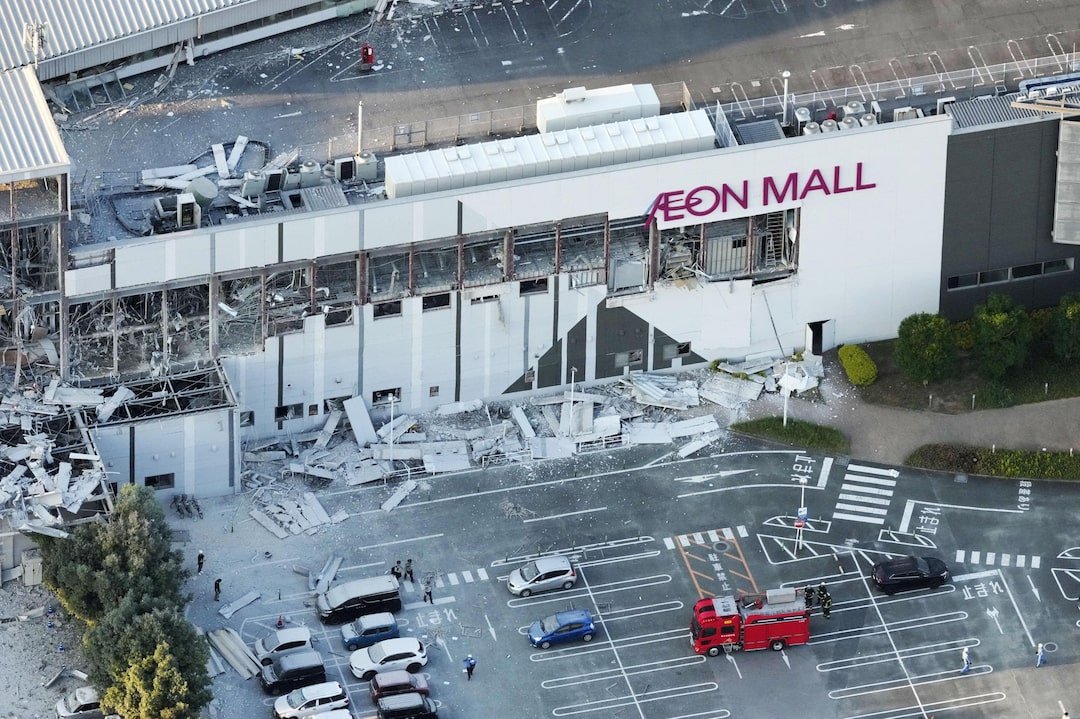
The destruction of Aeon Mall Kumamoto in Japan’s powerful earthquake has become one of the most heartbreaking stories to emerge from the disaster, with the shopping complex reduced to rubble only weeks after reopening as a symbol of recovery from the devastating 2016 Kumamoto earthquake. The tragedy has deeply shaken residents, many of whom viewed the mall as a beacon of hope and economic renewal for the region.
The shopping and entertainment complex officially reopened on 13 June 2026 following an extensive multi-year redevelopment and expansion programme. The project commemorated both the mall’s 21st anniversary and the 10th anniversary of the deadly 2016 earthquake that severely damaged the original structure. During the renovation, engineers strengthened the building with modern seismic reinforcements and improved safety features designed to withstand future earthquakes.
In promotional materials released ahead of the reopening, the mall described the project as a “re-start” for the community, promising a new phase of growth that would bring renewed enjoyment and economic activity to residents across Kumamoto Prefecture. The rebuilt complex featured around 200 shops, restaurants, entertainment facilities, a cinema and parking for approximately 5,000 vehicles, making it one of the region’s largest commercial centres.
The mall had also benefited from a surge in visitors after the opening of TSMC’s semiconductor plant in Kumamoto in 2024. Annual footfall exceeded eight million visitors, helping transform the shopping centre into a key commercial hub for both local residents and workers employed in the region’s expanding technology sector.
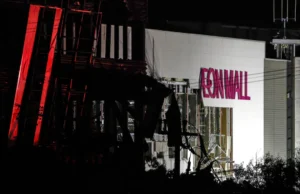
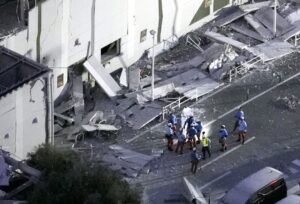
That optimism was shattered when a powerful earthquake struck Kumamoto on Tuesday afternoon. Mall employees quickly evacuated around 200 shoppers and visitors after the initial tremor. However, about an hour later, a massive explosion believed by witnesses to have followed a gas leak ripped through the complex, blowing out walls and causing widespread structural collapse. The blast turned much of the newly rebuilt mall into twisted steel and piles of concrete.
Emergency officials said 20 to 30 employees remained unaccounted for in the immediate aftermath of the explosion, although search-and-rescue operations were repeatedly delayed because of continuing aftershocks and fears that unstable sections of the building could collapse further. Firefighters, police and members of the Japan Self-Defense Forces have been working around the clock to search the debris using heavy equipment, rescue dogs and thermal imaging devices.

The destruction of Aeon Mall has become a powerful symbol of the devastating impact of the latest earthquake. After the 2016 disaster, the mall had played an important role in helping the local community recover, even selling discounted food to survivors during the emergency. Its recent reopening was widely celebrated as proof that Kumamoto had rebuilt stronger than before, making its latest destruction all the more painful for residents.
As rescue efforts continue and the death toll from the earthquake rises, authorities remain focused on locating missing people and securing damaged buildings. For many in Kumamoto, however, the loss of Aeon Mall represents more than the destruction of a shopping centre, it is the loss of a landmark that embodied resilience, recovery and hope after one of Japan’s worst natural disasters.