
Disaster/Tragedy
Nepal Flood Disaster: Families Hold Symbolic Funerals as Missing Tourists Begin to Reappear

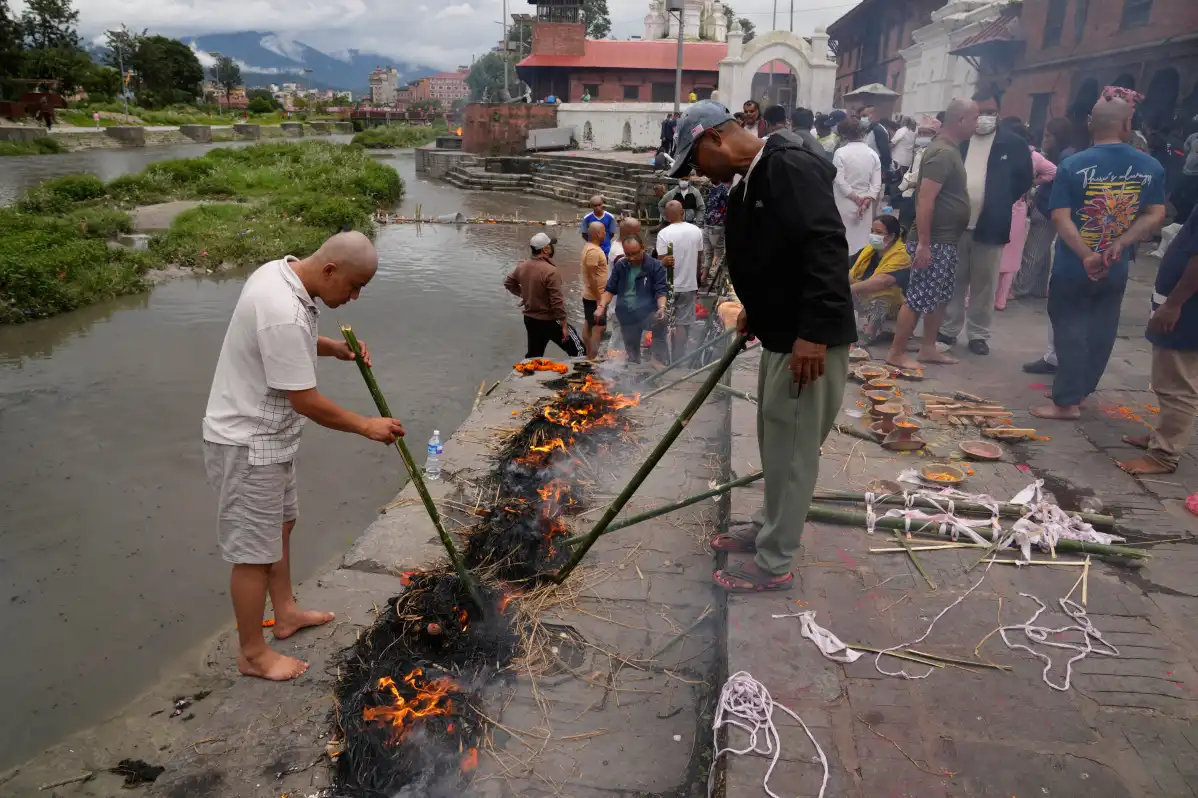
Families in Nepal are beginning to perform symbolic funerals for loved ones who remain missing after catastrophic floods and landslides swept through parts of the Himalayan nation, even as authorities receive encouraging reports that some tourists previously feared missing are still alive.
The disaster, triggered by a massive glacial collapse on August 26, has left Nepal facing one of its worst humanitarian crises in years. According to Nepal’s disaster management authorities, more than 1,200 people have been confirmed dead and over 4,200 remain missing.
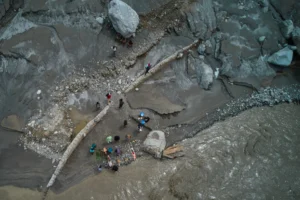
The floods unleashed huge volumes of water, mud, rocks and debris across communities near Nepal’s border with Tibet, destroying homes, roads, bridges and other critical infrastructure.
In hard-hit communities, some families have been forced to confront the painful possibility that their missing relatives may never be found.
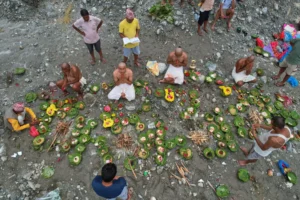
Relatives have therefore begun performing symbolic Hindu funeral rites, including the burning of effigies made from kusha grass. The ceremonies are intended to provide spiritual closure and, according to Hindu tradition, help release the souls of those presumed dead even when their bodies cannot be recovered.
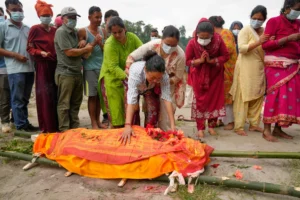
For families, however, the rituals do not necessarily mean they have abandoned hope.
Many continue visiting hospitals, identification centres and lists of missing people, searching for photographs or any information that could establish what happened to their loved ones.
Reuters reported that a “wall of the missing” at Kathmandu’s Tribhuvan University Teaching Hospital has become a focal point for relatives searching through photographs and information about people who remain unaccounted for.
Amid the grief, there have also been rare moments of relief.
Nepal’s Foreign Ministry said 324 foreign nationals had been rescued, while about 590 people from 39 countries were still listed as missing in the latest figures reported by the Associated Press.
In Australia, Prime Minister Anthony Albanese said the number of Australians officially missing fell from 43 to 38 after five people were confirmed safe.
Nepal Tourism Board spokesperson Sunil Sharma also said at least five other tourists who had previously been reported missing had contacted authorities by telephone or email.
The developments have provided a small measure of hope for families around the world still waiting for news.
Rescue teams continue to work through vast quantities of mud and debris in some of the country’s hardest-hit areas.
One of the most difficult operations is taking place around hydropower facilities. At the Rasuwagadhi hydropower plant, officials believe 46 workers could still be alive inside a tunnel-like chamber, where they may have access to food and water. Rescue teams are attempting to reach them through debris-filled areas.
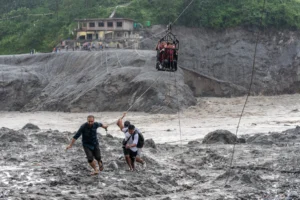
Across Nepal, thousands of soldiers and rescue workers have been deployed, supported by helicopters, heavy machinery, drones and international assistance.
The disaster has also overwhelmed facilities dealing with recovered bodies. Authorities have resorted to temporary and mass burials of unidentified victims while preserving DNA samples and other records in the hope that remains can eventually be identified and returned to families.
The flooding also devastated parts of Tibet, where Chinese authorities have reported deaths and hundreds of missing people.
The destruction has severely affected border infrastructure and pilgrimage routes used by international tourists and religious pilgrims travelling toward Mount Kailash.
The scale of the disaster has also renewed concerns about the vulnerability of Himalayan communities to increasingly unstable glaciers and extreme weather.
For now, Nepal’s families remain caught between hope and mourning, some receiving the life-changing news that missing relatives are safe, while others perform funeral rites without a body to bury.
As rescue teams continue searching, families are still waiting for the phone call, photograph or name that could finally end the uncertainty.