
Disaster/Tragedy
Two Helicopter Pilots Killed in Crash While Battling Massive Utah Wildfire

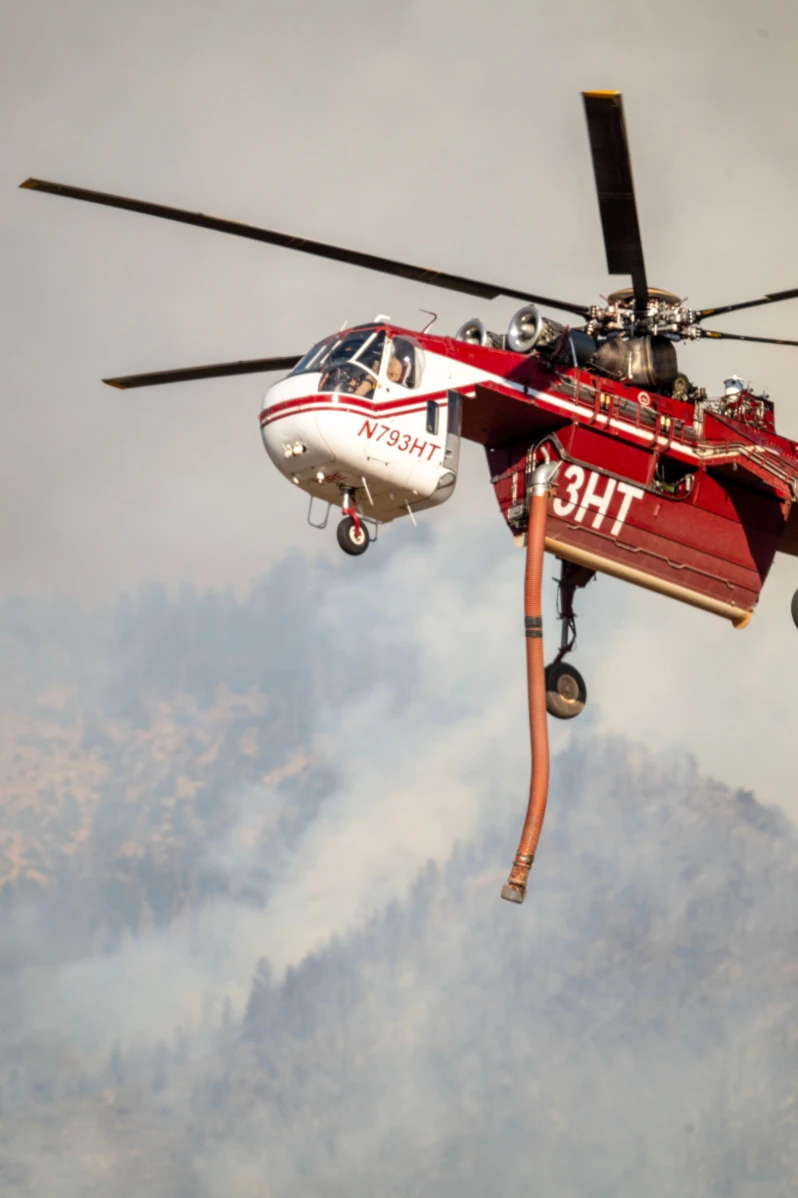
Two helicopter pilots have died after their firefighting helicopter crashed while battling a rapidly spreading wildfire in central Utah, authorities said, adding another tragic chapter to a deadly U.S. wildfire season.
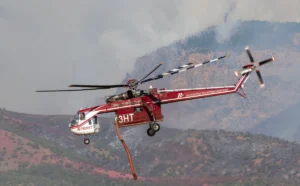
The Sikorsky S-64 Skycrane went down Friday morning while operating over the Widemouth 2 Fire in the Fishlake National Forest, near Richfield in central Utah. Officials confirmed the deaths on Saturday after firefighters and emergency crews were finally able to reach the crash site.
The pilots were employed by Helicopter Transport Services, which was working under contract with the U.S. Forest Service to support the wildfire response. Their identities had not immediately been released.
The crash occurred in extremely difficult terrain inside the wildfire’s perimeter.
The aircraft went down in an area already threatened by flames, and the crash itself ignited another fire. The resulting conditions made it too dangerous for ground crews to immediately reach the helicopter.
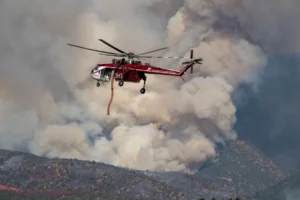
The U.S. Forest Service said rescue teams initially had to hold back because there was no safe route to the crash site.
Officials eventually determined that conditions had improved sufficiently for crews to enter the area Saturday, where they confirmed that both occupants had died.
The difficult access also meant that authorities could not immediately provide definitive information about the condition of those aboard the aircraft after the crash.
Officials urged the public not to speculate about what caused the accident while investigators worked to establish what happened.
The helicopter crash happened as firefighters continued battling the enormous Widemouth 2 wildfire.
The blaze, which began after a suspected lightning strike on July 27, has rapidly expanded across central Utah. By Saturday, it had burned more than 114,600 acres; roughly 174 square miles or 464 square kilometres, and was about 24% contained.
Just a day earlier, the fire was reported to have burned more than 105,000 acres and was only 19% contained.
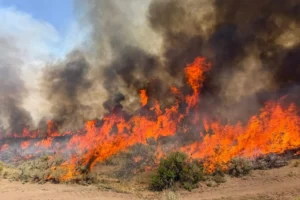
The rapid growth illustrates the challenging conditions firefighters are facing across the region.
Earlier in the fire’s development, strong winds contributed to rapid spread, while officials reported extreme fire behaviour in the area. Evacuation warnings and orders were issued for communities south of Kanosh as the flames advanced.
Authorities said the helicopter crash triggered an additional fire within the already burning area.
That created an especially dangerous situation for emergency responders because the accident scene was surrounded by active wildfire.
The Forest Service said ground crews attempted to respond immediately, but the developing fire made access unsafe. Incident commanders ultimately decided that rescuers should not be placed in additional danger until a safe zone could be established.
The situation demonstrates the extraordinary hazards faced by pilots who operate aircraft directly above or near active wildfires.
The National Transportation Safety Board (NTSB) is investigating the accident alongside the Federal Aviation Administration.
Investigators were expected to travel to the Richfield area before accessing the crash site once conditions permitted.
The investigation will examine the helicopter, flight operations, weather, terrain, maintenance records and other factors that could help determine why the aircraft went down.
Officials cautioned that determining the cause could take considerable time. The Guardian reported that the NTSB investigation could take a year or longer before a final determination is made.
No cause for the crash had been established as of Sunday.
The tragedy comes during an exceptionally difficult wildfire season across the western United States.
Utah has experienced numerous large fires this summer, while neighbouring western states have also struggled with rapidly spreading blazes.
Before the Utah helicopter crash, firefighters had already suffered fatalities during the 2026 wildfire season. Three firefighters were killed in June while battling a blaze along the Colorado-Utah border, while another later died from injuries sustained during the emergency response.
Utah Gov. Spencer Cox described wildland firefighting as one of the world’s most dangerous occupations and said the crash was a painful reminder of the risks accepted by firefighters and aviation crews working to protect communities.
Despite the tragedy, firefighting operations continued.
Crews temporarily paused operations to regroup following the crash before returning to efforts to contain the Widemouth 2 Fire.
The blaze remains a major threat because of its size, difficult terrain and rapidly changing conditions.
The fire began in the Fishlake National Forest south of Kanosh and expanded dramatically within days. Earlier reports indicated that hundreds of firefighters and numerous aircraft had been assigned to the incident.
The deaths have cast a shadow over an already dangerous firefighting operation.
The two pilots were performing a specialised job that requires aircraft to operate close to intense flames, smoke columns and mountainous terrain.
Their deaths also underscore a less visible danger of the wildfire crisis: the risks faced by the pilots, firefighters, emergency workers and other personnel deployed to stop fires before they reach populated areas.
As investigators begin examining the wreckage, authorities have yet to determine what caused the helicopter to crash.
For now, the focus remains on the families and colleagues of the two pilots, as well as the hundreds of firefighters continuing to battle a wildfire that has already consumed more than 114,000 acres.