
Disaster/Tragedy
Over 30 Feared Killed as Gunmen Attack Kaduna Community

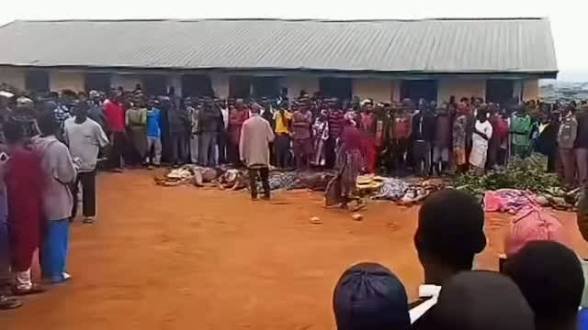
More than 30 people are feared dead following a fresh attack on Chawai community in Kauru Local Government Area of Kaduna State, in what residents described as one of the deadliest assaults on the area in recent months.

According to residents, dozens of heavily armed assailants stormed the community on Sunday night, shooting indiscriminately and attacking homes for several hours before fleeing. Local sources said at least 28 bodies were recovered and deposited in a mortuary, while two other victims were buried shortly after the attack. Seven injured survivors are reportedly receiving treatment at various hospitals.
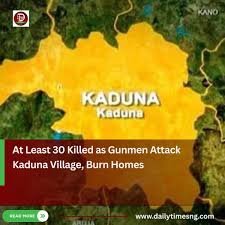
A resident, Mark Vincent, told BBC Hausa that the attackers moved from house to house targeting residents. He rejected suggestions that the violence resulted from a farmers-herders clash, insisting the victims were attacked inside their homes by about 50 armed men who operated for nearly three hours.

As of the time of filing this report, the casualty figures had not been independently verified, while the Kaduna State Police Command had yet to issue an official statement on the incident.
The latest attack has forced many residents of Chawai and neighbouring communities to flee for safety amid fears of further violence.
The killings have drawn widespread condemnation. Former Vice President Atiku Abubakar described the attack as heartbreaking and called on security agencies to urgently strengthen efforts to protect lives and property, stressing that insecurity remains one of Nigeria’s greatest challenges.
Similarly, the Southern Kaduna People’s Union (SOKAPU) urged the Kaduna State Police Command to reinforce security operations across Kauru and other vulnerable local government areas.
The group called for intelligence-driven operations, the deployment of additional security personnel and the dismantling of criminal hideouts to prevent further attacks and displacement of residents.
The attack adds to the recurring wave of violence that has continued to plague communities in Southern Kaduna, raising fresh concerns over the safety of residents and the effectiveness of ongoing security operations.