General News
Shettima Pushes Expansion of PPP Pipeline, Targets Power Metering Gap at Privatisation Council Meeting

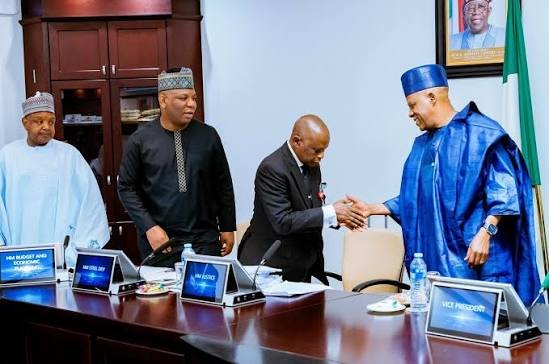
Vice President Kashim Shettima has called for an aggressive expansion of public-private partnerships (PPPs) as Nigeria intensifies efforts to unlock the value of national assets and attract global investment.
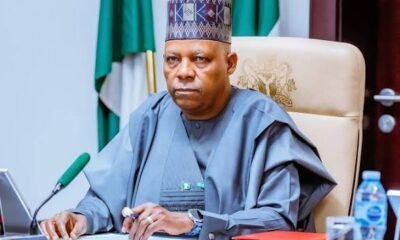
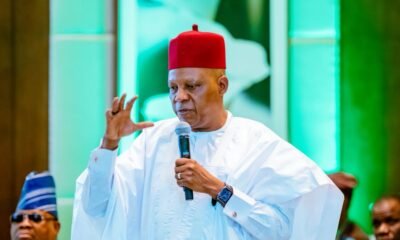
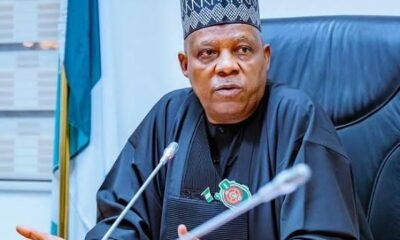
Speaking at the first 2026 meeting of the National Council on Privatisation (NCP) held at the Presidential Villa in Abuja, Shettima stressed that achieving Nigeria’s ambition of becoming a trillion-dollar economy would depend on a strategic balance between public enterprise and private sector participation.
In a statement issued by his Senior Special Assistant on Media and Communications, Stanley Nkwocha, the Vice President said the government is focused on ensuring that incoming investments align with national development priorities.
“The task before us is not only to ensure that Nigeria emerges as a safe destination for private investment, but to align that investment with the governing purpose of this administration,” Shettima said.
He emphasised that economic prosperity must be deliberately built through strong institutions, noting that credibility, policy consistency, and clarity remain key drivers of investor confidence.
The Vice President highlighted progress recorded across key sectors including mining, agriculture, and energy, citing the sale of Eko Electricity Distribution Company (Eko DISCO) as evidence of renewed investor interest in Nigeria’s power sector.
Shettima also charged the Council to fast-track the development of a pipeline of bankable projects and deepen PPP transactions to support economic growth targets. He underscored the importance of post-privatisation monitoring, warning that weak oversight could undermine expected outcomes from asset sales.
He further cautioned against policy inconsistencies within government institutions, noting that overlapping mandates and unclear responsibilities could erode investor confidence.
“Policy confusion is expensive. If we are to speak convincingly to investors, government must speak with one voice,” he said.
Meanwhile, Director-General of the Bureau of Public Enterprises (BPE), Ayodeji Ariyo Gbeleyi, briefed the Council on ongoing reforms in the power sector, particularly efforts to close Nigeria’s metering gap.
He revealed that under a $500 million World Bank-supported distribution sector recovery programme, about 3.22 million prepaid meters are being procured to address an estimated 5.6 million metering shortfall nationwide.
According to him, contracts have already been signed for 1.437 million meters, with nearly 400,000 installed across the country’s 11 electricity distribution companies (DISCOs).
Gbeleyi said the initiative is aimed at improving power supply stability and ending the long-standing issue of estimated billing for electricity consumers.
He also noted that the BPE has strengthened its institutional credibility by clearing a backlog of audited financial statements and ensuring timely reporting in line with the Public Enterprises Act, describing the move as part of broader efforts to align with global best practices.
The Council reiterated its commitment to leveraging revitalised national assets and scaling up privatisation and PPP frameworks to support Nigeria’s economic transformation agenda.