
Crime
Texas Man Who Killed Three Children Over ‘Demonic Possession’ Set to Be Executed

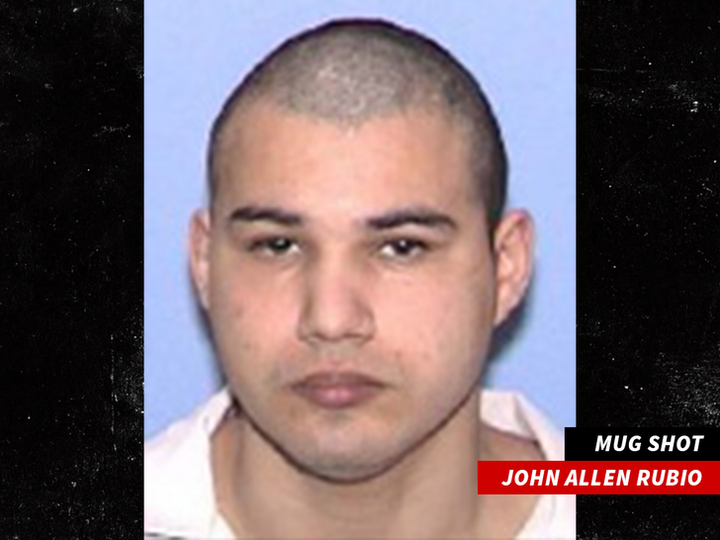
A Texas man convicted of killing his three young children after claiming they were possessed by demons is scheduled to be executed by lethal injection on Thursday, November 12, 2026, more than 23 years after the killings.
John Allen Rubio, 46, is due to face execution at the Huntsville Unit of the Texas Department of Criminal Justice for the 2003 murders of his children in Brownsville, southern Texas.

The victims were identified as three-year-old Julissa Quesada, 14-month-old John Esteban Rubio and two-month-old Mary Jane Rubio.
Prosecutors said Rubio and his common-law wife, Angela Camacho, killed the children in their family apartment on March 11, 2003. The children’s bodies were later discovered by Rubio’s brother, who alerted the police.
During the investigation, Rubio reportedly told authorities that he believed the children were possessed by evil spirits. His defence team later argued that he suffered from paranoid schizophrenia and had developed delusions that led him to believe his children were under demonic influence.
However, prosecutors maintained that the killings were deliberate and that Rubio understood his actions.

Camacho, who was also convicted for her involvement in the murders, pleaded guilty in 2005 and received three consecutive life sentences. She remains in prison.
Rubio was initially convicted and sentenced to death in 2003. However, the Texas Court of Criminal Appeals overturned the conviction in 2007 after finding that statements made by Camacho had been improperly admitted as evidence.
He was retried in 2010, convicted again of capital murder and sentenced to death. The conviction and sentence were subsequently upheld through the appeals process.
In the months leading up to the scheduled execution, Rubio’s lawyers challenged his mental competence, arguing that his longstanding delusions prevented him from rationally understanding the reason for his execution.

A state judge ruled in October 2026 that Rubio was competent to be executed after reviewing psychiatric evaluations. His legal team subsequently sought to halt the execution, but the Texas Court of Criminal Appeals rejected the latest challenge on November 6.
The Texas Board of Pardons and Paroles also reportedly rejected his request for clemency, clearing another major obstacle to the scheduled execution.
Earlier this year, Rubio spoke publicly about the murders in an interview with KRGV, expressing regret and saying he continued to miss his children.
The case has renewed attention on the intersection of severe mental illness, criminal responsibility and capital punishment in the United States, particularly the legal question of whether a person with serious psychiatric disorders can be executed.
If carried out, Rubio’s execution will bring an end to a lengthy legal battle that has lasted more than two decades.