
Weather
Thunderstorms Expected to Clear Wildfire Smoke From Northeast Ahead of World Cup Final

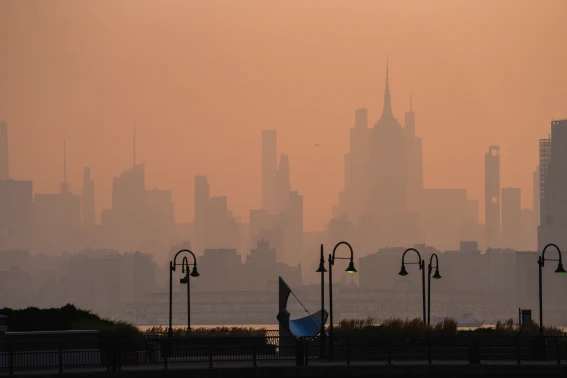
A wave of thunderstorms moving across the northeastern United States is expected to bring significant relief from wildfire smoke that has blanketed major cities in recent days, improving air quality ahead of the highly anticipated 2026 FIFA World Cup final, according to meteorologists.


The forecast comes after millions of residents across the Northeast, Midwest and Mid-Atlantic regions endured days of hazy skies and unhealthy air conditions caused by smoke from large wildfires burning in Canada and parts of the northern United States. Air quality alerts were issued across several states, including New York, New Jersey, Pennsylvania and Connecticut, prompting health officials to advise vulnerable people to limit outdoor activities.
Weather experts say an approaching cold front accompanied by thunderstorms is expected to help disperse the smoke plume that has lingered over the region. The storms are forecast to bring stronger winds, rainfall and changes in atmospheric circulation that will push much of the smoke away from densely populated areas, particularly around the New York metropolitan region where the World Cup final is scheduled to take place.
The improvement is especially significant for organizers of the World Cup final at MetLife Stadium, where tens of thousands of supporters from around the world are expected to gather. Earlier concerns had emerged that hazardous air quality could affect players, spectators and tournament operations if smoke concentrations remained elevated through the weekend. However, forecasters now believe conditions should improve substantially before kickoff.
According to meteorologists, air quality readings that reached unhealthy levels in some areas are expected to fall into the moderate or good range once the storms pass through. While some residual haze may remain, experts do not anticipate widespread smoke-related disruptions for the championship match. Weather models indicate that the greatest improvement will occur across New York City, northern New Jersey and surrounding communities.
The smoke originated primarily from intense wildfires burning in Ontario and other parts of Canada, where dry conditions and high temperatures have fueled dozens of active blazes. Prevailing winds carried smoke hundreds of miles southward into the United States, reducing visibility and triggering public health warnings across a broad region.
Health officials have continued urging residents to monitor local air quality updates until conditions fully improve. Children, older adults, pregnant women and people with respiratory or cardiovascular illnesses remain particularly vulnerable to smoke exposure. Authorities recommend limiting strenuous outdoor activity whenever air quality levels reach unhealthy categories.
Beyond the World Cup, the expected weather change is welcome news for communities across the Northeast that have seen outdoor events, recreational activities and travel plans disrupted by smoke-filled skies. Several sporting events and public gatherings faced delays or cancellations during the week as air quality deteriorated.
Climate and wildfire experts note that smoke events affecting large portions of North America have become increasingly common in recent years. Scientists attribute the trend partly to more intense wildfire seasons driven by hotter temperatures and prolonged drought conditions. The latest episode serves as another reminder of how wildfires can affect communities far beyond the areas where the fires are burning.
With thunderstorms expected to sweep through the region and clearer air forecast by Sunday, organizers, players and fans are hopeful that the World Cup final will proceed under far better conditions than those experienced during the smoke-filled days leading up to the tournament’s climax.