
Weather
Dangerous Heat Wave Scorches U.S. Midwest as Forecasters Warn East Coast Is Next


Millions of Americans across the Midwest and Great Lakes are enduring a dangerous heat wave, with meteorologists warning that the oppressive conditions will spread to the East Coast just ahead of the Fourth of July holiday, putting tens of millions more at risk of heat-related illnesses.
The U.S. National Weather Service (NWS) has described the conditions as “dangerous,” with a combination of soaring temperatures and high humidity pushing the heat index, the temperature the human body actually feels to well above 100°F (37.8°C) in many areas. Officials warned that prolonged outdoor exposure could lead to heat exhaustion or life-threatening heat stroke, particularly among older adults, children, outdoor workers, and people without access to air conditioning.

The Midwest has been among the hardest-hit regions. Cities across Michigan, Illinois, Indiana, Ohio, Kentucky, and Iowa remain under extreme heat warnings, while Detroit is expected to see temperatures hovering near 100°F (38°C) through midweek. In response, local authorities have opened recreation centers and public buildings as cooling shelters to help residents escape the dangerous conditions.

The heat has already begun disrupting everyday life. In parts of Illinois, roads have buckled as pavement expanded under the intense temperatures, creating hazardous driving conditions. In Milwaukee, firefighters battling a large school fire were forced to rotate crews frequently because of the extreme heat, while community organizations have stepped up efforts to distribute fans and air conditioners to vulnerable residents.

Weather forecasters say the heat dome responsible for the scorching conditions will continue moving eastward over the coming days, bringing extreme temperatures to major metropolitan areas including New York City, Boston, Philadelphia, and Washington, D.C. The hottest conditions are expected to coincide with Independence Day celebrations, prompting concerns over outdoor gatherings and holiday events.
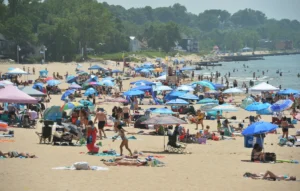
Authorities in Philadelphia have already declared a heat emergency and opened dozens of cooling centers across the city. Nearby Norristown, Pennsylvania, has canceled its Independence Day parade because of the forecast, while emergency management officials across the Northeast are urging residents to stay hydrated, limit strenuous outdoor activities, and regularly check on elderly neighbors and family members.

The heat wave is also placing enormous pressure on the nation’s electricity infrastructure. The U.S. Department of Energy has issued an emergency order for PJM Interconnection, the country’s largest regional power grid operator, to help maintain reliable electricity supplies as air-conditioning demand surges. Grid operators expect electricity consumption to approach record levels over the next several days, raising concerns about potential power shortages if demand exceeds available generation.

Meteorologists stress that one of the greatest dangers is the lack of overnight cooling. Temperatures are expected to remain unusually high after sunset, preventing homes and buildings from cooling naturally and increasing health risks for people without adequate ventilation or air conditioning. Experts advise drinking plenty of water, avoiding alcohol and excessive caffeine, wearing lightweight clothing, and seeking air-conditioned spaces whenever possible.
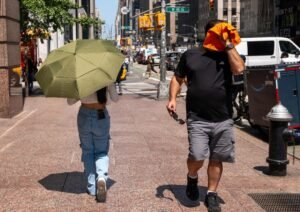
With more than 120 million Americans expected to experience extreme heat over the coming days, emergency officials continue to urge the public to take warnings seriously as the prolonged heat wave advances from the Midwest toward the eastern United States, where record-breaking temperatures are possible during one of the busiest holiday weekends of the year.