
Weather
UK, France Brace for Fifth Heatwave as Western Europe Sets New Temperature Record

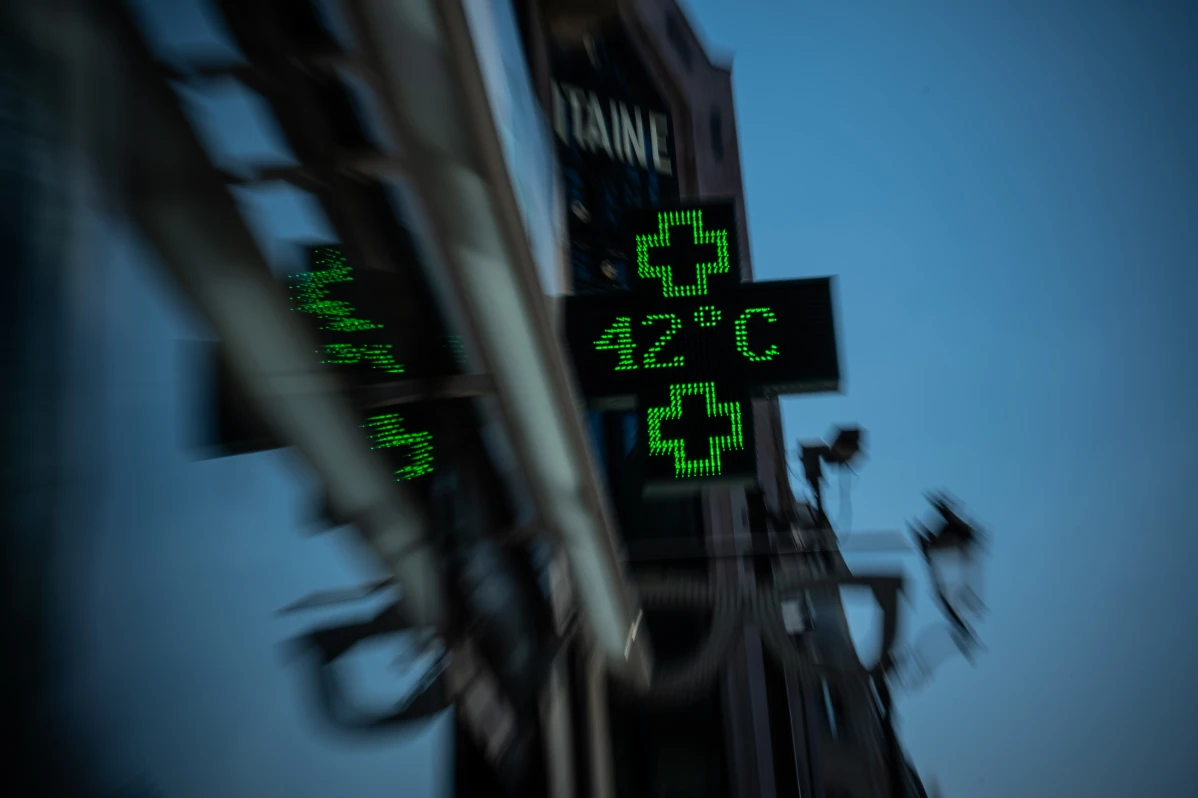
The United Kingdom and France are preparing for another spell of extreme heat as a relentless summer heatwave continues to grip large parts of Europe, with the region recording its warmest June-July period on record.
The latest heatwave will be the fifth of the season for Britain and France, according to weather authorities. Southeastern France is expected to experience temperatures approaching 40°C, while parts of the UK could reach 36°C later this week.
The extreme weather has already contributed to wildfires, worsening drought, falling river levels and a series of national temperature records across Europe.
The European Union’s Copernicus climate service said the average temperature across Western Europe for June and July reached 21.62°C, surpassing the previous record set in 2022.
Scientists say persistent high-pressure systems have trapped heat over the region, while dry soils have reduced the natural cooling effect of evaporation, allowing temperatures to rise even further.
Samantha Burgess, strategic lead for climate at the European Centre for Medium-Range Weather Forecasts, said the combination of heat and drought was increasingly reinforcing the other.
France is among the countries hardest hit by the prolonged heat.
Météo-France is forecasting temperatures close to 40°C in southeastern parts of the country from Tuesday, following a summer in which France has repeatedly experienced exceptional heat.
June 23 was recorded as the country’s hottest day ever, with temperatures reaching 44.3°C in southwestern France. France also recorded its first-ever heatwave alerts in May, while more than half of the country experienced new monthly temperature records at the time.
The heat has also had serious health consequences. France’s public health agency reported at least 5,700 more deaths than usual during June, while authorities continue to warn vulnerable residents to take precautions during periods of extreme temperatures.
In the UK, an amber heat-health alert covering most of England is due to come into force Tuesday.
Temperatures are forecast to reach approximately 36°C later in the week, particularly in southern and southeastern England.
The country is also facing an increasingly serious drought.
Half of England and all of Wales are currently experiencing drought conditions, while provisional figures indicate that England and Wales experienced their driest July since records began in 1836.

Nineteen English counties reportedly recorded no rainfall at all during July.
More than 2,800 excess deaths have been linked to extreme heat during the record-breaking heatwaves in May and June, according to figures cited by the Associated Press.
The prolonged heat has intensified wildfire risks across Europe.
In southwestern France, a major wildfire earlier in the summer forced about 220,000 people to evacuate, in one of Europe’s largest wildfire-related evacuations since World War II.
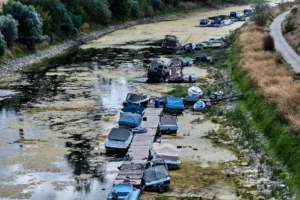
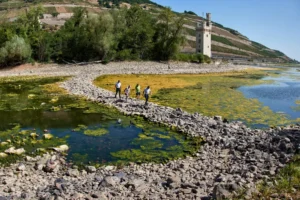
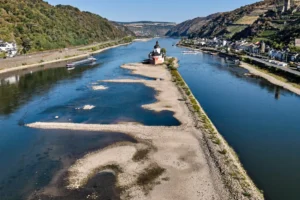
Elsewhere, low water levels are disrupting transport and energy systems.
The Danube and Rhine rivers have fallen significantly, affecting cargo transportation. In Germany, some companies have reportedly been forced to move goods by road because river conditions have become unsuitable for normal shipping.
Central Europe has also recorded extraordinary temperatures. Slovakia reached 42.2°C, while Austria recorded an all-time national high of 41.2°C during the latest heatwave.
Scientists say climate change is making extreme heat events more frequent and severe.
The current European heatwave is occurring alongside a developing El Niño climate pattern, which can influence global temperatures. Copernicus also reported that July recorded the highest average sea-surface temperature ever measured for that month across the world’s extra-polar oceans.
Europe is particularly vulnerable because it is warming faster than any other continent, according to climate scientists cited by Al Jazeera.
The combination of unusually high temperatures, prolonged drought and dry vegetation is creating conditions that increase the likelihood of wildfires and put additional pressure on water supplies, agriculture, transport and health services.
With temperatures expected to rise again across Britain and France, authorities are urging residents to stay hydrated, avoid prolonged exposure to the hottest parts of the day and check on elderly and vulnerable people.
The latest heatwave is also expected to keep pressure on Europe’s already strained water resources and wildfire response systems.
For a continent that has experienced repeated heatwaves since May, the latest forecast offers little immediate relief.