
Government
Tinubu Reforms Rebuilding Economic Pillars for States, Says Shettima

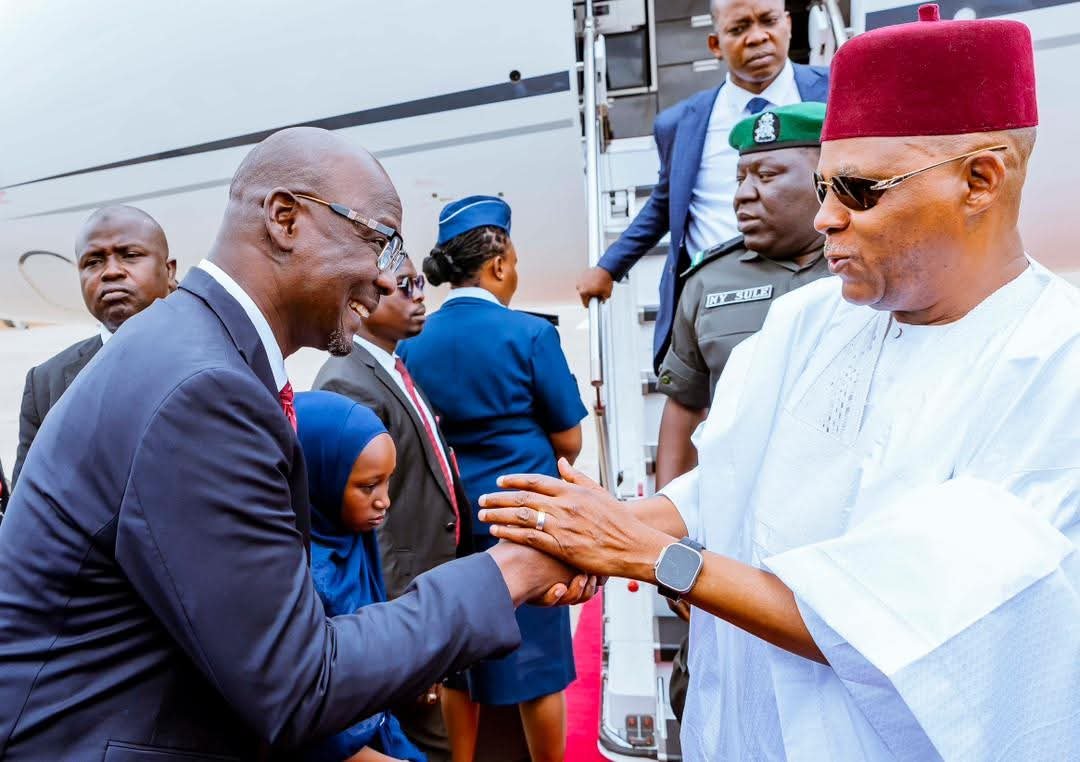
Vice President Kashim Shettima has said the economic reforms of the administration of Bola Ahmed Tinubu are rebuilding key pillars of the economy to empower states and reduce their dependence on the federal government.
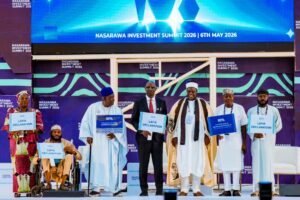
Speaking at the Nasarawa Investment Summit 2026 in Lafia, Shettima said the restructuring agenda is focused on strengthening subnational economies through fiscal reforms, improved revenue allocation, and enhanced investment frameworks.
He identified core pillars of the reform programme to include energy reliability, fiscal balance, tax reform, and the creation of a single digital gateway for investment.
“At the national level, we are rebuilding the pillars every state depends on: energy reliability, fiscal balance, tax reform, and a single digital gateway for investment,” the Vice President said.
He noted that ongoing power sector reforms are opening new opportunities for state participation, while major federal infrastructure projects such as the Ajaokuta-Kaduna-Kano gas pipeline and the Abuja industrial corridor are expected to boost regional economic development.
Shettima said the administration’s focus on subnational growth aligns with global trends where strong federating units drive national development.
“All over the world, nations that move fastest are powered by strong federating units, and Nigeria is embracing that truth,” he said, adding that states now have greater capacity to invest and respond to local needs.
He described the evolving relationship between the federal government and the states as a new “economic compact” that rewards fiscal discipline, competitiveness, and reform-minded leadership.
The Vice President also highlighted improving economic indicators, noting that capital inflows rose from $12.32 billion in 2024 to $23.22 billion in 2025, while the equity market recorded a 51.19 percent return, with market capitalisation reaching ₦99.38 trillion.
“Investors are beginning to read Nigeria again as a country willing to correct itself… Capital follows credibility, stability, and direction,” he added.
Shettima described the “Lafia Declaration” adopted at the summit as a binding public covenant that guarantees policy continuity and long-term economic planning beyond electoral cycles.
Earlier, Nasarawa State Governor Abdullahi Sule said the summit was aimed at boosting investor confidence by emphasising institutional stability and policy continuity.
He noted that the state’s development strategy is anchored on strong governance structures rather than individual leadership.
Also speaking, the Minister of Budget and Economic Planning, Abubakar Bagudu, said ongoing reforms are dynamic and necessary to adapt to changing global realities, while commending the federal government’s management of economic transitions.
The Minister of Industry, Trade and Investment, Jumoke Oduwole, reaffirmed the Federal Government’s commitment to partnering with states to attract investment and expand local production.
In his remarks, the Managing Director of the Nasarawa Investment and Development Agency, Ibrahim Abdullahi, disclosed that the agency has attracted over $2 billion in investments into the state, noting that the summit was designed to sustain investment inflows.
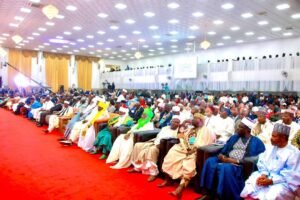
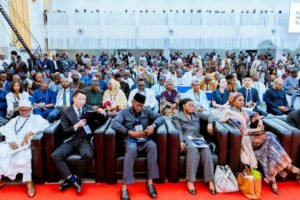
The event brought together policymakers, investors, and development partners to align strategies for economic growth and industrial expansion in Nasarawa State.