
Climate Change
Turkish Villagers Urge COP31 Leaders to Witness Devastation Caused by Coal Mining


Residents of a village in southwestern Turkey have called on world leaders attending the United Nations Climate Change Conference, COP31, to visit their community and witness the environmental destruction they say has been caused by decades of coal mining.
The villagers, from Ikizkoy in Mugla province, want delegates to leave the conference venue in Antalya and visit the disputed Akbelen Forest, where expanding lignite mining operations have raised concerns over deforestation, agricultural land and the future of local communities.

Nejla Isik, an elected representative of Ikizkoy and a longtime environmental campaigner, said world leaders and United Nations officials should see the consequences of coal extraction firsthand rather than limiting discussions to conference halls.
“They should come here, these heads of state. They should not come to Antalya, but to Akbelen, to Ikizkoy,” Isik said.

Her home is located just a few hundred metres from a lignite mine that residents say has gradually expanded towards their community over several decades.
Lignite, a low-grade form of coal, produces relatively high carbon dioxide emissions when burned, making its continued use a concern for climate campaigners.

Residents and environmental activists say mining activities have destroyed parts of the surrounding forest and threaten olive groves, farmland and settlements. They argue that Turkey’s role as host of the climate summit should come with stronger action against fossil fuel dependence.

The concerns highlight a contradiction in Turkey’s energy policy. While the country is promoting cleaner energy and greater electrification at COP31, coal remains a major part of its electricity supply.
According to energy research organisation Ember, coal generated 34 per cent of Turkey’s electricity in 2025, making the country Europe’s largest coal-fired electricity producer.
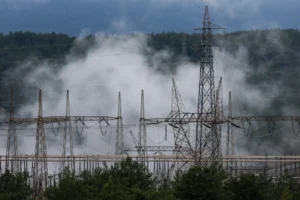
The mines around Akbelen supply the nearby Yenikoy and Kemerkoy thermal power stations, which together generate just over two per cent of Turkey’s electricity, according to information from their operator.
The dispute has also taken a toll on residents who have opposed the expansion of mining operations.
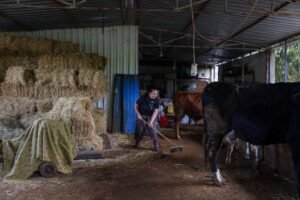
Isik’s 26-year-old daughter, Esra, spent 42 days in pretrial detention following protests against plans to acquire land for mining. A court sentenced her to two years in prison in July for resisting public officials, although she remains free pending an appeal.
Esra said the sentence was an attempt to discourage people from defending their land, communities and rights.

Other residents have also described being detained, fined and subjected to police measures during demonstrations against the mining expansion. Protesters say security forces used water cannons and pepper spray against demonstrators, allegations that have drawn attention from human rights organisations.
Human Rights Watch said in an October report that Turkish authorities had arbitrarily arrested and prosecuted environmental activists, including those involved in protests around Akbelen. The organisation also raised concerns about restrictions on peaceful demonstrations and the treatment of protesters.
The Turkish government maintains that police intervene when demonstrations are unlawful or threaten public order.
Meanwhile, Energy Minister Alparslan Bayraktar has acknowledged the difficulty of transitioning away from coal, arguing that the mining sector provides employment for thousands of people.
He has identified nuclear energy as a major alternative, with Turkey targeting 10 gigawatts of nuclear electricity generation capacity by 2040.
As COP31 opens in Antalya on November 9 and continues until November 20, the villagers’ appeal has brought attention to the gap between international climate commitments and the experiences of communities living alongside fossil fuel extraction.
For residents of Ikizkoy, the issue goes beyond global climate targets. They say it concerns the protection of their homes, forests, farmland and livelihoods, and want world leaders to see the consequences before making promises about a cleaner energy future.