
BREAKING NEWS
UK Cracks Down on Big Tech as Starmer Bans Social Media for Under-16s


British Prime Minister Keir Starmer has announced a sweeping ban on social media use by children under the age of 16, marking one of the toughest online safety measures introduced by any major Western nation.

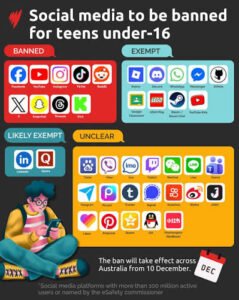
The landmark policy, unveiled on Monday, will prohibit under-16s from accessing major social media platforms such as TikTok, Instagram, Facebook, X, Snapchat and YouTube, as the UK government moves to tackle growing concerns over the impact of social media on children’s mental health, online safety and well-being.
Starmer described the decision as a necessary intervention to protect young people from harmful content, cyberbullying and excessive screen time, saying the government could no longer ignore mounting evidence linking social media use to emotional and psychological challenges among children.
“This is real change for our children and our future,” Starmer said while announcing the policy at Downing Street, adding that while social media offers benefits, the risks to young users now outweigh the advantages.
The restrictions, expected to take effect next year, go beyond similar measures adopted in Australia and have been described by officials as an “Australia-plus” model. In addition to blocking access to major social media platforms, the plan will introduce tighter controls on online gaming and livestreaming services, including restrictions on communication with strangers.
Messaging services such as WhatsApp and Signal are expected to remain exempt from the ban, although the government is considering further safeguards for young users across digital platforms.
The decision follows a nationwide consultation that attracted more than 116,000 responses. Government figures indicate that about 90 per cent of parents supported raising the minimum age for social media access to 16.
Beyond the under-16 ban, the government is also examining additional measures for older teenagers, including restrictions on late-night scrolling, limits on certain addictive platform features, and tighter controls on AI-powered chatbots.
While the move has received widespread public backing, critics have questioned how effectively the ban can be enforced and warned that some teenagers may attempt to bypass age-verification systems or migrate to less-regulated online spaces. Child safety groups have also urged the government to focus on making platforms safer rather than relying solely on age-based restrictions.
Nevertheless, Starmer insisted that the legislation would send a strong signal about society’s responsibility to protect children online and establish clearer boundaries for technology companies operating in the UK.