
Opinion
Where Is Our Money? Corruption And The Nigerian Condition

By Chris Okobah PhD
Award wining author
Nigeria’s greatest tragedy is no longer simply that corruption exists. It is that corruption has become so familiar that outrage is gradually losing its power.
A nation begins to decay when billions of naira leave public accounts and the records required to establish where the money went cannot easily be produced. It decays further when citizens become so accustomed to such revelations that they simply move on.
The recent findings involving the National Cash Transfer Office should therefore concern every Nigerian, regardless of political affiliation.
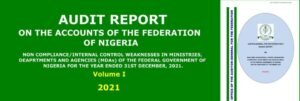
According to the Auditor-General for the Federation’s 2024 Annual Report on Non-Compliance and Internal Control Weaknesses, electronic transfers totalling ₦33.751 billion were recorded as payments to 3,295,207 households and beneficiaries across 35 states in 2023.
The money was supposedly meant for vulnerable Nigerians.
Yet when auditors attempted to verify the payments, they reported that the vouchers did not contain complete beneficiary details. The Remita statement required to reconcile those listed as beneficiaries with those who actually received the money was also not presented.
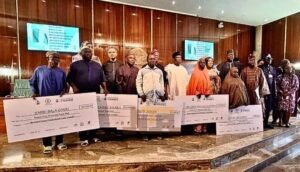
Even more disturbing, the Auditor-General reported that efforts to access the Remita records were obstructed and denied by officials, frustrating the audit process.
This does not automatically prove that ₦33.75 billion was stolen. An audit query is not a criminal conviction.
But it raises an unavoidable question:
If the money was properly paid to genuine beneficiaries, why should auditors struggle to obtain the records necessary to prove it?
The Auditor-General warned of the risk of payments to ineligible or fictitious beneficiaries and recommended that evidence be produced showing that genuine beneficiaries actually received the funds. Where satisfactory evidence cannot be produced, the money should be recovered.
And the ₦33.75 billion was not the only issue.
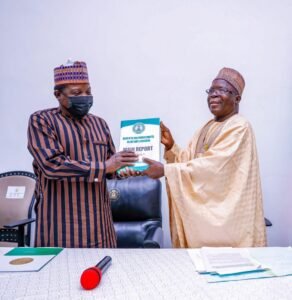
The report also queried approximately ₦36.744 billion paid through 215 vouchers in December 2023 without the required prepayment audit.
Another ₦4.616 billion involving 101 payments was queried because the corresponding paid vouchers were not presented for examination.
In another case, about ₦350.18 million relating to beneficiary enrolment exercises in the states lacked satisfactory supporting documentation.
There were also questions concerning ₦393.71 million reportedly returned by State Cash Transfer Units without sufficient evidence presented to show that the funds had entered the Consolidated Revenue Fund.
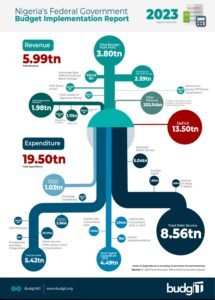
Further audit queries involved a ₦280.42 million mobilisation payment, approximately ₦89.51 million worth of store items, procurement documentation and diesel expenditure.
These findings do not establish that every queried naira was stolen. But they reveal serious weaknesses in documentation, internal controls and accountability involving enormous amounts of public money.
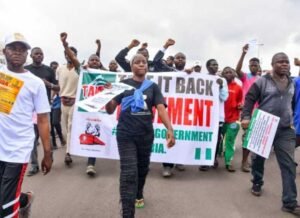
And this is happening in a country where citizens are constantly told there is not enough money.
Not enough for hospitals.
Not enough for roads.
Not enough for schools.
Not enough for security.
Not enough for electricity.
Not enough to create opportunities for millions of young Nigerians.
Yet somehow, there always appears to be enough money to generate another audit query.
CORRUPTION HAS NO POLITICAL PARTY
This is where Nigerians must be honest with themselves.
Corruption is not an APC problem.
It is not a PDP problem.
It is not a Labour Party problem.
It is not an ADC problem.
Governments change. Party logos change. Campaign slogans change. Politicians defect from one party to another.
Yet the disease survives.
The uncomfortable truth is that political parties do not manufacture Nigerians. Nigerians populate political parties.
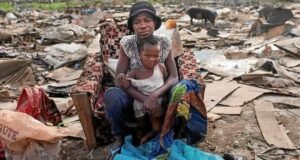
We saw this after the political wave generated by Peter Obi in 2023. That movement helped several Labour Party candidates into office. But with time, some of those politicians moved to other parties and returned to the familiar culture of political realignment.
The lesson is bigger than Peter Obi.
A political wave cannot manufacture character.
A party membership card cannot create integrity.
A slogan cannot remove greed from the human heart.
Power eventually reveals the person beneath the campaign poster.
That is why Nigeria cannot be rescued merely by replacing one political party with another while retaining the same values.
If we replace corrupt Nigerians in one party with corrupt Nigerians in another party, we have changed government without changing governance.
THE CULTURE OF UNEXPLAINED WEALTH
Nigeria must also confront its unhealthy fascination with wealth.
Too often, a person enters public office with modest means and emerges a few years later surrounded by mansions, luxury vehicles and unexplained wealth.
Instead of asking questions, society celebrates him.
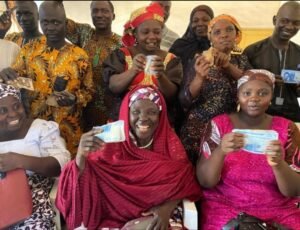
Communities give him titles.
Religious institutions reserve front seats for him.
Associations give him awards.
Young people call him successful.
Nobody asks:
What did he produce?
What business created this fortune?
What value did he add?
What legitimate enterprise explains the sudden wealth?
A society that worships wealth without questioning its source eventually teaches its children a dangerous lesson:
Do not worry about how you become rich. Just become rich enough, and society will forgive everything else.
That is how corruption migrates from government into the national conscience.
POLITICIANS ARE PRODUCTS OF OUR SOCIETY
We often speak about politicians as though they came from another planet.
They did not.
They came from our homes, schools, churches, mosques, communities and professional associations.
The corrupt politician is Nigerian.
The contractor who inflates a government invoice is Nigerian.
The civil servant who demands a bribe is Nigerian.
The voter who sells his vote is Nigerian.
The parent who pays to manipulate examination results is Nigerian.
The police officer who extorts motorists is Nigerian.
And so is the citizen who condemns corruption when his political enemy is accused but suddenly becomes silent when his friend is involved.
This does not mean that all Nigerians are corrupt. Millions remain decent, hardworking and honourable.
But we must admit that corruption has been sustained not only by bad leaders but also by a society that too often rewards the wrong things.
LEADERSHIP STILL MATTERS
None of this excuses political leadership.
Leadership is decisive because behaviour flows from the standards established at the top.
When a President refuses to protect friends, when ministers know that wrongdoing will have consequences, when anti-corruption agencies can investigate allies and opponents alike, and when civil servants know that missing public funds may end their careers, behaviour changes.
But where people believe that some individuals are untouchable, corruption spreads.
The junior officer watches the director.
The director watches the permanent secretary.
The permanent secretary watches the minister.
The minister watches the presidency.
And everyone learns what the system truly tolerates.
Nigeria does not lack speeches against corruption.
What it often lacks are consequences.
CORRUPTION HAS HUMAN VICTIMS
The greatest mistake we make is discussing corruption merely as figures in an audit report.
Behind every missing or poorly accounted-for billion is a human being.
The victim is the pregnant woman who arrives at a hospital without adequate equipment.
The victim is the child learning under a leaking classroom roof.
The victim is the graduate with no opportunity.
The victim is the pensioner waiting for his entitlement.
The victim is the motorist who dies on a collapsed road.
The victim is the family kidnapped on an insecure highway.
The victim is the poor woman in whose name government borrowed or budgeted money but who never received any benefit.
That is why corruption is not merely financial misconduct.
Corruption steals roads. Corruption steals hospitals. Corruption steals education. Corruption steals electricity. Corruption steals security. Corruption steals opportunity. Corruption steals dignity. And sometimes, corruption steals life.
THIS IS BIGGER THAN TINUBU, OBI OR ANY PARTY
The wider 2024 Auditor-General’s report reportedly identified financial irregularities and internal-control weaknesses exceeding ₦1.34 trillion across federal ministries, departments and agencies.
Again, that does not mean ₦1.34 trillion was judicially established as stolen.
But no serious country should wait for criminal convictions before becoming alarmed by massive weaknesses in public financial management.
The National Cash Transfer Office controversy should therefore not become another APC-versus-opposition argument.
It is bigger than President Bola Tinubu.
It is bigger than Atiku Abubakar.
It is bigger than Peter Obi.
It is bigger than APC, PDP, Labour or ADC.
This is Nigeria confronting itself.
Every President must account.
Every minister must account.
Every permanent secretary must account.
Every governor must account.
Every agency head must account.
Every local government chairman must account.
Every contractor who receives public money must account.
Because public money belongs to the people.
When the Auditor-General asks, “Who received this money?”, the response cannot be politics, ethnicity, party loyalty or silence.
Bring the records.
Bring the vouchers.
Bring the Remita statements.
Bring the beneficiary registers.
Bring the bank reconciliations.
Bring the procurement documents.
Bring the evidence.
If the money was properly spent, prove it.
If administrative failures occurred, correct them.
If money cannot be accounted for, recover it.
And where criminal wrongdoing is established through proper investigation and due process, prosecute whoever is responsible—regardless of party, tribe, religion or political connection.
THE REAL BATTLE
For decades, Nigerians have searched for the leader who will save Nigeria.
Perhaps we should also ask a more difficult question:
What kind of Nigerians must we become before Nigeria can be saved?
We need citizens who stop celebrating unexplained wealth.
We need religious institutions that value character above donations.
We need communities that stop honouring people merely because they are rich.
We need voters who understand that selling a vote today may mean four years of bad roads, empty hospitals and unemployment.
We need political supporters who love Nigeria more than politicians.
And we need institutions strong enough to make accountability unavoidable.
Because corruption survives not only because people are willing to steal.
It survives because too many people are willing to celebrate the successful thief.
Nigeria’s real struggle is therefore not APC versus PDP, North versus South or government versus opposition.
It is Nigeria against the worst instincts within itself.
And our starting principle must be simple:
Public money is sacred.
Those who receive it must account for it.
Those who spend it must explain it.
Those who cannot account for it must answer questions.
And those eventually proved to have stolen it must face the law.
No exceptions.
No political protection.
No ethnic defence.
No partisan excuses.
Until then, one question must continue to echo across Nigeria:
WHERE IS OUR MONEY?