
Opinion
World Cup 2026 Final: Spain Conquered The World—Dominance Or Submission?

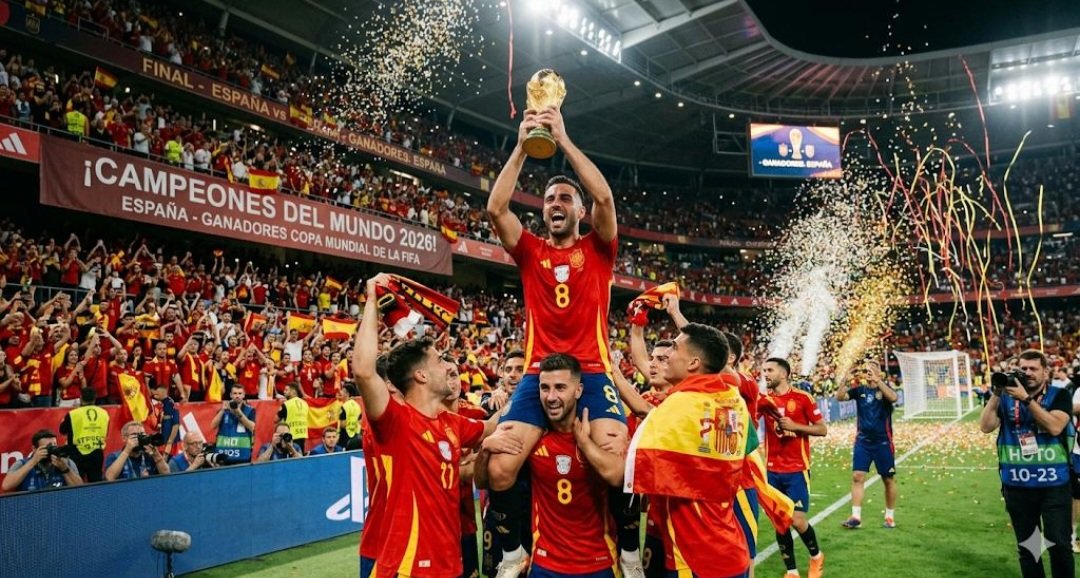
Spain 🇪🇸 1–0 Argentina 🇦🇷 (After Extra Time)
Sixteen years after South Africa, La Roja are world champions again after overwhelming the defending champions in a final decided by Ferran Torres.
By Paul Lucky Okoku
Some World Cup finals are remembered for a single flash of brilliance.
Others are remembered for relentless endurance, tactical discipline, and the refusal to surrender.
The 2026 FIFA World Cup Final demanded all three.
After 120 intense minutes at MetLife Stadium, Spain defeated defending champions Argentina 1–0 after extra time to lift the FIFA World Cup for the second time in their history, sixteen years after Andrés Iniesta’s unforgettable goal delivered their first title in South Africa.
The decisive moment came in the 106th minute when substitute Ferran Torres finally found a way past Emiliano Martínez, ending Argentina’s dream of becoming the first men’s team since Brazil in 1962 to successfully defend the World Cup.
Spain also achieved another remarkable milestone, becoming the first nation to hold both the FIFA Men’s and Women’s World Cup titles simultaneously.
The scoreline suggested a closely contested final.
The football told a different story.
For nearly two hours, Spain controlled possession, dictated the rhythm, and forced Argentina into survival mode.
This was more than a victory.
It was a lesson in control.
It was a demonstration of patience.
It was a championship built on belief in a football philosophy that never changed, even when the goal refused to come.
Dominance or Submission?
Football is not always decided by possession.
But when one team controls almost every important aspect of the game, possession becomes more than a statistic—it becomes authority.
Spain monopolized the ball, dictated the tempo, and continually stretched Argentina’s defensive shape.
Argentina, by contrast, defended deep, absorbed wave after wave of attacks, and depended heavily on Emiliano Martínez to keep the score level.
The numbers reflected what every neutral observer could see.
Spain produced twenty shots before Argentina managed its first meaningful attempt.
They earned nine corner kicks while Argentina struggled to escape its own half.
Martínez produced a World Cup Final record with 12 saves, repeatedly denying Spain what appeared inevitable.
Argentina deserve enormous credit for their defensive commitment.
Cristian Romero, Nicolás Otamendi, and Enzo Fernández threw themselves into challenges.
Every clearance, every block, every interception delayed what Spain seemed destined to achieve.
But there is a difference between defending courageously and competing equally.
Argentina resisted.
Spain controlled.
Argentina survived.
Spain dictated.
For more than one hundred minutes, Argentina’s strategy nearly succeeded.
They defended with discipline, hoping frustration would eventually force Spain into mistakes or penalties.
Spain never abandoned their identity.
They continued circulating possession.
They continued probing.
They trusted the football that had carried them to the final.
The scoreboard remained level.
The contest itself never truly was.
As every midfielder understands, scoreboards tell us where the match stands.
Midfields tell us where the match is going.
Long before Ferran Torres scored, the midfield had already revealed the likely champion.
Spain Controlled the Match Without Controlling the Scoreboard
One of football’s great ironies is that domination does not always produce immediate rewards.
Spain controlled almost every measurable aspect of this final, yet for more than one hundred minutes remained without a goal.
Rodri orchestrated the match with remarkable composure.
Every attack seemed to begin at his feet.
Every Argentine attempt to establish rhythm was interrupted by Spain’s relentless pressing.
Lamine Yamal and Nico Williams stretched the field from the wings, forcing Argentina’s back line deeper and deeper.
The full-backs advanced relentlessly.
The midfield recycled possession with patience rather than panic.
Every Argentine clearance simply invited another Spanish attack.
Had Emiliano Martínez not delivered one of the finest goalkeeping performances ever witnessed in a World Cup Final, Spain might have won comfortably inside ninety minutes.
Instead, his extraordinary saves prolonged Argentina’s hopes.
But eventually, football demands more than survival.
Hope cannot permanently replace attacking ambition.
THE FINAL THAT FELT LIKE THE FINAL WAS PLAYED A DAY EARLIER
Spain deserved to become world champions.
There should be no debate about that.
They were technically superior, tactically disciplined, mentally patient, and ultimately found the breakthrough their football deserved.
Yet football supporters often remember tournaments not only by the champion but by the matches that captured the imagination.
If excitement, drama, attacking football, momentum swings, and unforgettable moments become the standard, many supporters may argue that the tournament’s greatest spectacle had already taken place.
England’s unforgettable 6–4 victory over France in the third-place playoff produced ten goals, a Bukayo Saka hat-trick, breathtaking attacking football, and ninety minutes of relentless entertainment.
Officially, it was a bronze-medal match.
Emotionally, for many supporters, it felt like a World Cup Final.
That observation should not diminish Spain’s achievement.
Championships are not awarded for entertainment value.
They are awarded for winning football matches.
Spain earned that right.
England and France simply reminded the world how spectacular football can be.
The two matches represented different forms of greatness.
One celebrated attacking chaos.
The other celebrated tactical mastery.
Both deserve their place in World Cup history.
FINAL BY THE NUMBERS
Match Statistics
* Final Score: Spain 1–0 Argentina (after extra time)
* Goals: Spain 1 | Argentina 0
* Possession: Spain 68% | Argentina 32%
* Shots: Spain 20 | Argentina 2
* Shots on Target: Spain 11 | Argentina 0
* Completed Passes: Spain 803 | Argentina approximately 380
* Pass Accuracy: Spain 90% | Argentina 79%
* Corner Kicks: Spain 9 | Argentina 4
* Yellow Cards: Spain 1 | Argentina 4
* Red Card: Enzo Fernández (Argentina)
* Winning Goal: Ferran Torres (106’)
The statistics confirm what the eye witnessed.
Spain controlled possession.
Spain controlled territory.
Spain controlled creativity.
Spain controlled opportunity.
Argentina defended heroically, and Martínez produced an unforgettable goalkeeping display.
But over 120 minutes, the numbers overwhelmingly favored Spain.
The final score was only 1–0.
The football itself suggested a much wider difference.
Argentina became the first team in World Cup Final history to complete the regulation 90 minutes without registering a single shot.
Tournament Honors
Beyond lifting the FIFA World Cup Trophy, Spain also celebrated individual excellence throughout the tournament.
* 🏆 Golden Ball (Best Player): Rodri (Spain) — The midfield maestro was named the tournament’s outstanding player after dictating Spain’s rhythm and controlling matches from the opening game to the final.
* ⚽ Golden Boot (Top Scorer): Kylian Mbappé (France) — Finished as the tournament’s leading scorer with 10 goals, once again demonstrating his world-class finishing ability.
* 🧤 Golden Glove (Best Goalkeeper): Unai Simón (Spain) — Anchored one of the finest defensive campaigns in World Cup history with a series of commanding performances throughout the tournament.
* 🌟 Best Young Player: Pau Cubarsí (Spain) — The teenage defender announced himself on football’s biggest stage, highlighting the emergence of another generation capable of carrying Spanish football into the future.
The Goal That Sparked Another VAR Debate.
For one unforgettable moment, Nico Williams believed he had written his name into World Cup history.
The ball found the back of the net.
Spain celebrated.
The stadium erupted.
Then came the whistle.
The goal was ruled out after the referee determined that Mikel Merino had committed a foul on Nicolás Otamendi during the attacking phase. Following a VAR review, the decision stood.
The controversy immediately became one of the defining talking points of the final.
Many supporters watched the replay repeatedly and struggled to identify contact they believed justified overturning a World Cup-final goal. To them, it looked like normal football contact within a highly competitive sequence.
Whether one agrees with the decision or not, the incident highlighted football’s continuing debate over VAR.
Technology was introduced to correct clear and obvious errors.
It was never intended to remove every goal because of minimal contact that many supporters would not even recognize in real time.
Spain eventually overcame the disappointment, but the debate remains.
Football authorities should continue striving for greater transparency so that supporters understand not only what decision was made, but why it was made.
Ferran Torres: The Substitute Who Changed History
Championships are often remembered by unlikely heroes.
On this night, that hero was Ferran Torres.
Introduced from the bench, Torres carried fresh energy into a match that had demanded extraordinary patience from Spain.
In the 106th minute, patience finally became reward.
One decisive run.
One composed finish.
One historic goal.
After more than one hundred minutes of relentless pressure, Spain finally found the breakthrough their football deserved.
For Argentina, it was heartbreaking.
For Spain, it was release.
For Ferran Torres, it was football immortality.
World Cup finals have a unique way of transforming substitutes into legends.
Torres entered as a tactical option.
He left as the player who returned Spain to the summit of world football.
Argentina Finally Had to Attack
For most of the evening, Argentina had concentrated on surviving.
Once Torres scored, survival was no longer enough.
The defending champions were forced to chase the game.
Lionel Messi dropped deeper searching for possession.
Argentina pushed more players forward than they had at any previous stage of the match.
But attacking rhythm cannot simply appear because a team suddenly needs it.
Momentum is built over time.
Spain had built theirs throughout the final.
Argentina had spent most of the evening defending against it.
When the final whistle arrived, Spain’s defensive discipline protected the narrow lead just as effectively as their midfield had created it.
Messi’s Final World Cup?
The match may prove to be Lionel Messi’s final appearance on football’s greatest stage.
At 39 years old, he pursued an achievement that only a handful of football legends have ever contemplated—successfully defending a World Cup title.
It was not to be.
Spain’s collective organization prevented Argentina from building sustained possession around their captain.
Messi still displayed moments of vision and quality whenever space appeared.
But space was scarce.
This defeat changes nothing about his place in football history.
World Cups create legends.
They do not define them.
If this was indeed Messi’s farewell, he leaves the tournament as one of its greatest ambassadors and one of the finest footballers the game has ever produced.
No Referee Decided This Final
The disallowed Nico Williams goal deserves discussion.
VAR deserves continued examination.
Supporters deserve greater transparency whenever major decisions alter matches of this magnitude.
But none of those discussions should overshadow the fundamental truth of this final.
Spain did not become world champions because of officiating.
They became world champions because they were the better football team.
They controlled possession.
They controlled territory.
They controlled tempo.
They remained faithful to their identity even when frustration threatened to overwhelm them.
Argentina defended bravely.
Martínez produced one of the greatest goalkeeping displays ever witnessed in a World Cup Final.
Yet over 120 minutes, Spain consistently demonstrated why they deserved to lift the trophy.
Sometimes football is complicated.
This final was not.
The better team won.
A Victory That Will Echo Through History
Spain’s triumph represented far more than another World Cup title.
Sixteen years after lifting the trophy in South Africa, La Roja once again stood at the summit of world football, becoming only the ninth nation to win multiple FIFA Men’s World Cups. More significantly, Spain became the first country ever to simultaneously hold both the FIFA Men’s and FIFA Women’s World Cup titles, a reflection of the depth, continuity, and philosophy that now define Spanish football from youth development to the senior international level.
Championships are remembered for trophies.
Great dynasties are remembered for changing the way football is played.
Spain’s 2026 team has earned the right to be mentioned in that conversation.
From a Midfielder’s Eye
The true story of a football match is rarely told by the final score alone.
The scoreboard records the result.
The midfield explains how that result was achieved.
Spain understood that possession is not simply about keeping the ball.
It is about creating pressure, controlling space, exhausting opponents mentally and physically, and forcing mistakes through patience rather than desperation.
Argentina chose a different path.
They defended courageously, hoping discipline and resilience would carry them to penalties.
There is no shame in defending.
Championship football often demands it.
But when one team controls the ball, the rhythm, the territory, and the initiative for almost an entire final, the balance eventually tips.
That is the essence of the question posed throughout this final:
Dominance or Submission?
Argentina never surrendered emotionally.
They fought until the final whistle.
But they surrendered possession.
They surrendered territory.
They surrendered initiative.
Eventually, they surrendered the trophy.
Spain conquered the world because they never abandoned the football that brought them there.
A Tournament That Changed the Game
The 2026 FIFA World Cup will also be remembered as a landmark in football history.
For the first time, 48 nations competed in a FIFA World Cup hosted jointly by the United States, Canada, and Mexico, expanding the tournament to 104 matches and bringing football to new audiences across North America. Critics questioned whether the expanded format would dilute the competition. Instead, it produced memorable upsets, emerging nations, record attendances, and one of the most globally celebrated tournaments FIFA has ever staged.
If the goal was to make football more inclusive without sacrificing quality, the 2026 World Cup provided a compelling answer.
Until the Next World Cup
And so, as Shakespeare wrote, ‘All the world’s a stage,’ the curtain falls on another unforgettable FIFA World Cup—not as an ending, but as the close of one magnificent act before the next begins.
Spain leave North America as worthy world champions.
Argentina depart with dignity after an admirable title defense that reached one final obstacle too great to overcome.
Rodri confirmed himself as the heartbeat of the tournament.
Ferran Torres wrote his name into World Cup folklore.
Lionel Messi may have taken what may prove to be his final bow on football’s greatest stage.
And a new generation—Lamine Yamal, Nico Williams, Pau Cubarsí, and others—has announced that the future has already arrived.
Every World Cup closes one chapter and opens another.
The champions change.
The stars evolve.
But the beautiful game endures.
Until we meet again on football’s greatest stage, may we celebrate victory with humility, accept defeat with dignity, and always respect the beautiful game.
One Trophy. Two Nations. One Place in History.
Spain are world champions once again.
They did not merely win the FIFA World Cup.
They conquered it.
On this night, dominance became destiny.