
International
10 Days After Devastating Floods, Rescuers Pull More Survivors Alive From Nepal Debris

Ten days after catastrophic floods and mudslides devastated parts of Nepal, rescuers have pulled two more people alive from the debris, providing a rare and dramatic moment of hope amid one of the country’s worst recent disasters.
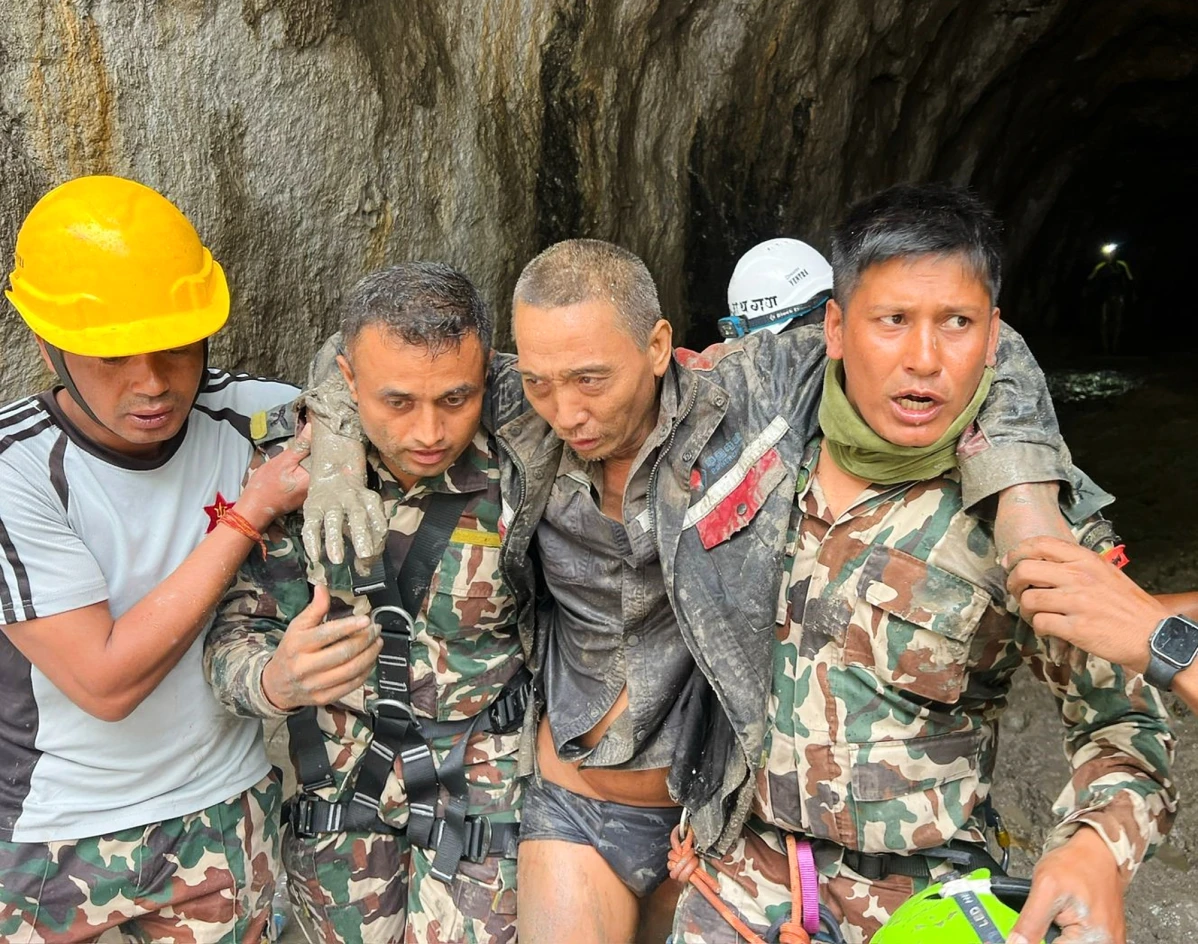
A Chinese national was rescued alive on Saturday from a tunnel at the Upper Trishuli-1 Hydropower Project, while a 64-year-old Nepali woman was found alive beneath the debris of her home in Nuwakot district.
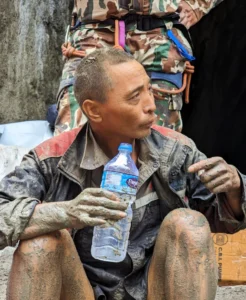
The latest rescues came a day after two other hydropower workers were pulled alive from a separate tunnel after spending nine days underground.
The Chinese national, identified by Reuters as Luhaitao, was found inside a roughly 225-metre tunnel at the Upper Trishuli-1 Hydropower Project.
Nepal Army rescuers brought him out after painstaking efforts to clear mud, rock and other debris that had blocked sections of the underground facility.
Images released by the Nepal Army showed the survivor covered in mud and appearing exhausted as rescuers moved him to safety. He was taken by helicopter for emergency medical treatment before being transported to an army hospital.
His rescue is particularly significant because hundreds of people are still believed to be missing from hydropower facilities along the Trishuli River.
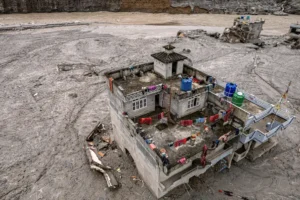
In a separate rescue operation, a 64-year-old Nepali woman was pulled alive from the remains of her home in flood-hit Nuwakot.
She had survived beneath thick mud and debris for approximately 10 days after the disaster swept through the region.
The woman was being taken to Kathmandu for medical treatment as rescuers continued searching other areas buried by the floods.
The two rescues have given families waiting for news of missing relatives a fresh reason to hope.
The floods and mudslides struck on August 26, after what authorities believe was a glacier collapse sent a devastating torrent of ice, rock, mud and water through valleys along the Nepal-Tibet border.
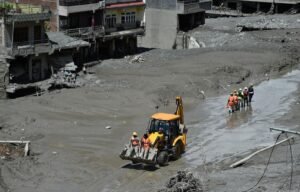
The disaster destroyed homes, roads, bridges and hydropower infrastructure.
AP reported that the death toll in Nepal has climbed to at least 1,300, while more than 5,000 people remain missing. Search-and-rescue teams are continuing operations across affected communities and hydropower projects.
The disaster has also affected neighbouring Tibet, where deaths and disappearances have been reported.
The rescue of survivors has intensified attention on the hydropower tunnels along the Trishuli River.
Authorities and rescue workers believe about 900 people may be missing from hydropower projects, with many thought to have been inside tunnels when the flood struck.
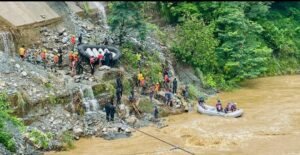
International rescue specialists from countries including China, India and South Korea have joined Nepali teams in efforts to reach blocked underground areas.
Rescuers have had to work through unstable tunnels, huge quantities of mud and debris, standing water and collapsed sections of infrastructure.
Friday’s rescue of two Nepali workers, Sanjay Sah and Kabir Maharjan, had already been described as a remarkable breakthrough.
The two men were recovered from a tunnel at the Upper Trishuli 3A Hydropower Station after nine days underground.
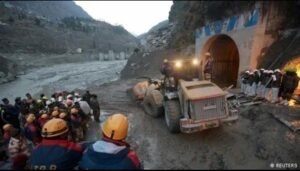
Rescuers used excavators, mapping information and controlled blasts to clear a path through approximately 170 metres of mud and debris before reaching them.
Their survival encouraged rescuers to continue searching other underground areas where air pockets or habitable spaces could potentially have protected trapped workers.
The latest rescues offer powerful reminders that the search may not yet be over.
But rescue teams are racing against difficult conditions as damaged tunnels remain dangerous and large areas of Nepal’s mountainous terrain are covered in mud and debris.
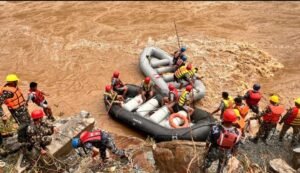
Reuters reported that the flood left entire sections of the Trishuli River valley devastated, with villages swept away and major infrastructure destroyed.
For families still waiting for missing relatives, the survival of four people pulled from the disaster zone in recent days has transformed what had become a desperate search into a renewed fight against time.
Ten days after the flood, Nepal is still searching, and every survivor found beneath the wreckage is keeping hope alive.