
International
France Protests: Macron Vows Prosecution as Clashes, Looting Rock Major Cities

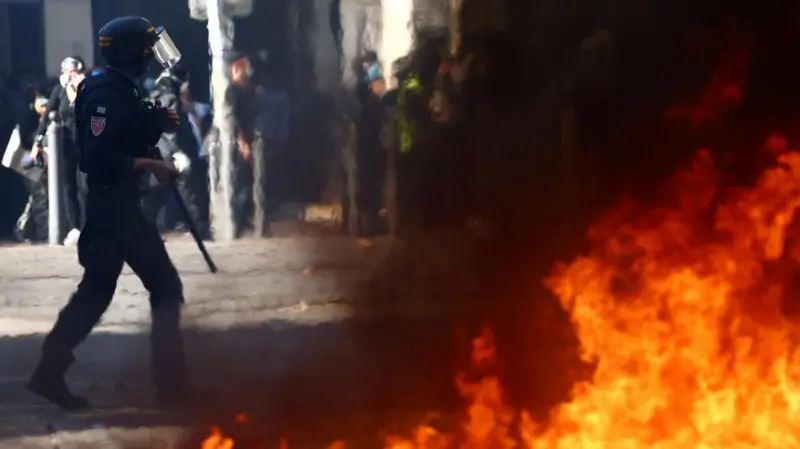
French President Emmanuel Macron has condemned violence during nationwide protests over rising living costs and declining public services, declaring that there is “no place for violence” as demonstrators clashed with police in several cities.
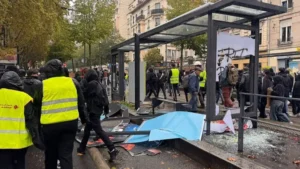
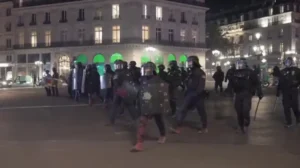
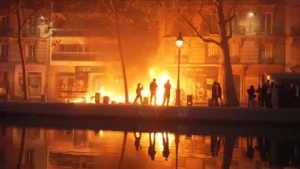
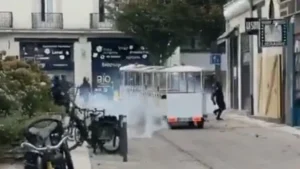
The unrest erupted on Saturday, October 17, when hundreds of thousands of people took to the streets across France, with demonstrations in Paris, Lyon, Marseille, Bordeaux and Limoges turning violent in some areas. Police deployed tear gas and water cannons as groups of masked protesters threw projectiles, set fires and looted shops.
France’s Interior Ministry estimated that approximately 550,000 people participated in demonstrations nationwide, while organisers put the figure at about 800,000. Although many marches remained peaceful, confrontations between police and groups of demonstrators caused extensive damage to public buildings and businesses. Reuters and the Associated Press reported the developments.
In a statement posted on social media, Macron condemned those responsible for vandalism and attacks on public institutions, warning that they would be prosecuted and punished.
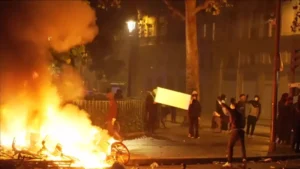
“We will all stand united against the sowers of chaos,” he said, arguing that violence must not prevent citizens from peacefully expressing their grievances.
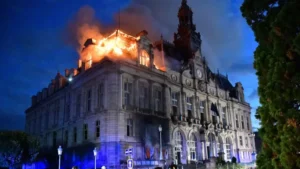
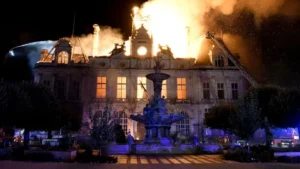
One of the most serious incidents occurred in Limoges, where a fire engulfed the historic town hall after masked individuals reportedly broke into the building and set it alight. The blaze severely damaged the 140-year-old landmark, while several nearby businesses were also looted.
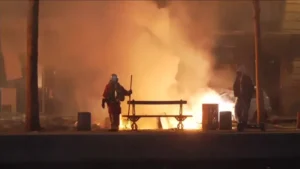
In Lyon, a fire broke out at a tourist office, while demonstrators in Marseille briefly entered the city hall and damaged property. Paris also witnessed clashes, looting and fires involving vehicles and other objects as riot police attempted to disperse crowds.
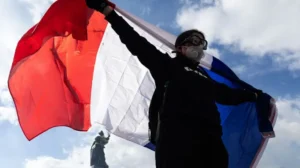
The demonstrations have been fuelled by anger over rising food, fuel and energy prices, concerns about declining public services and demands for better conditions in schools. Student protests that began weeks earlier have increasingly merged with broader opposition to the government’s economic policies and perceived social inequality.
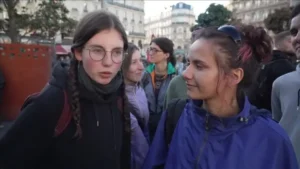
The scale of the unrest became clearer on Sunday, when Reuters reported that police had detained nearly 1,800 people nationwide, including a record 855 in Paris. More than 500 police officers were reported injured. Authorities also said one demonstrator died after suffering a cardiorespiratory arrest during the protests in Paris.
A separate incident in Saint-Étienne left a demonstrator with a severe hand injury during the unrest, prompting renewed scrutiny of the use of police crowd-control weapons. Authorities opened an investigation into the circumstances surrounding the injury.
Prime Minister Sébastien Lecornu condemned the violence and said the government would not be intimidated by groups seeking to impose their political agenda through disorder. Officials also promised to pursue those responsible for attacks on public property and to consider support for affected businesses.
The protests have increased pressure on Macron’s government as France approaches its next presidential election. They also highlight the challenges facing authorities as economic hardship, dissatisfaction with public services and distrust of political institutions fuel growing public anger.
While the government has pledged to prosecute those responsible for violence, protesters and their supporters continue to demand action on living costs, wages, education and public services.