
International
Israel Halts Commercial Goods Entering Gaza, Raising Fears of Worsening Hunger

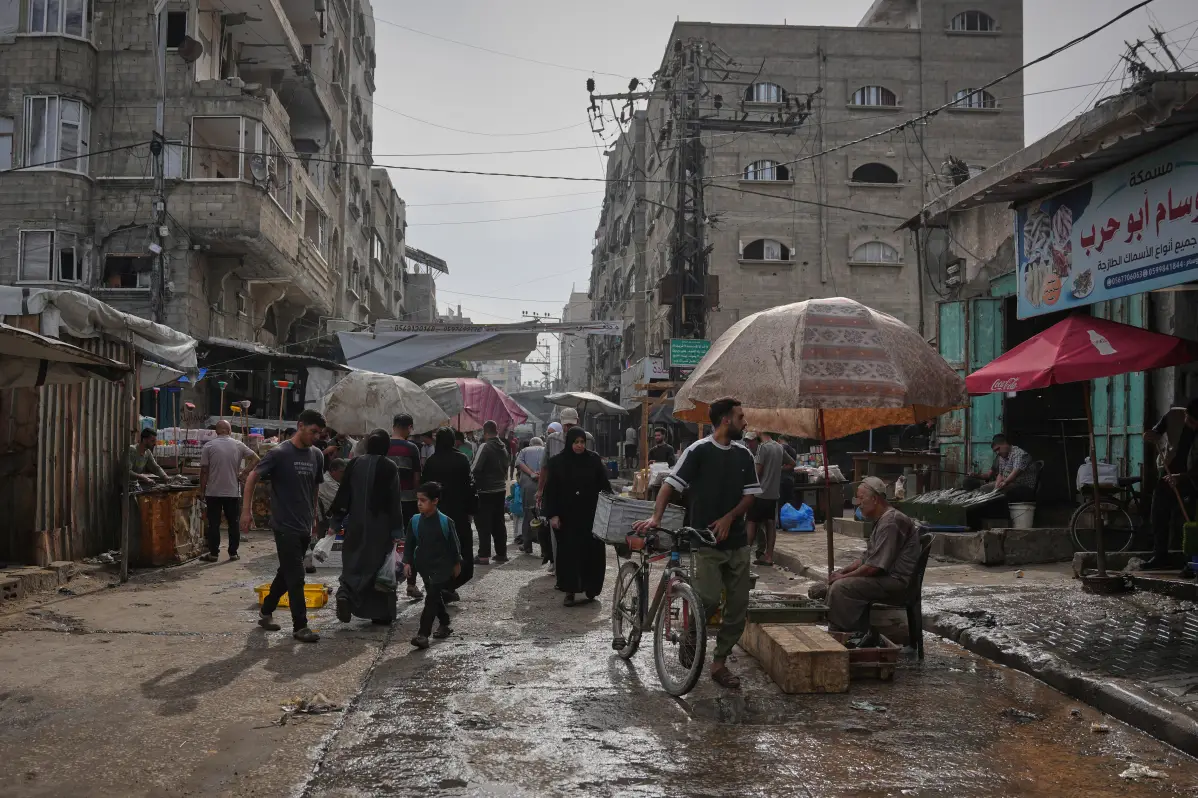
Israel has announced a suspension of commercial goods entering the Gaza Strip, raising concerns about food availability, rising prices and access to essential supplies as millions of Palestinians continue to face severe humanitarian hardship.
The announcement was made on Wednesday, October 14, by COGAT, the Israeli military body responsible for coordinating civilian and humanitarian affairs in the Palestinian territories. The development was reported by the Associated Press on Thursday, October 15, 2026.

COGAT said it was relaying a decision by Gaza merchants to suspend coordination for shipments, allegedly because of pressure, threats and fees imposed by Hamas. However, Palestinian traders disputed that explanation, insisting that Israel was responsible for the suspension.
Nahed Sheheiber, head of Gaza’s private truckers union, rejected the suggestion that merchants had independently stopped shipments. He said Israeli authorities had imposed the restrictions, while representatives of Gaza’s Ministry of Economy argued that charges sought from traders were intended to support civil servants rather than constitute a tax.
The disagreement has raised questions about who is responsible for the disruption and how quickly commercial deliveries could resume.
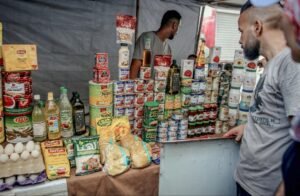
Commercial shipments have become an important source of food, household goods and other necessities for Gaza’s population of roughly two million people. Although humanitarian organisations bring in relief supplies, aid agencies warn that humanitarian assistance alone cannot meet every household’s needs or replace a functioning commercial market.
Shaina Low, a spokesperson for the Norwegian Refugee Council, stressed that markets must continue operating alongside humanitarian aid to help ensure supplies remain available and affordable.
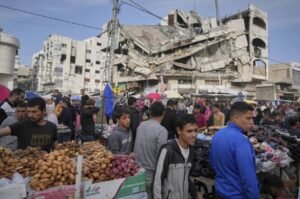
The suspension could therefore affect not only the quantity of goods reaching Gaza but also the prices paid by families already struggling with food insecurity. Reduced commercial supplies may increase dependence on limited relief distributions and put additional pressure on households with little or no income.
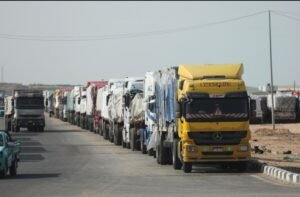
COGAT has said Gaza requires approximately 250 truckloads of goods daily to meet its needs, while the US-brokered ceasefire agreement stipulated a target of around 600 truckloads per day. The figures refer to different assessments of requirements and ceasefire commitments, underscoring the continuing dispute over the adequacy of supplies entering the territory.
It remained unclear whether humanitarian agencies would be permitted to increase their deliveries to compensate for the suspension of commercial shipments.
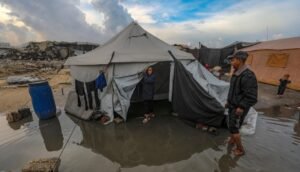
The announcement comes as aid organisations warn that Gaza faces further hardship with winter approaching. Many displaced families are living in damaged buildings, tents and makeshift shelters, while humanitarian groups report shortages of materials needed to repair homes and protect residents from cold weather and flooding.
The Norwegian Refugee Council and other humanitarian organisations have separately called for greater access to shelter materials and fewer restrictions on essential supplies.
The latest development also highlights the fragile state of the ceasefire arrangements intended to improve conditions in Gaza. While the agreement increased humanitarian access, major disagreements remain over security, governance, restrictions on goods and the next steps towards reconstruction.
With commercial deliveries now in question, humanitarian organisations and Palestinian traders face uncertainty over whether existing aid channels can prevent further deterioration in living conditions.