
International
Trump’s DOJ Probes Major TV Networks After White House Ban of CNN

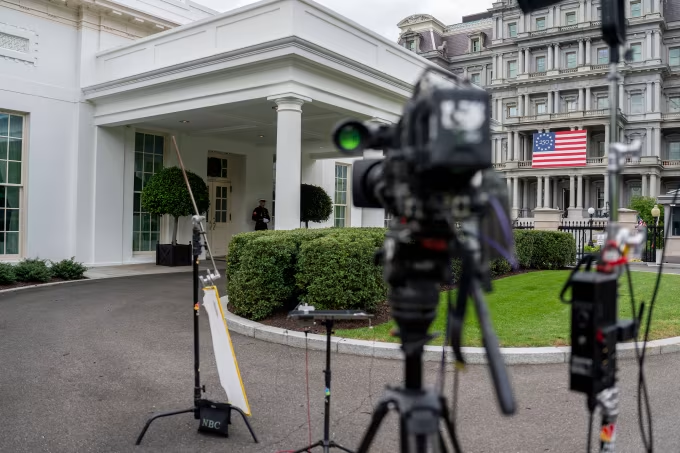
The US Department of Justice has launched an antitrust investigation into ABC, CBS, CNN, Fox News and NBC over their temporary suspension of White House television coverage following the Trump administration’s decision to bar journalists from CNN, MS NOW and Politico from the White House.
The investigation, announced on Saturday, October 10, is examining whether the five broadcasters’ coordinated decision to halt coverage of President Donald Trump violated federal antitrust law, particularly the Sherman Act, which prohibits certain anti-competitive agreements.
Justice Department spokesperson Emily Covington said group boycotts involving commercial competitors could violate the law, but stressed that the inquiry was intended to determine whether the networks had breached antitrust rules. The department has not announced any finding of wrongdoing.
The probe follows a dispute that began on September 19, when the White House revoked the credentials of journalists from CNN, MS NOW and Politico. The administration defended the restrictions by arguing that access to the president was a privilege rather than a right, while the affected news organisations accused it of retaliating against critical reporting.
In response, the five broadcasters that make up the main White House television press pool suspended their coverage of presidential events. The pool operates on a rotating basis, with participating networks sharing the costs of covering the president and distributing video footage to other media organisations.
The networks said at the time that the public had a vital interest in receiving accurate, independent information about the government and that no administration should exclude a news organisation because it disagreed with its reporting.
CNN, MS NOW and Politico subsequently sued the administration, arguing that the restrictions violated their constitutional protections, including freedom of the press. On September 24, US District Judge Timothy Kelly ordered the White House to restore their access after finding the ban was likely unconstitutional. The credentials were reinstated, although disputes over access to particular presidential events and assignments continued.
The television pool’s coverage of the president has since resumed, but the Justice Department’s investigation has opened a new front in the dispute between the administration and major news organisations.
The inquiry has drawn criticism from press-freedom advocates. Jose Zamora, the Committee to Protect Journalists’ Americas director, warned that antitrust investigations should not be used to intimidate media organisations defending access to government officials. He argued that the public’s right to know depends on that access.
The networks did not immediately provide public responses to requests for comment on the investigation, according to reports by the Associated Press and Reuters.
The case raises questions about the boundary between competition law and collective action by news organisations responding to restrictions on press access. The Justice Department will need to establish whether the broadcasters’ decision meets the legal criteria for an unlawful group boycott.
For now, the investigation remains at an early stage. No charges or penalties have been announced, and the probe does not establish that the networks violated the law. Its outcome could nevertheless have implications for the relationship between the US government and the media, as well as for how news organisations respond collectively when access to presidential events is restricted.