
International
Empty Classrooms on Remote Greek Islands Reflect Europe’s Growing Population Crisis

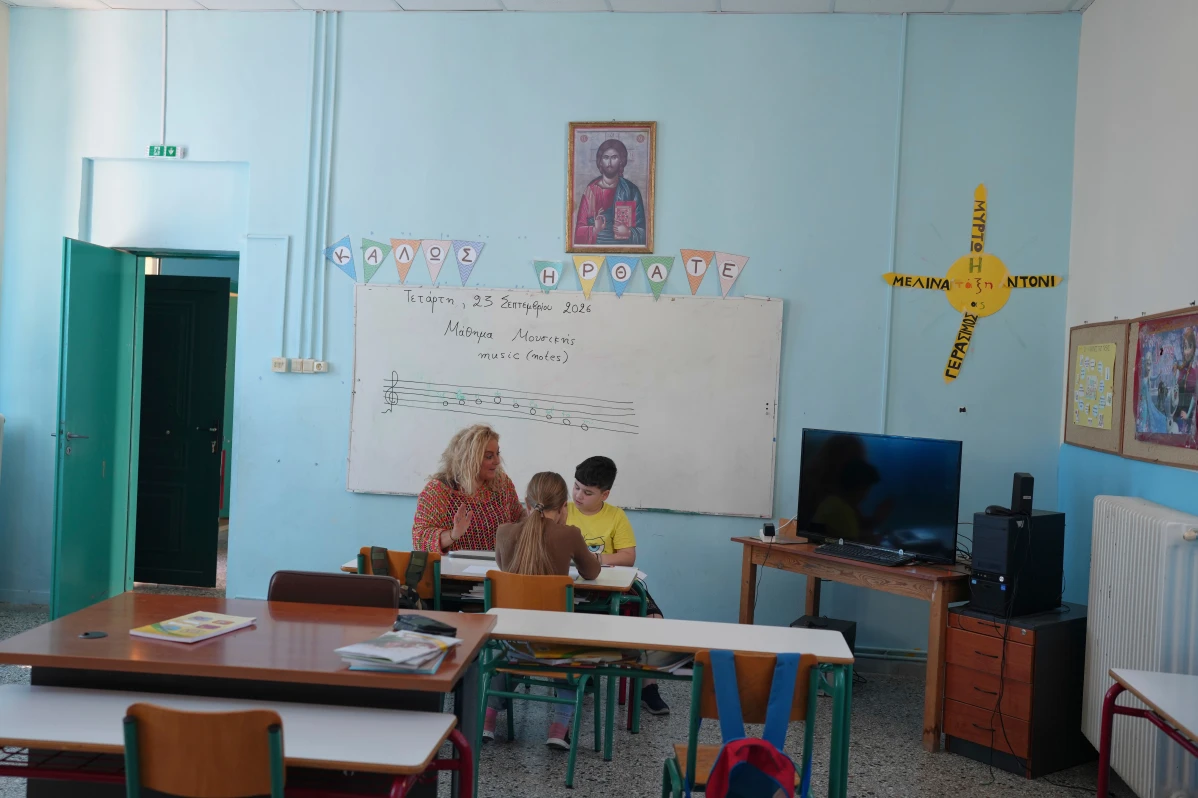
A primary school on the Greek island of Kalamos is approaching closure with just two pupils remaining, highlighting a wider demographic challenge facing Greece and other parts of Europe as falling birth rates and the departure of young families leave rural communities with fewer children.
The school’s sole teacher, Chryssa Ntalaka, has watched enrolment decline over the years. The two pupils currently attending the school are in their final year of primary education and are expected to move to the mainland for middle school next year. Unless new families settle on the island, the school will close.
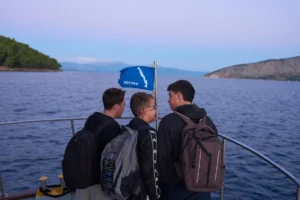
Kalamos has about 80 permanent residents. Around a decade ago, its schools and public daycare facilities served approximately 40 children. Today, only seven teenagers live on the island, and those attending secondary school must travel by boat to the mainland. Rough seas and strong winds can disrupt their journeys, sometimes preventing them from attending classes.
The island’s experience reflects a broader problem across Greece. Authorities closed 75 schools for the 2026–2027 academic year and suspended or extended the suspension of classes at more than 400 others because of insufficient pupil numbers, according to reports citing education authorities.
The decline is not limited to remote islands. Greek education data reported by Kathimerini show that enrolment in primary and secondary education has fallen substantially in recent years, while school closures, mergers and reductions in teaching positions have spread across the country.
Demographers warn that the loss of schools can deepen the decline. When families cannot access essential services locally, they may move to larger towns or cities, leaving fewer young people to establish households and have children. As the population shrinks further, maintaining schools, transport and other public services becomes increasingly difficult.
Byron Kotzamanis, co-founder of Athens’ Institute of Demographic Research, has warned that school closures can encourage young people to leave remote communities, accelerating depopulation and leaving settlements increasingly dominated by older residents.
The situation is also visible on the Greek island of Thymaina, where two young boys are the last primary-school pupils. According to Euronews, the island has lost many of the educational services once available to local families, while teenagers must travel by boat to attend school elsewhere.
Across the European Union, the challenge is linked to ageing populations and persistently low fertility. The EU recorded about 3.55 million births in 2024, while its fertility rate fell to a record low of 1.34 children per woman, well below the approximately 2.1 needed to maintain a population without migration.
Other countries are trying different approaches to keep remote communities alive. Croatia has invested in island infrastructure and educational facilities, while some Japanese islands have introduced support programmes to attract residents and students. On Italy’s Stromboli island, a school recently reopened in a village with just one pupil, illustrating how authorities may preserve educational services even where enrolment is exceptionally low.
The European Commission has also funded school modernisation projects on Greek island groups. However, local communities face challenges that infrastructure alone may not resolve, including limited employment, expensive transport, isolation and a lack of opportunities for younger residents.
For Kalamos, keeping the school open could depend on just a few families choosing to move there. Ntalaka and local officials have appealed for new residents, but the island’s longer-term prospects remain uncertain.
The empty desks are therefore more than a local education problem. They reflect a difficult question facing communities across Europe: how can remote areas retain young families and essential public services when there are fewer children to sustain them?