Health
OVER 300 JOURNALISTS BENEFIT FROM NUJ FCT AND NIZAMIYE HOSPITAL’S FREE MEDICAL CHECK-UP INITIATIVE IN ABUJA
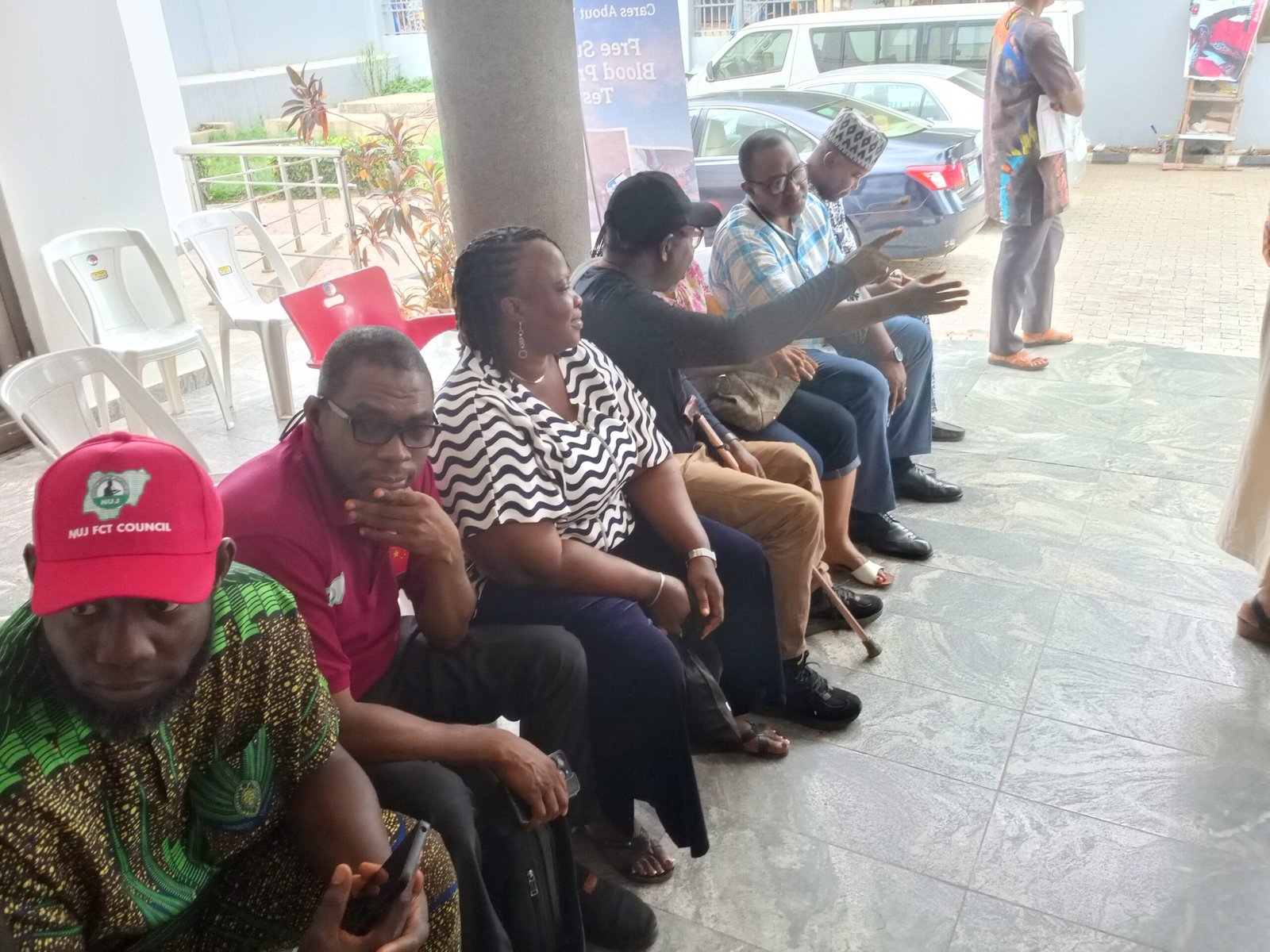
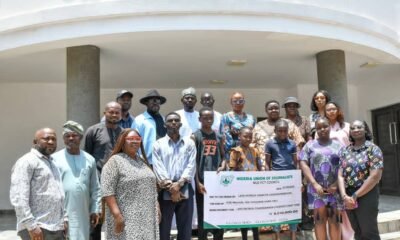
The Nigeria Union of Journalists (NUJ) Federal Capital Territory (FCT) Council, in partnership with Nizamiye Hospital, has provided free medical check-ups for over 300 journalists in Abuja. The medical outreach, held at the NUJ FCT Secretariat in Utako, revealed a high prevalence of high blood pressure and sugar level issues among the participants.

Chief of Defence Staff (CDS) General Christopher Musa praised the initiative, describing it as a critical step toward safeguarding journalists’ health. Represented by Director of Medical Services Surgeon Commodore Momoh Jimoh Salihu, the CDS said, “It is actually a laudable event and I want to say kudos to the NUJ FCT and the Nizamiye Hospital for organizing and conducting this medical outreach for journalists. This effort will improve the well-being and productivity of journalists in Abuja and help them stay focused on their job.”

NUJ FCT Chairman Comrade Grace Ike expressed gratitude to Nizamiye Hospital for deploying a team of specialists, including a general surgeon, internals, cardiologist, nephrologist, ophthalmologist, and general practitioners. “We will always make sure our members are healthy. They go out to the field every time and most times they barely have time to check on themselves,” she said.

The outreach is part of NUJ FCT’s wider plan to raise health awareness and provide free medical support to journalists. Comrade Ike noted that the results of the check-ups would help guide their efforts to secure health insurance for members. “This initiative demonstrates the union’s commitment to supporting journalists’ well-being,” she added. “It is our desire to make sure that we get health insurance for our members. The outcome of today’s outreach will better guide us.”

Comrade Ike promised that this wouldn’t be the last time, saying the union remains committed to looking after its members. “This will not be the last. We will continue to do this. Thank you to Nizamiye Hospital for taking up this challenge.”

Doctors from Nizamiye Hospital carried out various health checks, including heart health, bones and joints, eyes, and dental care. The hospital’s Deputy Chief Operating Officer, Mohammed Abubakar, said, “Our aim was to conduct medical screening for journalists in the FCT. The aim of the medical outreach is to prevent diseases. We are known to give humanitarian aids and this for us is a partnership with the NUJ FCT.”
The medical outreach identified several health issues, including high blood pressure, elevated blood sugar levels, hernia, and hemorrhage. The hospital will follow up with participants who require further treatment and management. Dr. Nurullo Sadokov, Deputy Medical Director of Nizamiye Hospital, stated that the medical outreach was part of the hospital’s corporate social responsibility. “I hope this screening will help journalists to identify and prevent diseases and sicknesses.”
Comrade Grace Ike expressed her joy and satisfaction with the exercise, stating that it aligns with her campaign focus on prioritizing welfare and inclusivity for journalists. She emphasized that the nature of the job often leaves the issue of healthcare neglected and revealed that efforts are ongoing to obtain health insurance for media members of the union under the National Health Insurance Scheme. “We will always make sure our members are healthy. They go out to the field every time and most times they barely have time to go for medical check-ups.”
The partnership between NUJ FCT and Nizamiye Hospital aims to promote better health and higher productivity among journalists in Abuja. The exercise was well-attended, with Comrade Ike thanking Nizamiye Hospital for bringing their team of specialists to check on NUJ members. “I am happy that members turned out en masse for this outreach. For me, I am happy that the team of medical doctors from Nizamiye hospital are here to check our members.”
Health
NACA Issues Warning: New HIV Injection Lenacapavir Unsafe for Pregnant Women
The National Agency for the Control of AIDS (NACA) has cautioned that the newly introduced twice-yearly HIV prevention injection, Lenacapavir, is not recommended for pregnant women due to insufficient safety data.
Director-General of NACA, Temitope Ilori, gave the advisory on Monday during a media briefing in Abuja, organised by the National HIV, Viral Hepatitis and Sexually Transmitted Infections Control Programme under the Federal Ministry of Health and Social Welfare.
“Even though LenPrEP is considered very safe based on global studies, it is not recommended for pregnant women,” Ilori said, stressing that the drug is strictly for prevention known as pre-exposure prophylaxis (PrEP) and not for treating existing HIV infections.
The drug, Lenacapavir, developed by Gilead Sciences, is administered via injection twice a year and is seen as a major breakthrough in HIV prevention, especially for individuals who struggle with daily oral PrEP adherence. Clinical trials have shown near-total protection against HIV among high-risk groups.
Nigeria recently received 11,520 doses through support from the Global Fund, marking the beginning of a phased nationwide rollout. Preparations, including regulatory clearance by National Agency for Food and Drug Administration and Control (NAFDAC), healthcare worker training, and community sensitisation, are already underway.
National Coordinator of the programme, Adebobola Bashorun, said efforts are ongoing to expand access, particularly among vulnerable populations.
“As we scale up, we are exploring catalytic funding to increase doses and reach those most at risk,” he said, adding that Lenacapavir will complement existing prevention tools rather than replace them.
Bashorun noted that reported side effects have been mild, mainly injection-site reactions such as pain or swelling, while authorities continue close monitoring for any adverse outcomes.
Minister of State for Health, Iziaq Salako, attributed the availability of the drug to partnerships with global donors and expressed optimism about future local production through technology transfer.
Despite its promise, officials warned that Lenacapavir does not protect against other sexually transmitted infections, including hepatitis, syphilis, or gonorrhoea. Users are therefore advised to maintain safer-sex practices, including condom use.
Nigeria continues to bear a significant HIV burden, with about 1.9 million people living with the virus and an adult prevalence rate of roughly 1.3%. While treatment coverage has improved, prevention gaps remain, particularly among young people and key populations.
Health authorities describe Lenacapavir as a potential “game-changer” in reducing new infections but stress that its success will depend on equitable access, sustained funding, and effective integration into the country’s broader HIV response strategy.
Health
Nigerian Dietitian Dismissed in UK Over False Qualifications, Competency Concerns
A Nigerian-born senior dietitian, Ifeyinwa Chizube Ndulue-Nonso, has been dismissed from her role in the United Kingdom after a tribunal found she misrepresented her qualifications and demonstrated serious gaps in basic medical knowledge.
Ndulue-Nonso was employed by Manchester University NHS Foundation Trust in February 2024 after scoring 62 percent during her interview. However, concerns about her competence reportedly surfaced within days of resuming duty.
According to tribunal findings, she admitted to exaggerating her experience during the hiring process, stating she had “lied over her qualifications a bit,” which she attributed to cultural differences.
Her supervisor, Lorna Haywood, raised alarm over what she described as “extremely concerning” knowledge gaps, noting that the issues involved fundamental aspects of human anatomy and clinical practice.
Among the reported errors, Ndulue-Nonso allegedly stated that urine is stored in the gallbladder and that radiotherapy is used to treat heart failure. She was also said to have struggled with calculating body mass index (BMI) and incorrectly identified parts of the digestive system.
Further concerns emerged when she reportedly admitted to lacking practical experience in key procedures she had claimed familiarity with, including intravenous feeding and the use of nutritional supplements. She was also said to have failed to recognise a feeding tube in a patient and was observed searching online for basic medical terms during work hours.
She was suspended in March 2024 pending an investigation into her credentials. Disciplinary proceedings later found that 20 out of the 28 areas of expertise she claimed were not supported by her actual knowledge or experience.
Following the outcome, she has been barred from practising as a registered dietitian in the UK.
The case has raised broader concerns about recruitment processes and verification of professional qualifications in the healthcare sector.
General News
Jehovah’s Witnesses Ease Rules On Blood Transfusions Allow Use Of Own Blood
Jehovah’s Witnesses has updated its long standing policy on blood transfusions, now allowing members to have their own blood removed, stored, and later returned during medical procedures.
The adjustment means adherents can undergo planned surgeries involving the use of their own blood, but the group still prohibits receiving blood donated by others.
Gerrit Losch, a member of the movement’s leadership, announced the change, stating that each individual Christian must decide how their blood is used in medical and surgical care.
Despite the revision, the organisation emphasized that its core belief on the sanctity of blood remains unchanged. The doctrine is rooted in interpretations of biblical teachings, which followers say instruct believers to abstain from blood.
The development has drawn mixed reactions. Some former members argue the update does not go far enough, particularly in emergency situations where donated blood may be required to save lives.
In a recent legal case in Edinburgh, a court ruled that doctors could administer a blood transfusion to a 14 year old Jehovah’s Witness if necessary to preserve her life, despite her refusal on religious grounds. The judge held that such intervention would be in the child’s best interest.
Jehovah’s Witnesses, known globally for their door to door evangelism, number about nine million members worldwide, including roughly 144,000 in the United Kingdom.