General News
AMAECHI JOINS ABUJA PROTEST AS SENATE REJECTS E-TRANSMISSION OF ELECTION RESULTS

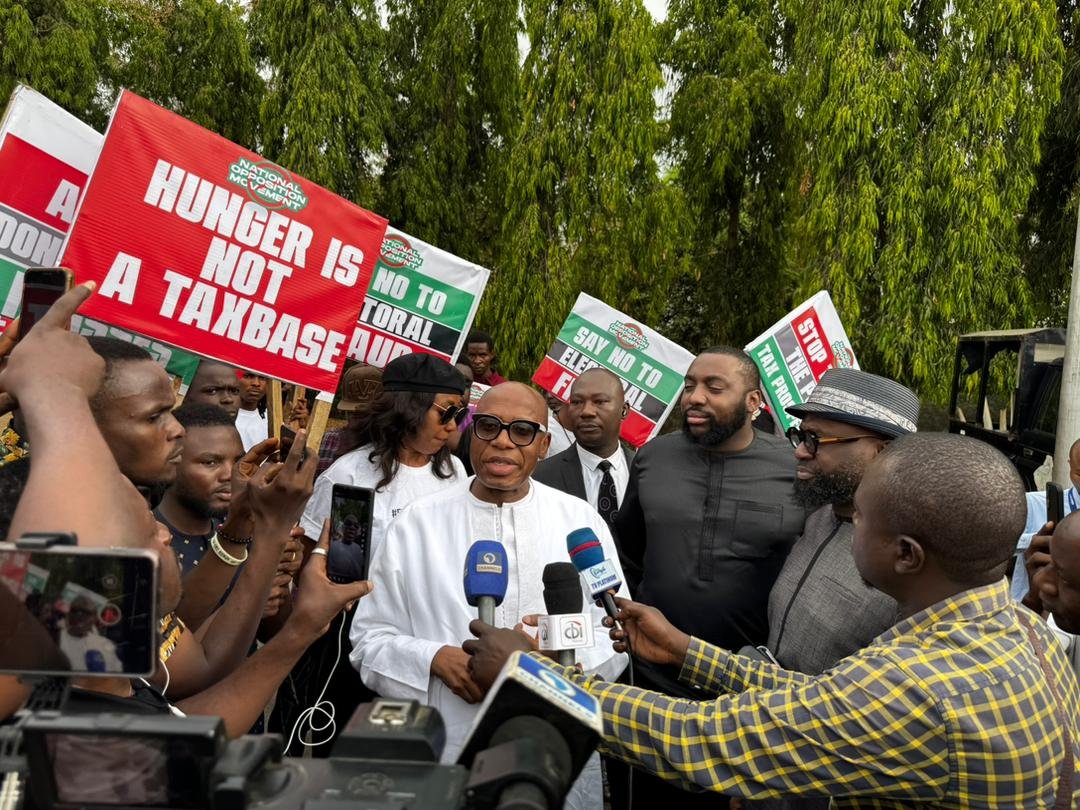
Former Rivers State Governor and ex-Minister of Transportation, Rotimi Amaechi, on Tuesday joined protesters at Nigeria’s National Assembly in Abuja, demanding electoral reforms following the Senate’s rejection of a bill seeking to make electronic transmission of election results mandatory.


Amaechi, who appeared at the protest ground on the second day of demonstrations, said he brought along his first son, a medical doctor, to attend to protesters in the event of injuries.
“I brought my first son to join the protest. He is a medical doctor; his job is if there’s injury to treat the injured ones,” Amaechi said while addressing demonstrators.
The protest was organised by civil society groups and political activists who argue that electronic transmission of results is critical to restoring public confidence in Nigeria’s electoral process. Demonstrators accused the Senate of deliberately weakening reforms ahead of the 2027 general elections.
Amaechi’s presence at the protest has sparked mixed reactions, particularly among critics who question his motivations and timing. Once a key figure in the political realignment that led to the formation of the All Progressives Congress (APC) and the election of former President Muhammadu Buhari, Amaechi has in recent years fallen out of the inner circle of the ruling party.
Some observers see his participation as evidence of growing internal dissent within the APC, while others question whether his current stance reflects genuine reformist convictions or political repositioning after losing influence within the party.
The Senate has defended its decision, arguing that technical and security concerns informed its rejection of compulsory electronic transmission of results. However, protesters insist that the move undermines transparency and opens the door to electoral manipulation.
As demonstrations continue, questions remain over whether pressure from political figures like Amaechi and civil society groups will force lawmakers to revisit the bill or whether the protest marks yet another flashpoint in Nigeria’s long-running struggle for credible elections.