Connect with us

Environment

The Cruel Nature of Humanity: Planetary Exploration, Extortion and Extraction 

Published

on

Share


By AVM (Rtd.) Akugbe Iyamu, MNSA, fsi

The world is now confronting unavoidable planetary emergencies. No nation, institution, or individual can excuse themselves from the chain of actions and inactions that have led to extreme weather events and accelerating climate change.
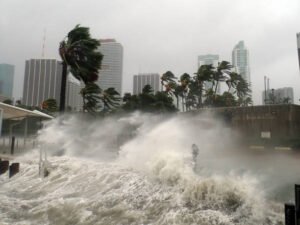
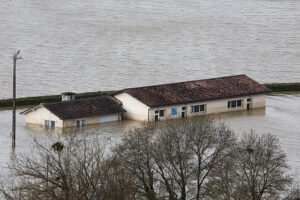
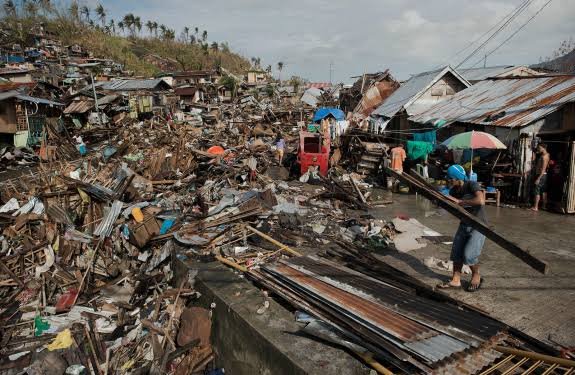
The planet is no longer a self-justifying resource to be created, consumed, and pillaged without restoration. Earth can not sustain endless extraction without deliberate renewal. The extreme weather conditions of 2026 have marked a turning point — a ferment of reckoning — demanding that humanity lead planetary restoration with courage and conviction.


Planets do not degrade themselves. People degrade the planet. Every delay in restoration deepens the damage — economically, socially, and environmentally.


Planetary degradation is the systemic, anthropogenic erosion of Earth’s natural systems — including climate stability, biodiversity, and biogeochemical cycles — driven by overconsumption, pollution, and destructive land-use changes. It represents a breach of safe operating boundaries, such as climate equilibrium and biodiversity thresholds, threatening global stability and potentially the long-term habitability of our world.


Let it be clearly stated: as long as poverty, hunger, displacement, and inequality persist, environmental degradation will continue. Climate change is not isolated from social injustice; it is both a cause and a consequence of structural inequality. Extreme weather patterns are not random episodes — they are stories written by human choices.


A renewed learning process is therefore critical. Humanity must adopt a new attitude — one that prioritizes the greatest good for the greater majority rather than continuous global overconsumption. History has a symmetry: those who dominate in one era are eventually called to account in another.

See also  OPINION: A NEW DAWN FOR NEW DELTA AND ANIOMA STATEHOOD – Senator Ned Nwoko


For industrialized nations of the Global North, the most urgent transition is from the centrality of economic growth to the centrality of climate responsibility. Unrestrained economic expansion has fostered an illusion of indispensability — the belief that development must continue at any cost and that history pauses in their absence. It does not.


Those who once commanded the Industrial Revolution can no longer answer climate questions from the wings. Climate change has entered a cyclical phase where rhetoric meets record, posture meets proof. No matter how skillfully staged, subterfuge ultimately yields to institutional accountability and scientific evidence.


The global climate now stands at a decisive juncture. We are compelled to confront excessive planetary degradation with firm resolve. The choice before us will shape human survival and determine whether we restore collective confidence in our capacity to protect and renew the Earth.


The time for cautious rhetoric has passed. What is required now is structured action, equitable responsibility, and unwavering commitment to environmental restoration.


AVM (Rtd.) Akugbe Iyamu, MNSA, fsi

Consultant on Climate Change and Analyst on Environmental Policies

President, Association of Environmental Protection, and Climate Change Practitioners

Continue Reading
Click to comment

Leave a Reply

Your email address will not be published. Required fields are marked *

Environment

Maldives Experience: Nigeria Can Turn Extreme Weather into Prosperity with Good Governance

Published

on

Share

The conversion of Maldives extreme weather experience into economic prosperity is possible in Nigeria if the country fix governance, transparency and accountability.

Three things are implicated and prioritized in building good resistance and resilience against extreme weather, climate change and planetary restorations : accountability, transparency and good governance.

However, Nigeria’s limited adaptive capacity, driven by economic, institutional, and infrastructure challenges, leaves the country highly exposed to these climate hazards.

Let look at climate actions across vulnerable countries like the Maldives, the sahel region and the Gulf of Guinea starting with Maldives where extreme weather threats has been transformed into building good governance, transparency and accountability.

In the Maldives, Climate change poses an existential threat with 80% of its islands sitting less than one meter above sea level, risking total submersion by 2100 due to sea-level rises of up to 0.9 meters.

Key impacts include severe coastal erosion, flooding, destruction of coral reefs, depletion of freshwater aquifers, and threats to tourism and fishing, which are critical to the nation’s economy.

The efforts of the government is creating progress and prosperity in recreational communities and attracting over 2m tourists annually is turning adversity into prosperity.


In corollary, Nigeria sits in the 2 most promising economic areas in the world: the Gulf of Guinea and the sahel region. How does Nigeria create economic growth and prosperity from the crisis in this region starting with the Gulf of Guinea.

Climate change in the Gulf of Guinea drives severe sea-level rise (~3.89 mm/yr), causing intense coastal erosion, flooding, and saltwater intrusion that destroy infrastructure and ecosystems.

See also  MATTERS ARISING:TAX REFORM BILLS AND KANO EMIRSHIP TUSSLE

Rising temperatures and erratic rainfall threaten fishing, agriculture, and livelihoods, particularly in densely populated cities like Lagos, Accra, and Abidjan.

Nigeria can turn her economic challenges into fortunes if she approaches the sahel region with the Maldives model where climate actions changed threat to prosperity and progress.

On the otherhand, the sahel Savannah is the region of contradictions in poverty, insecurity and prosperity.

The Sahel is experiencing rapid, severe climate change impacts, with temperatures rising 1.5 times faster than the global average.

Key effects include erratic rainfall, severe droughts, and intense flooding, which degrade agricultural productivity, destroy livelihoods, drive displacement of millions, and exacerbate conflict over scarce resources.

Let’s understand the real issue of climate change in Nigeria and the need to redouble efforts and create the pathway and framework for economic growth and development.

How has governance, transparency and accountability change the fight against climate change in Nigeria.

Climate change in Nigeria drives severe environmental and economic crises, including devastating floods in the south, rapid desertification in the north, and extreme heatwaves nationwide, making it one of the world’s most vulnerable countries.

These shifts destroy agriculture, reduce food security, and cause violent conflicts over dwindling resources. As the country prepares for the 2026 season of extreme weather conditions, the choice between politics, elections and environmental protection and economic consequences stares at the nation.

Nigeria must remember that the World Economic Forum has identified extreme weather conditions as the third most disruptive action against global economy because anywhere there is natural disasters, there are also economic disasters.

See also  NIGERIA NEED HER FOREST TO BE PRESERVED


AVM RTD AKUGBE IYAMU MNSA fsi

CONSULTANT ON CLIMATE CHANGE AND ANALYST ON ENVIRONMENTAL POLICIES


PRESIDENT ASSOCIATION OF ENVIRONMENTAL PROTECTION AND CLIMATE CHANGE PRACTITIONERS

Continue Reading

Environment

TANKER SALVAGE OPERATION SUCCESSFULLY UNDERWAY AT LAGOS BRIDGE (+VIDEO)

Published

on

Share

The Lagos State Fire and Rescue Service is actively salvaging a 45,000-litre diesel tanker that upturned at Liverpool bridge outward Apapa, Tin Can Island, Lagos. Emergency officials confirm the situation is now under control.

The tanker was successfully saved from a secondary incident. Security agents were deployed to curtail a crowd attempting to scoop the fuel. “Emergency scene secured from scoopers,” an update confirmed, allowing safe trans-loading of the remaining contents to proceed.

Authorities are urging motorists to take alternative routes while maintaining control of the affected area.

Operations are ongoing with further details expected.

See also  KARMA AT WORK: THE TINUBU-LED APC AND THE NEW ADC COALITION - A CASE OF DEJA VU?
Continue Reading

Environment

NIGERIA LEADS WEST AFRICA IN CLIMATE COMMITMENT, EYES INVESTMENT BOOST AT COP30

Published

on

Share

Nigeria has solidified its position as West Africa’s climate action leader after submitting the region’s first 3rd National Determined Contribution to the United Nations Framework Convention on Climate Change. Vice President Kashim Shettima is set to unveil Nigeria’s green transition roadmap at the COP30 summit in Belém, Brazil, aiming to transform climate commitments into concrete investment opportunities and projects.

In a statement, Senior Special Assistant to The President on Media and Communications, Stanley Nkwocha, emphasized Nigeria’s dedication to global climate goals. “For us as a country, it is not just about our participation at COP 30 in Belem, Brazil, but it shows clearly the President’s commitment to the 2016 Paris accord, to which Nigeria is a signatory, and ensuring that article 13 of that accord, which talks about climate change, is duly pursued and being implemented to the letter,” Nkwocha stated.

Director General of Nigeria’s National Council on Climate Change, Tenioye Majekodunmi, revealed Nigeria’s pioneering status in an interview ahead of the summit’s opening ceremony. Majekodunmi noted with delight that Nigeria’s early submission positions the country to leverage COP30 for substantial investment gains and partnerships. In a statement, she said, “This is particularly what we call the implementation COP that we have all been waiting for here in Belem, and we are very excited that it has come. COP 30 is particularly important for us in Nigeria because of the momentum that we have gathered in the last two months leading up to the summit. First with the submission of our NDC 3.0 and us being the first West African country to submit—this is a turning point for Nigeria.”

See also  GAZA CAN NEVER BE DEFEATED AND HER PEOPLE CAN NEVER BE MOVED TO EGYPT AND JORDAN!

Majekodunmi highlighted three key takeaways for Nigeria at COP30. She explained that the summit would help turn deliverables in the NDC 3.0 into pipeline projects, partnerships, and pay-for-performance models. “We need to start turning from paper to projects, and COP 30 is where Nigeria would be doing this,” she added. Secondly, she pointed to Nigeria’s recent approval of the National Carbon Market Framework and operationalisation of the National Climate Change Fund, which signals to investors that Nigeria is open for high-integrity carbon investments. In a statement, Majekodunmi emphasized, “Belem gives us the right global matchmaking platform to be able to achieve this, and we are quite excited about what is going to happen.” Thirdly, she noted Nigeria’s aim to deepen South-South cooperation on climate change, particularly through forest protection initiatives with regions like the Amazon, Congo, and Guinea.

Nkwocha further outlined Nigeria’s emission reduction targets, confirming the country’s commitment to cutting emissions by 32 percent by 2035. He stated that Vice President Shettima would present Nigeria’s climate action address at the general plenary of leaders and participate in a high-level thematic session on “Climate and Nature: Forests and Oceans.” Nkwocha reiterated that Nigeria’s participation underscores its alignment with the Sustainable Development Goals and the Paris Accord.

Continue Reading