Government
Shettima Sets Up Committee to Develop Funding Framework for Nigeria’s Nutrition Interventions
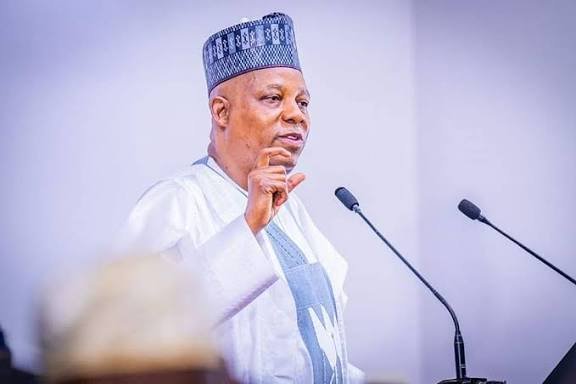
Vice President Kashim Shettima has announced the establishment of a Nutrition Financing Subcommittee to develop a sustainable funding structure for Nigeria’s nutrition interventions.
The decision was taken during a virtual meeting of the National Council on Nutrition (NCN) chaired by the Vice President, where he also called for the ring-fencing of nutrition financing to ensure that policy commitments translate into tangible improvements in people’s lives.
The newly constituted subcommittee has been given 30 days to develop a financing roadmap that will be presented to the council and the National Economic Council (NEC) for review and final adoption.
The committee will be chaired by the Coordinating Minister of Health and Social Welfare, Muhammad Ali Pate, and includes the Ministers of Education, Water Resources, Women Affairs, and Science and Technology, alongside the Deputy Chief of Staff to the President and the Senior Special Assistant to the President on Public Health. The Federal Ministry of Budget and Economic Planning will serve as the secretariat.
Shettima also directed that development partners and private sector investors be involved in the process, including the Aliko Dangote Foundation.
Speaking after the meeting, the Vice President stressed the need to urgently pursue the National Nutrition Bill to establish a stronger legal and institutional framework for coordinating, financing, and monitoring nutrition interventions across sectors.
“Council recognises the importance of establishing a strong legal and institutional framework to sustain coordination, financing, and accountability across sectors. Council therefore resolves that the National Nutrition Bill should be pursued with urgency,” he said.
According to him, budgetary allocations for nutrition programmes must be matched with timely releases and effective utilisation, adding that ministries, departments and agencies must ensure approved funds for nutrition-related initiatives are implemented accordingly.
Shettima also highlighted the importance of the Accelerating Nutrition Results in Nigeria Project (ANRiN) 2.0, describing it as a key initiative for addressing service delivery gaps in states with high malnutrition burdens. He urged state governors to expedite necessary actions to ensure the programme is effectively implemented.
“If our efforts are to succeed, they must not stop at the federal level. Nutrition outcomes are ultimately determined within households and communities,” the Vice President said, calling for stronger state and grassroots participation.
The council also emphasised that women must remain at the centre of nutrition interventions, noting their critical role in household nutrition, childcare, and food systems.
Shettima stressed that financing remained the central challenge in Nigeria’s nutrition reform agenda.
“Budgeting without release is not financing. Allocation without predictability is not reform. Nutrition must be protected,” he said, adding that government agencies must now account not just for budget figures but for measurable improvements in citizens’ lives.
He also called for improved budget tagging, tracking, and reforms to ensure transparency and accountability in nutrition financing.
Earlier, the council received updates on the Food and Nutrition Security Preparedness Plan, the Nutrition 774 implementation framework, and the proposed nutrition legislation.
Representatives of state governments, development partners, and stakeholders, including AbdulRahman AbdulRazaq, the governor of Kwara State, Muhammad Sanusi II of the Nutrition Society of Nigeria, the Aliko Dangote Foundation, and UNICEF, reaffirmed their support for nutrition-focused programmes across the country.
The council was also informed that State Councils on Nutrition have already been inaugurated in nine states Abia State, Adamawa State, Borno State, Cross River State, Jigawa State, Plateau State, Rivers State, Yobe State, and Zamfara State, with more states expected to follow.
General News
Tinubu Government Moves to Revive Textile Industry with New Development Board Plan
The Federal Government has inaugurated a Textile Steering Committee to lay the groundwork for a Cotton, Textile, and Garment Development Board, aimed at reviving Nigeria’s struggling textile industry.

The initiative is part of the Renewed Hope Agenda under President Bola Ahmed Tinubu, which focuses on industrial growth, job creation, and economic diversification.

Speaking at the Abuja ceremony, Secretary to the Government of the Federation, George Akume, highlighted that the textile sector, once a major contributor to the economy and rural livelihoods, has faced declining production, poor infrastructure, inconsistent policies, and competition from smuggled products.

He urged the committee to prioritise local content and public-private partnerships, assuring government support for implementing their recommendations.

The committee, chaired by Mr. Abia Ifiok Bassey includes representatives from key industry associations such as the Nigerian Textile Manufacturers Association, Fashion Designers Association of Nigeria, Apparel and Accessories Manufacturers Association, and the National Cotton Association of Nigeria.

Coordinator of the Cotton, Textile and Garment Development Forum, Anibe Achimugu, described the move as a historic step toward rebuilding Nigeria’s cotton, textile and garment sector and coordinating policy, investment, and standards across the industry.
Government
STATES RECEIVE N551.77 BILLION VAT ALLOCATION IN JANUARY UNDER NEW TAX SHARING FORMULA
Nigeria’s 36 state governments received a combined N551.77 billion as their share of Value Added Tax revenue in January 2026, marking a sharp rise following the implementation of the Federal Government’s new tax sharing framework.
Data presented by the Federation Account Allocation Committee showed that the amount represents a 30.4 percent increase compared with the N423.25 billion shared by states in December 2025. The increase comes as the country begins distribution under the newly introduced tax laws, which altered the VAT sharing formula among the three tiers of government.
Under the revised arrangement, the Federal Government now receives 10 percent of net VAT, down from the previous 15 percent, while states’ share increased to 55 percent, up from 50 percent. The 35 percent allocation to local governments remains unchanged.
Figures from the Nigeria Revenue Service indicated that total VAT collections rose to N1.08 trillion in January, up from N913.96 billion in December 2025. After deductions at source amounting to N79.9 billion, the net VAT available for distribution stood at about N1 trillion.
From the net amount, the Federal Government received N100.32 billion, representing its new 10 percent share, while states collectively received N551.77 billion. Local governments were allocated N351.13 billion.
The Federal Government’s allocation represents a decline from N126.98 billion received in December under the old formula, translating to a drop of N26.65 billion, or about 21 percent. States, however, recorded a significant gain. Their combined share rose by N128.52 billion, from N423.25 billion in December to N551.77 billion in January.

Local governments also saw an increase in their allocation, receiving N351.13 billion in January, compared with N296.28 billion in December, representing an 18.5 percent rise.
Meanwhile, the cost of revenue collection also increased during the period. The revenue service reported N43.33 billion as collection cost in January, up 32.4 percent from N32.72 billion recorded in December.
Other statutory deductions included 3 percent to the North East Development Commission project account, which rose to N31.20 billion from N26.32 billion. The 0.5 percent deduction for the Revenue Mobilization Allocation and Fiscal Commission also increased to N5.42 billion from N4.57 billion. Combined deductions to the two agencies amounted to N36.61 billion in January, compared with N30.89 billion in December, reflecting a month-on-month increase of N5.72 billion.
FAAC’s broader revenue summary showed that total funds available for distribution in January across revenue lines stood at N3.04 trillion. After total deductions of N1.14 trillion, the net distributable revenue stood at N1.90 trillion. Of this amount, N896.78 billion came from statutory revenue, while N1 trillion was from net VAT.
When both revenue sources were combined, the Federal Government received N525.23 billion, while state governments received N767.29 billion. Local governments were allocated N517.28 billion, while the 13 percent derivation share stood at N90.19 billion.
A breakdown of VAT allocations among states showed Lagos State remaining the largest beneficiary, with N111.22 billion in gross VAT allocation. After deductions of N9.89 billion, the state retained N101.34 billion, while its local governments collectively received N70.57 billion.
Other top recipients included Oyo State with N24.04 billion, Rivers State with N23.57 billion, Kano State with N17.37 billion, and the Federal Capital Territory with N15.76 billion. Also among the higher allocations were Bayelsa State with N15.07 billion, Katsina State with N13.82 billion, Jigawa State with N12.92 billion, Delta State with N12.89 billion, and Kaduna State with N12.73 billion.
States with relatively lower allocations included Ekiti State with N9.83 billion, Nasarawa State with N9.77 billion, Ebonyi State with N9.45 billion, and Taraba State with N9.37 billion.
Economy
Nigeria Set To Unveil National Single Window Platform March 27
Nigeria will officially launch its long-awaited National Single Window (NSW) platform on March 27, marking what the Chief of Staff to the President, Femi Gbajabiamila, described as a landmark reform in the country’s trade and fiscal architecture.
Gbajabiamila made the disclosure during a high-level stakeholders’ meeting at the State House, Abuja, attended by ministers, heads of key government agencies, and senior officials.
He noted that the initiative, first introduced by President Bola Ahmed Tinubu nearly two years ago, represents a major fiscal reform designed to simplify trade processes, boost operational efficiency, and strengthen Nigeria’s global competitiveness.
“We are about to launch yet another reform by this administration — one that is transformational in nature,” he said. “As the name implies, it is a single national window, replacing multiple fragmented systems. This meeting is to assess our progress and secure collective commitment to ensure a smooth transition.”
The Chief of Staff commended the professionalism and dedication of participating institutions, including the Central Bank of Nigeria, the Nigeria Revenue Service, and the Nigeria Customs Service, among others.
Earlier, the NSW Coordinator, Mr. Tola Fakolade, urged agencies to intensify collaboration in the remaining 23 days before the platform goes live. He explained that the first phase will facilitate online processing of import permits, electronic submission of cargo manifests, and deployment of a centralised risk management system.
Fakolade disclosed that nationwide user training is already underway, while pilot testing will soon commence to guarantee a seamless rollout. He added that cargo manifests will be electronically transmitted to relevant agencies automatically, eliminating manual intervention and duplication.
“The support from all agencies is even more critical at this stage. Documents will be submitted once and shared across all relevant agencies without duplication,” he stated.
The Coordinating Minister of the Economy and Minister of Finance, Wale Edun, reaffirmed the ministry’s backing, describing the initiative as growth-enhancing and vital to economic expansion.
Similarly, the Minister of Industry, Trade and Investment, Jumoke Oduwole, described the NSW as a key pillar of the Renewed Hope Agenda. She noted that the reform is long overdue and pledged intensified engagement with traders, importers, and exporters in the weeks ahead.
Governor of the Central Bank of Nigeria, Olayemi Cardoso, also assured the Bank’s full support, stressing the importance of bridging Nigeria’s trade facilitation gap with peer economies.
Chairman of the Nigeria Revenue Service, Zacch Adedeji, called for stronger inter-agency coordination and political commitment, suggesting that the Trade Minister oversee the final 23-day implementation phase.
On his part, Comptroller-General of the Nigeria Customs Service, Bashir Adeniyi, described the project as historic and pledged sustained stakeholder engagement to ensure its success.
At the close of the meeting, the Minister of Industry, Trade and Investment was formally mandated to lead the final implementation phase ahead of the March 27 launch.
Other agencies represented at the meeting included the Standards Organisation of Nigeria, the Nigerian Maritime Administration and Safety Agency, the Nigerian Ports Authority, the National Agency for Food and Drug Administration and Control, the Federal Airports Authority of Nigeria, the Nigeria Agricultural Quarantine Service, and the National Environmental Standards and Regulations Enforcement Agency.
.