
Government
Shettima Sets Up Committee to Develop Funding Framework for Nigeria’s Nutrition Interventions

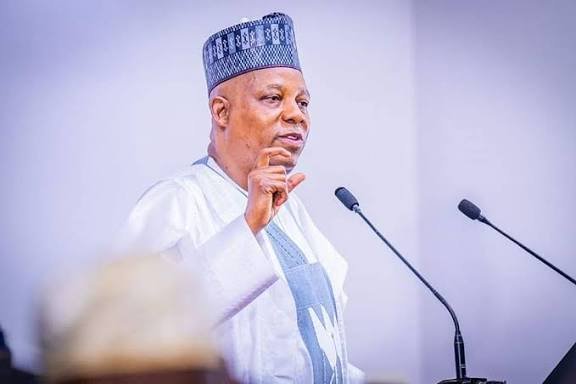
Vice President Kashim Shettima has announced the establishment of a Nutrition Financing Subcommittee to develop a sustainable funding structure for Nigeria’s nutrition interventions.
The decision was taken during a virtual meeting of the National Council on Nutrition (NCN) chaired by the Vice President, where he also called for the ring-fencing of nutrition financing to ensure that policy commitments translate into tangible improvements in people’s lives.
The newly constituted subcommittee has been given 30 days to develop a financing roadmap that will be presented to the council and the National Economic Council (NEC) for review and final adoption.
The committee will be chaired by the Coordinating Minister of Health and Social Welfare, Muhammad Ali Pate, and includes the Ministers of Education, Water Resources, Women Affairs, and Science and Technology, alongside the Deputy Chief of Staff to the President and the Senior Special Assistant to the President on Public Health. The Federal Ministry of Budget and Economic Planning will serve as the secretariat.
Shettima also directed that development partners and private sector investors be involved in the process, including the Aliko Dangote Foundation.
Speaking after the meeting, the Vice President stressed the need to urgently pursue the National Nutrition Bill to establish a stronger legal and institutional framework for coordinating, financing, and monitoring nutrition interventions across sectors.
“Council recognises the importance of establishing a strong legal and institutional framework to sustain coordination, financing, and accountability across sectors. Council therefore resolves that the National Nutrition Bill should be pursued with urgency,” he said.
According to him, budgetary allocations for nutrition programmes must be matched with timely releases and effective utilisation, adding that ministries, departments and agencies must ensure approved funds for nutrition-related initiatives are implemented accordingly.
Shettima also highlighted the importance of the Accelerating Nutrition Results in Nigeria Project (ANRiN) 2.0, describing it as a key initiative for addressing service delivery gaps in states with high malnutrition burdens. He urged state governors to expedite necessary actions to ensure the programme is effectively implemented.
“If our efforts are to succeed, they must not stop at the federal level. Nutrition outcomes are ultimately determined within households and communities,” the Vice President said, calling for stronger state and grassroots participation.
The council also emphasised that women must remain at the centre of nutrition interventions, noting their critical role in household nutrition, childcare, and food systems.
Shettima stressed that financing remained the central challenge in Nigeria’s nutrition reform agenda.
“Budgeting without release is not financing. Allocation without predictability is not reform. Nutrition must be protected,” he said, adding that government agencies must now account not just for budget figures but for measurable improvements in citizens’ lives.
He also called for improved budget tagging, tracking, and reforms to ensure transparency and accountability in nutrition financing.
Earlier, the council received updates on the Food and Nutrition Security Preparedness Plan, the Nutrition 774 implementation framework, and the proposed nutrition legislation.
Representatives of state governments, development partners, and stakeholders, including AbdulRahman AbdulRazaq, the governor of Kwara State, Muhammad Sanusi II of the Nutrition Society of Nigeria, the Aliko Dangote Foundation, and UNICEF, reaffirmed their support for nutrition-focused programmes across the country.
The council was also informed that State Councils on Nutrition have already been inaugurated in nine states Abia State, Adamawa State, Borno State, Cross River State, Jigawa State, Plateau State, Rivers State, Yobe State, and Zamfara State, with more states expected to follow.