General News
Ekiti 2026: CEMESO, EU Urge Journalists to Strengthen Professionalism Ahead of Governorship Election

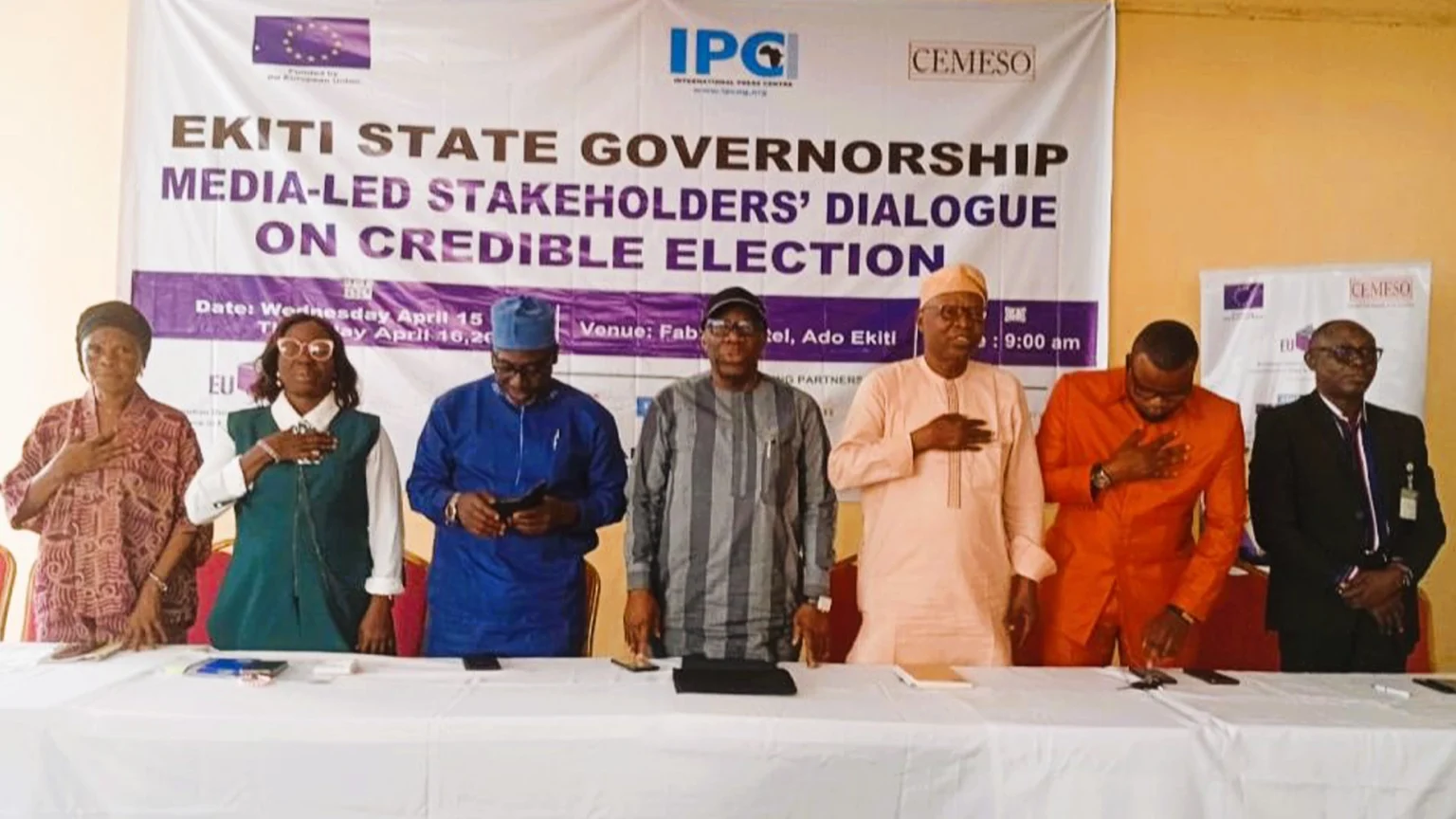
As preparations intensify for the June 2026 Ekiti State governorship election, the Centre for Media and Society (CEMESO) has called on journalists to uphold the highest standards of professionalism, stressing that the media plays a central role in determining the credibility of electoral outcomes.

The Executive Director of CEMESO, Akin Akingbulu, made the appeal at a Media Stakeholders Forum on Credible Elections held in Ado-Ekiti, where he urged media practitioners to see themselves as key actors in democratic consolidation rather than passive observers.
Akingbulu said the integrity of any election is not only determined on election day, but is largely shaped by the quality of information citizens receive long before they cast their votes.
According to him, a fundamental question that should guide every electoral process is not just who emerges victorious, but whether the process itself will be trusted by the public.
He emphasised that journalists hold significant influence in shaping public perception through their reporting choices, framing of issues, and storytelling approaches.
“The pen, microphone, and digital platforms, when guided by evidence and professional ethics, remain among the strongest tools for sustaining democracy,” he said.
Akingbulu also warned that off-cycle elections like Ekiti’s are particularly vulnerable to voter apathy, limited public engagement, and heightened political manipulation, noting that these factors often widen the gap between what citizens know and what they need to know.
He therefore called for consistent, intentional, and in-depth media coverage to ensure informed participation in the electoral process.
Also speaking at the forum, the Executive Director of the International Press Centre (IPC), Lanre Arogundade, warned that Nigeria’s electoral environment continues to face serious challenges including violence, vote buying, misinformation, weak enforcement of electoral laws, and emerging threats such as deepfakes.
He stressed that in such a complex environment, the responsibility of the media to provide accurate, balanced, and fact-based reporting has become even more critical.
According to him, credible elections depend not only on electoral institutions but also on a media sector that is well-prepared, ethically grounded, and resistant to partisan pressure.
The forum, organised under the European Union Support to Democratic Governance in Nigeria (EU-SDGN II), also received backing from the European Union, which reiterated that electoral credibility is built on three pillars: informed citizens, accountable institutions, and a responsible media ecosystem.
Stakeholders at the event also announced ongoing training and support programmes for journalists ahead of the polls, including the use of fact-checking tools and digital verification platforms to counter misinformation and strengthen newsroom capacity.
They noted that similar interventions previously implemented in states such as Edo, Kogi, Anambra, and Ondo have helped improve electoral coverage and public confidence in democratic processes.