Politics
Obi Faults Forest Guard Plan, Says Tinubu’s Approval Shows Poor Leadership

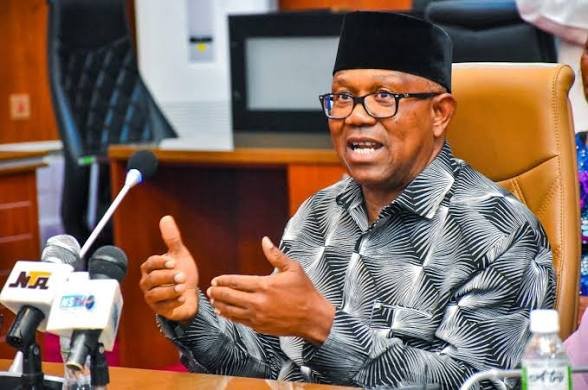
The 2027 presidential candidate of the Nigeria Democratic Congress, Peter Obi, has criticised President Bola Tinubu’s reported approval for the recruitment of 1,000 forest guards in Oyo State, describing the move as a demonstration of poor leadership and a reactive approach to governance and security.
In a statement posted on his X handle on Friday titled “What Our Pervasive Insecurity Requires: A Holistic, Not Reactive Approach,” Obi said the decision was made in a hasty effort to appear attentive and courageous following the recent abduction of schoolchildren and teachers in Oriire Local Government Area of Oyo State.

Obi drew a parallel between the forest guard approval and other government policies such as the sudden removal of fuel subsidy and the floating of the naira, which he argued have caused irreparable damage to ordinary Nigerians and the economy.
The former Anambra State governor acknowledged that recruiting more security personnel is necessary, but insisted such measures should be implemented through a more organised and well-thought-out national strategy rather than as isolated responses to emerging threats.
He noted that nearly all 36 states in Nigeria are experiencing different forms of insecurity, with Oyo, Plateau, Kwara, Kogi, Borno, Katsina, Anambra, Niger, Imo, and Sokoto facing particularly alarming situations.
Obi questioned whether similar approvals would be extended to all states and the Federal Capital Territory, pointing out that such a move would amount to the recruitment of about 37,000 forest guards nationwide.
“The question, such as the reactive approach of our President, is whether all the states will receive the same approval to recruit 1000 forest guards per state, that is 37,000 forest guards for the 36 states and Abuja, or is the recruitment approval based on the mood of the President?” he asked.
He also raised concerns about the implications of the initiative for existing regional security outfits, particularly the Western Nigeria Security Network codenamed Amotekun, which currently operates across the South-West region.
“Moreover, with the approval for Oyo, what will happen to the Amotekun Corps that is trying its best to secure South-West Nigeria? Will they be disbanded in Oyo state?” Obi queried.
He maintained that Nigeria’s pervasive insecurity is directly related to what he described as systemic leadership failure, noting that over 10,000 innocent Nigerians have reportedly been killed since 2023 while the country remains among the world’s most terror-affected nations.
Obi stressed that addressing the nation’s security challenges requires a holistic or ecosystem approach that tackles both the symptoms and root causes of insecurity.
He linked leadership failures to broader breakdowns in national unity, industrialisation, and the inability to harness Nigeria’s abundant resources in agriculture, minerals, tourism, water, sports, and oil and gas to generate revenue, growth, and crucially jobs for the exponentially growing youth population.
“With failure in leadership, there is failure in unifying our dear nation, failure in industrialisation, failure in harnessing our abundant resources,” Obi said.
He concluded by expressing optimism that a new and productive Nigeria remains possible through purposeful leadership, economic productivity, and effective governance.