
General News
Three Years of Democracy Under Tinubu: Government Highlights Gains from Economic Reforms

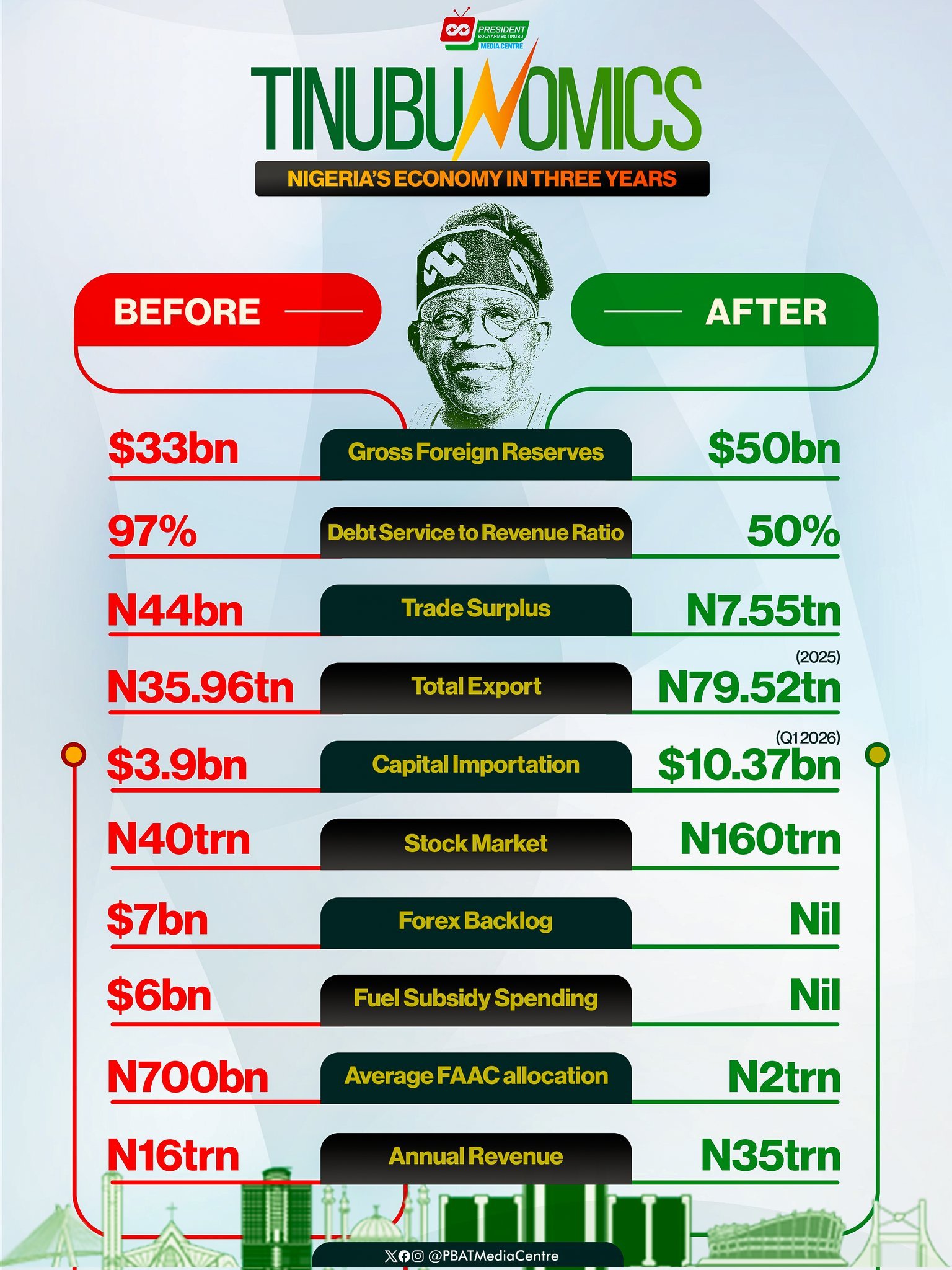
As Nigeria marks three years under President Bola Ahmed Tinubu’s administration, the Federal Government has defended its economic reform agenda, insisting that difficult policy decisions taken since 2023 are beginning to produce long-term benefits for the nation’s economy.


Speaking during activities marking the 2026 Democracy Day celebrations, government officials said reforms introduced under the Renewed Hope Agenda have helped stabilize public finances, improve revenue generation, restore investor confidence, and lay the foundation for sustainable economic growth.
Among the administration’s most significant policy measures were the removal of fuel subsidies, reforms in the foreign exchange market, efforts to boost non-oil revenues, and initiatives aimed at strengthening fiscal discipline. According to President Tinubu, these decisions were necessary to address long-standing structural weaknesses in the economy and prevent a deeper fiscal crisis.
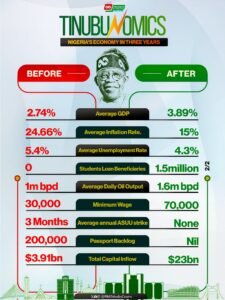
Government figures indicate that Nigeria’s Gross Domestic Product (GDP) expanded by 4.07 percent in the fourth quarter of 2025 and 3.89 percent in the first quarter of 2026, reflecting continued economic growth despite global and domestic challenges. Officials also point to improved revenue mobilization, increased infrastructure spending, and growing investment interest across key sectors of the economy.
In his Democracy Day address, President Tinubu stated that the reforms have restored credibility and stability to economic management, adding that investor confidence has strengthened in sectors including agriculture, energy, manufacturing, technology, mining, transportation, and the creative industry.
The administration further highlighted progress in infrastructure development, noting that thousands of kilometres of roads are currently under construction or rehabilitation, while investments in rail transport and energy infrastructure continue. Government officials argue that these projects will support economic expansion and job creation over the long term.
However, the reforms have also attracted criticism from opposition figures, labour groups, and some economists who argue that the policies contributed to rising living costs, inflationary pressures, and hardship for many households. While acknowledging these challenges, the government maintains that the short-term difficulties are part of a broader transition toward a more resilient and competitive economy.
Economic observers note that the ultimate success of the reforms will depend on whether macroeconomic gains translate into lower poverty levels, job creation, improved purchasing power, and better living standards for ordinary Nigerians in the years ahead.