
Featured
The Irony of an Unprotected Protector


By Lemmy Ughegbe, Ph.D
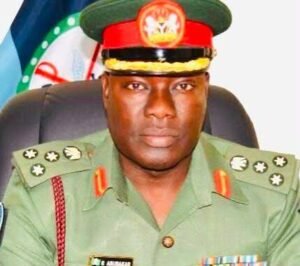
Major General Rabe Abubakar gave the better part of his life to the defence of Nigeria, only to die as a hostage in the hands of the criminality the state has sworn to defeat. The irony is difficult to absorb.
As a former Director of Defence Information, he stood for an institution built on one solemn promise: that it would shield the nation and its people from harm. Yet his final days, by all accounts, were spent in a bandits’ den, captured on video pleading for his life, before word came that he had not survived.


This should weigh heavily on the national conscience. Not because of the rank he once held, but because of what his death confirms. Insecurity in Nigeria no longer discriminates. It has become a great leveller. It does not check a man’s epaulettes before striking.

Retired generals, monarchs, clerics, judges, magistrates, traders, farmers, schoolchildren and ordinary citizens have all been drawn into the same nightmare. In the face of kidnapping and terrorism, social status offers no immunity and privilege confers no protection.
There was once a comforting illusion that insecurity was someone else’s problem, confined to distant forests, remote highways or troubled regions. That illusion has long vanished. The menace has steadily expanded in reach and sophistication. Nobody is exempt anymore.
Every figure contained in a security report represents a family that may never be whole again. Every abandoned classroom, every empty chair at a dinner table, every unfinished conversation, every child deprived of a parent and every community living under fear. These are the real costs hidden behind the statistics.
For that reason, General Rabe’s death should not be dragged into partisan point scoring. Kidnappers do not ask for a victim’s party card, religion or tribe before striking. Their cruelty is non partisan, and our response to it ought to be equally so.
The truth is that insecurity did not begin with the present administration, nor is it likely to end overnight. Successive governments have struggled against various manifestations of violence, from insurgency and banditry to kidnapping and communal conflicts. To reduce the issue to partisan talking points is to underestimate the complexity of the challenge.
It would also be unfair to pretend that nothing has been done. No government sets out to preside over insecurity, and the current security architecture has recorded important gains.
The arrests linked to the Papiri school abduction and the interception of a large cache of arms destined for criminal elements demonstrate that intelligence operations are yielding results. The convictions secured over the horrific Owo church massacre showed that justice, though often slow, can still prevail. Across several theatres of operation, security agencies have disrupted armed networks, neutralised terrorists and rescued hostages.
These achievements matter and deserve acknowledgement. They are evidence that the state has not surrendered and that many brave men and women in uniform continue to risk their lives daily to keep the nation safe.
But victories, important as they are, cannot be allowed to dull our sense of urgency. Behind every success story are countless families still waiting for news, for justice and for closure that may never come.
General Rabe’s death forces some uncomfortable questions to the surface. How does a country reach a point where a retired senior military officer can be held captive for weeks on end? At what point did abduction cease to be a crime of desperation and become a structured and highly profitable enterprise? What allowed armed groups to acquire such confidence and operate with apparent impunity?
These are not questions for one political party or one administration alone. They go to the heart of whether the state can still perform the one function for which every state exists, namely the protection of life and property.
Kidnapping has evolved beyond isolated acts of criminality. In many parts of the country, it has become an economy unto itself. There are recruiters, informants, arms suppliers, negotiators and collaborators. Entire networks now thrive on human misery. Dismantling such a system requires more than military operations. It requires superior intelligence, effective policing, functioning local institutions, technology, inter agency cooperation and the political will to pursue sponsors and collaborators wherever they may be found.
There is a bitter symmetry in General Rabe’s passing. A man who spent decades confronting danger in service to his country ultimately fell not on a battlefield, but in captivity, undone by the very forces his uniform once stood against. A nation that trained him to protect others could not protect him.
Perhaps that is why his death resonates so deeply. It symbolises the vulnerability of the ordinary Nigerian. If a retired Major General could become prey to criminal gangs, then millions of citizens with neither security details nor influence can only imagine their own exposure.
Grief, however, is not enough. Mourning without action merely compounds tragedy. What General Rabe’s death demands is not sorrow but resolve. It calls for a renewed and sustained effort to strengthen intelligence gathering, deepen cooperation among security agencies, improve response mechanisms and relentlessly pursue terrorists, bandits and kidnappers without let up.
It should also remind political leaders that national security must rise above partisan competition. Before there can be parties, there must be a country. Before there can be prosperity, there must be peace. Before any of our other ambitions can flourish, there must first be safety.
That, perhaps, is the real lesson here. The tragedy is not simply that a general died in the custody of criminals. It is that a nation he once helped defend could not defend him.
And if even those who devoted their lives to guarding the Republic now require guarding themselves, then Nigeria has no choice but to confront an uncomfortable truth. This is no longer merely a security challenge. It is a test of national survival itself.
The death of Major General Rabe Abubakar should therefore not pass as just another headline in a country that has become dangerously accustomed to tragedy. It should serve as a moment of reflection and a call to action. Nations are ultimately judged not by the eloquence of their promises, but by their ability to protect their people.
For when protectors themselves become victims, the crisis is no longer at the gates. It is already within.
Dr Lemmy Ughegbe, FIMC, CMC
lemmyughegbeofficial@gmail.com
WhatsApp ONLY: +2348069716645