
International
Crews Use High-Tech Water Treatment to Restore Lincoln Memorial Reflecting Pool

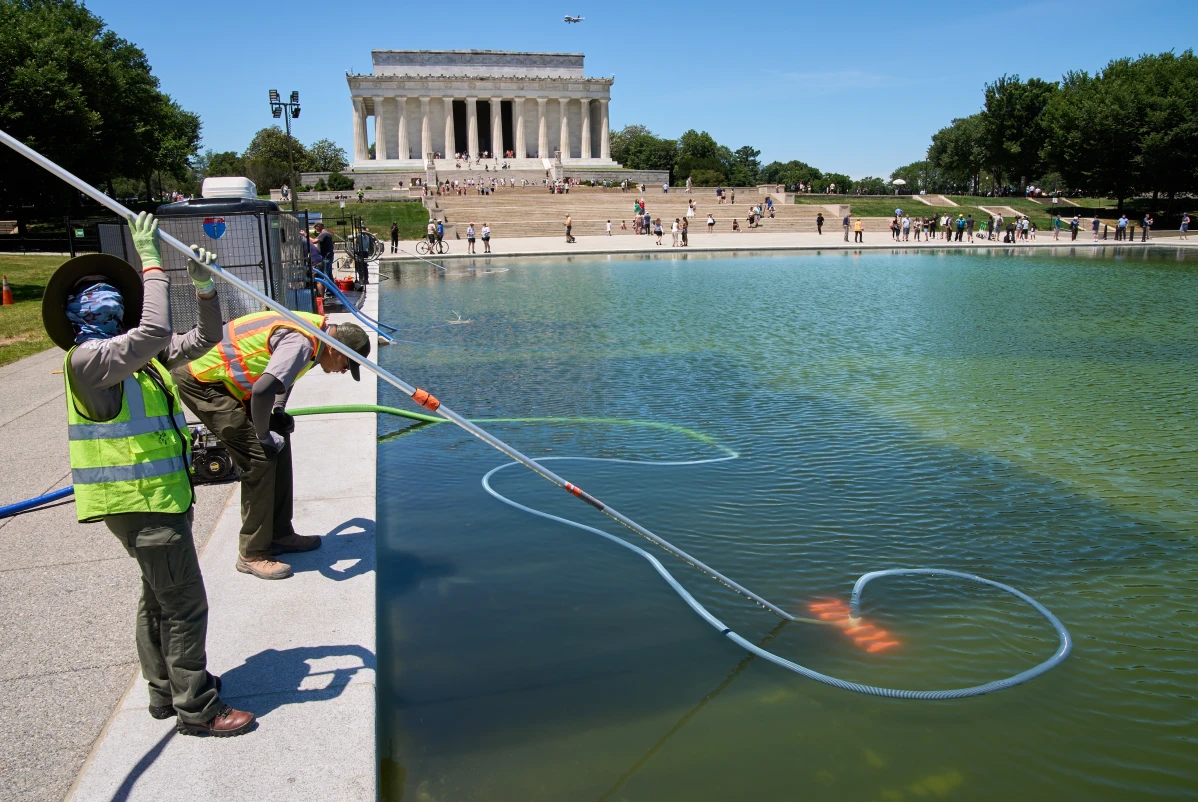
The Trump administration has turned to hydrogen peroxide and advanced ozone nanobubble technology in an effort to combat a significant algae bloom that has spread across the recently renovated Lincoln Memorial Reflecting Pool in Washington, D.C.
The algae outbreak emerged only days after the iconic pool was reopened following a renovation project worth more than $14 million. The refurbishment included resurfacing the pool and painting its bottom a shade President Donald Trump described as “American flag blue” as part of a broader initiative to beautify the nation’s capital ahead of America’s 250th anniversary celebrations.

However, the newly refilled pool quickly developed a green algae bloom, turning large sections of the water chartreuse and obscuring the intended blue appearance. National Park Service crews and contractors have since been working around the clock to restore the pool’s appearance.

Officials say the cleanup effort involves the use of hydrogen peroxide, a treatment commonly used in specialty pools and spas, alongside an ozone nanobubble system designed to kill algae, bacteria and other contaminants while minimizing environmental impacts. The Department of the Interior described the technology as a cleaner alternative to harsher chemical treatments.
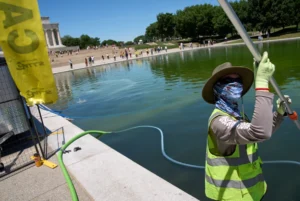
Experts note that algae has been a persistent challenge at the Reflecting Pool for decades due to its shallow depth, warm temperatures and water supply from the Tidal Basin. Some scientists have suggested that the darker blue coating may also contribute to warmer water temperatures, creating conditions that encourage algae growth.
Workers have been using vacuum equipment to remove dead algae while treatment systems continue operating. Despite the ongoing cleanup, specialists caution that long-term control of algae may require additional measures beyond chemical treatment, particularly given the pool’s size and environmental conditions.
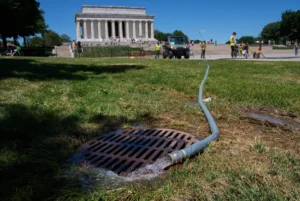
The administration maintains that the algae bloom is temporary and linked partly to residual growth from water supply lines that remained inactive during construction. Officials say they expect the combination of hydrogen peroxide treatment and nanobubble technology to improve water quality and preserve the appearance of the historic landmark.