
International
Thousands Protest in Germany as Far-Right AfD Eyes Political Power

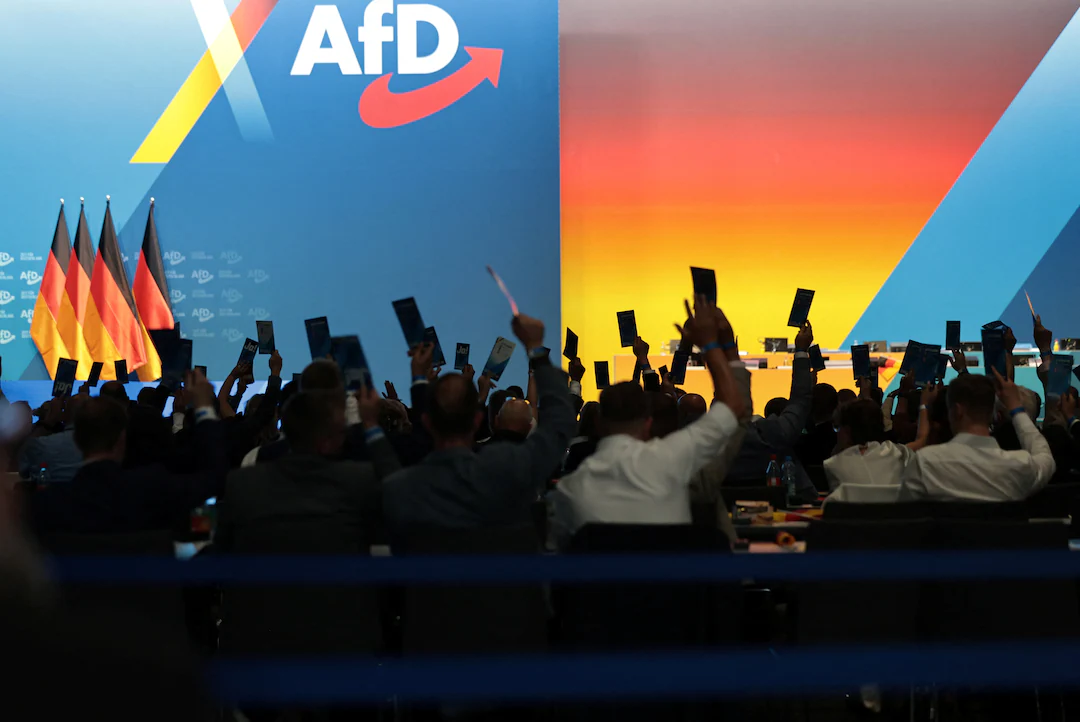
Thousands of demonstrators gathered in the eastern German city of Erfurt on Saturday to protest against the far-right Alternative for Germany (AfD) party as it opened its two-day national conference, where delegates re-elected the party’s leadership and laid out plans to expand its political influence ahead of crucial regional elections.
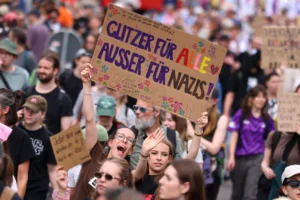
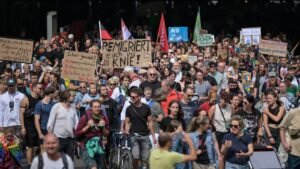
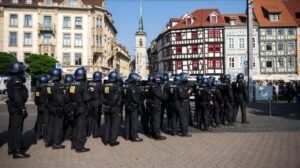
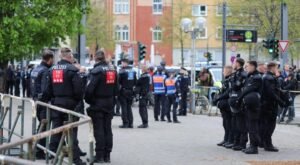
The demonstrations drew an estimated 15,000 to more than 30,000 people, according to police and protest organizers. Participants included trade unions, civil society organizations, church groups, student movements and left-wing political parties, many of whom sought to block roads leading to the conference venue. Riot police from across Germany were deployed to maintain order and clear access routes for delegates attending the congress.

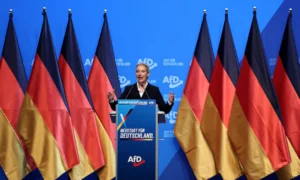
Despite the disruptions, the AfD successfully opened its convention and overwhelmingly re-elected co-leaders Alice Weidel and Tino Chrupalla, the duo credited with transforming the party into Germany’s strongest opposition force. Addressing delegates, Weidel declared that the AfD represented Germany’s “last chance” to reverse what she described as the country’s decline, while Chrupalla vowed that the party would first take power at the regional level before eventually governing nationally.
The AfD, founded in 2013, has built its popularity on promises of stricter immigration controls, criticism of Germany’s asylum policies, opposition to military aid for Ukraine and calls for a tougher law-and-order agenda. During the congress, party leaders reiterated their commitment to mass deportations of migrants without legal status and accused Germany’s mainstream political parties of failing the country.
Outside the conference venue, protesters carried banners denouncing fascism and racism while chanting slogans against the AfD. Several groups staged sit-ins on roads leading to the exhibition centre, and some demonstrators glued themselves to tram tracks or used other forms of civil disobedience to delay delegates from reaching the event. Police reported isolated clashes and dozens of minor offences, though authorities said the demonstrations were largely peaceful.
The protests reflect growing concern over the AfD’s rapid rise in German politics. Recent opinion polls place the party at around 29% national support, ahead of Chancellor Friedrich Merz’s conservative CDU/CSU alliance in some surveys. The AfD is particularly strong in eastern Germany and is aiming for a breakthrough in September’s regional elections in Saxony-Anhalt and Mecklenburg-Vorpommern, where it hopes to become the largest governing party for the first time.

The party remains deeply controversial. Germany’s domestic intelligence agency previously classified the AfD as a right-wing extremist organization, although that designation has been temporarily suspended following a court ruling while legal proceedings continue. Mainstream political parties have also maintained a long-standing “firewall” policy, refusing to form coalition governments with the AfD despite its growing electoral success.
Political analysts say the demonstrations underscore Germany’s increasingly polarized political climate. Supporters argue the AfD is giving voice to voters frustrated by immigration, inflation and economic stagnation, while critics warn that the party’s nationalist rhetoric poses a threat to Germany’s democratic values and social cohesion.
As Germany moves closer to key regional elections, both the AfD’s growing popularity and the scale of public opposition are expected to shape the country’s political landscape. Whether the party can convert its strong polling numbers into executive power remains one of the defining questions in German politics.