
Disaster/Tragedy
Bangladesh Flood Death Toll Rises to 44 as More Than One Million Remain Stranded

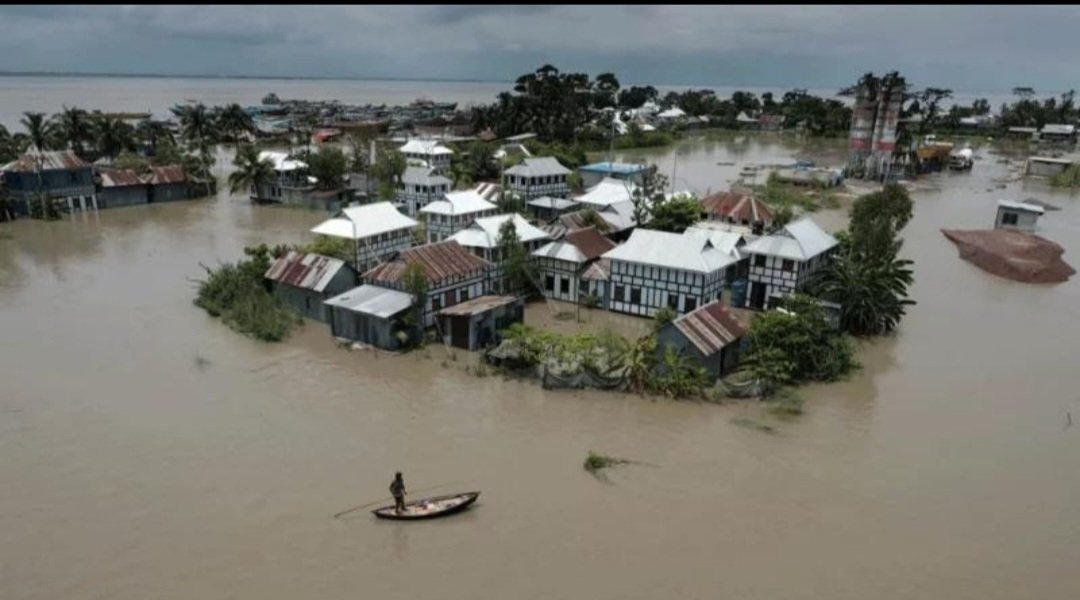
At least 44 people have died and more than one million people remain stranded after days of torrential monsoon rains triggered widespread flooding across large parts of Bangladesh, inundating villages, destroying homes and cutting off entire communities. Authorities described the disaster as one of the country’s most severe flooding emergencies this year, with rescue and relief operations continuing as heavy rain persists.
The flooding has affected several districts in the country’s northern, northeastern and central regions, including Sylhet, Sunamganj, Kurigram, Gaibandha, Jamalpur, and Sirajganj, where overflowing rivers submerged roads, farmland and residential areas. Thousands of homes have been damaged or washed away, forcing families to seek refuge in schools, cyclone shelters and other temporary evacuation centres.
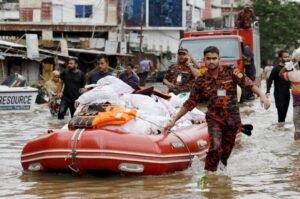
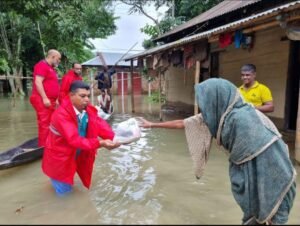
According to Bangladesh’s Ministry of Disaster Management and Relief, rescue teams from the army, navy, air force, police and volunteer organizations have deployed hundreds of boats to evacuate residents trapped by rising waters. Emergency workers have also been distributing food, drinking water, medicine and other essential supplies to isolated communities where road access has been cut off.
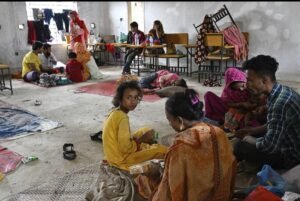
Officials said many of the fatalities resulted from drowning, landslides, electrocution and the collapse of buildings weakened by floodwaters. Authorities warned that the death toll could increase as emergency crews reach remote areas that remain inaccessible due to damaged infrastructure and fast-moving currents.
The disaster has also caused significant damage to agriculture, with thousands of hectares of rice fields, vegetable farms and fish ponds submerged. Experts fear the destruction could affect food production and rural livelihoods, particularly in communities that depend heavily on farming for income. Livestock losses have also been reported in several districts.
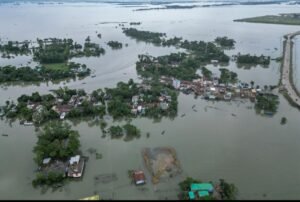
Public health officials are increasingly concerned about the risk of waterborne diseases as contaminated floodwaters spread across densely populated communities. Medical teams have been dispatched to shelters to provide emergency healthcare, while authorities continue efforts to ensure access to safe drinking water and sanitation facilities. Humanitarian organizations have warned that overcrowded shelters could increase the risk of disease outbreaks if conditions worsen.
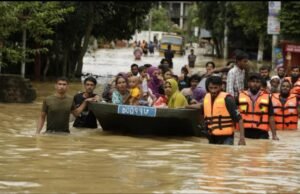
The Bangladesh Meteorological Department has forecast additional rainfall in parts of the country, raising fears that rivers could continue to swell and prolong flooding in already devastated areas. Disaster management officials have urged residents in vulnerable communities to remain alert and comply with evacuation orders where necessary.
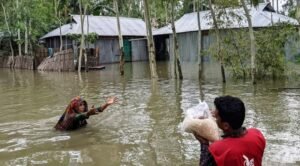
Bangladesh is among the world’s most flood-prone countries due to its low-lying geography and extensive network of rivers fed by seasonal monsoon rains from the Himalayas. Scientists have warned that climate change is contributing to more frequent and intense extreme weather events, increasing the country’s vulnerability to devastating floods.

As rescue operations continue and humanitarian agencies scale up relief efforts, the government faces the challenge of providing long-term support to affected communities. With millions impacted, homes destroyed and livelihoods disrupted, the flood crisis is expected to have lasting social and economic consequences long after the waters recede.