
Business
Cartier Owner Outperforms Forecasts, Offering Hope for Luxury Sector Recovery

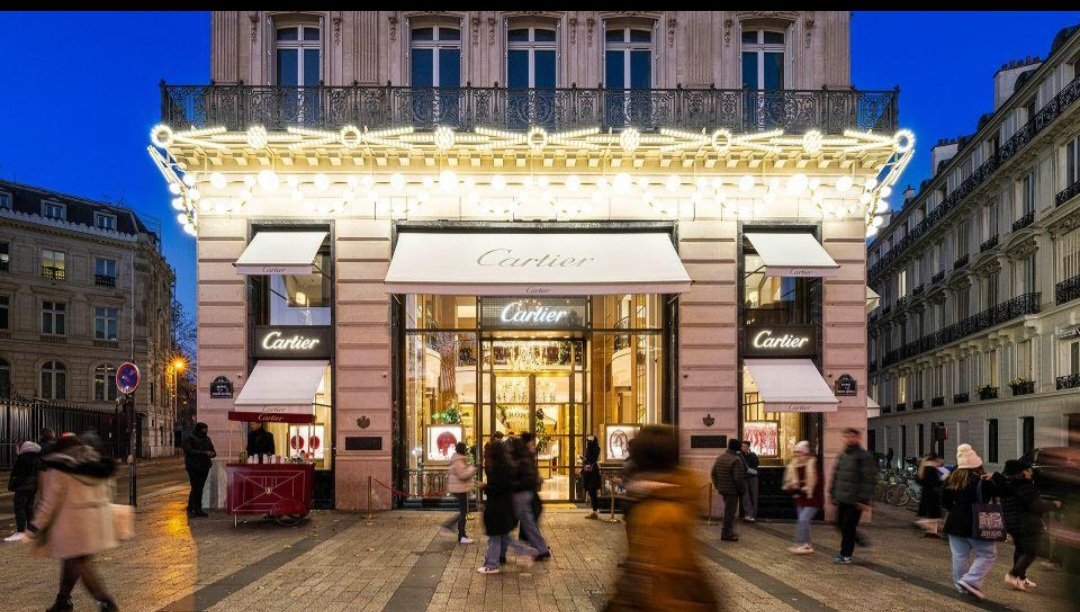
Swiss luxury goods giant Richemont, the owner of iconic brands including Cartier, Van Cleef & Arpels, Buccellati, Piaget, and IWC Schaffhausen, has delivered stronger-than-expected quarterly sales, offering a welcome boost to the global luxury goods sector after months of slowing demand. The company’s impressive performance was driven largely by continued strong demand for high-end jewellery, particularly in Asia and the Americas.
Richemont reported first-quarter sales of €6.33 billion (about US$7.24 billion) for the three months ending June 30, representing 20% growth at constant exchange rates compared with the same period last year. The result comfortably exceeded analysts’ expectations of €5.90 billion, prompting investors to push the company’s shares sharply higher when European markets opened.

The standout performer was Richemont’s jewellery division, which includes globally renowned brands such as Cartier, Van Cleef & Arpels, Buccellati and Vhernier. Sales in the division surged 24%, far outperforming analysts’ forecasts of around 13.5%. The company’s specialist watchmaking division also recorded healthy growth, with sales rising 8%, suggesting improving demand for premium Swiss timepieces.
The strong earnings report immediately lifted sentiment across the European luxury industry. Richemont’s shares climbed about 6%, while shares in rival luxury groups including LVMH, Hermès, Kering, Burberry, Moncler, and Ferragamo also advanced as investors interpreted the results as a sign that demand for premium luxury goods remains resilient despite global economic uncertainty.

Regional performance highlighted broad-based growth. Sales in the Americas rose 27%, accelerating from the previous quarter, while the Asia-Pacific region; including China, recorded 21% growth. Europe also posted solid gains of 11%, and sales in the Middle East returned to growth despite disruptions caused by recent geopolitical tensions, with stronger purchases by local customers helping offset weaker tourist spending.
Industry analysts said Richemont continues to benefit from its dominant position in the high-end jewellery market, where wealthy consumers have remained willing to spend despite economic headwinds. At the same time, the company has also attracted customers seeking relatively accessible entry-level luxury products, allowing it to outperform many competitors that depend more heavily on fashion and leather goods.

Nevertheless, experts cautioned against viewing Richemont’s success as proof that the entire luxury sector has fully recovered. Analysts noted that China’s consumer market remains a key uncertainty. Although Richemont posted encouraging growth in Asia, a sustained recovery across the broader luxury industry is still expected to depend on stronger spending by Chinese consumers, who have traditionally accounted for a significant share of global luxury purchases.
Richemont’s results are also seen as an important indicator ahead of upcoming earnings reports from other major luxury companies, particularly LVMH and Hermès. Investors will be watching closely to determine whether the resilience seen in jewellery extends to fashion, leather goods and other luxury categories that have experienced slower growth over the past two years.

For now, Richemont has provided a rare bright spot for the luxury goods industry. The company’s ability to outperform expectations despite global economic uncertainty, geopolitical tensions and cautious consumer spending suggests that demand for prestigious jewellery brands remains remarkably resilient, reinforcing Richemont’s position as one of the strongest performers in the global luxury market.